
Paving Contractor in Riverside, CA
Heritage Streets, Modern Standards
Riverside is where the Inland Empire began — the county seat, the citrus capital that built Magnolia Avenue’s grand boulevard and the Wood Streets’ historic grids, and today a city of institutions: the courts and civic core, a major university, medical centers, and the logistics parks rising on its southern edge. United Paving Co is a paving contractor in Riverside, CA serving all of it from one freeway exit away — our Corona headquarters puts the county seat inside our shortest response range — with the fluency this city specifically demands: heritage streetscapes treated with character in mind, institutional properties bid to institutional standards, and the most multi-departmental permit machine in our service area navigated as routine.
Our Riverside Paving Services
Asphalt Paving
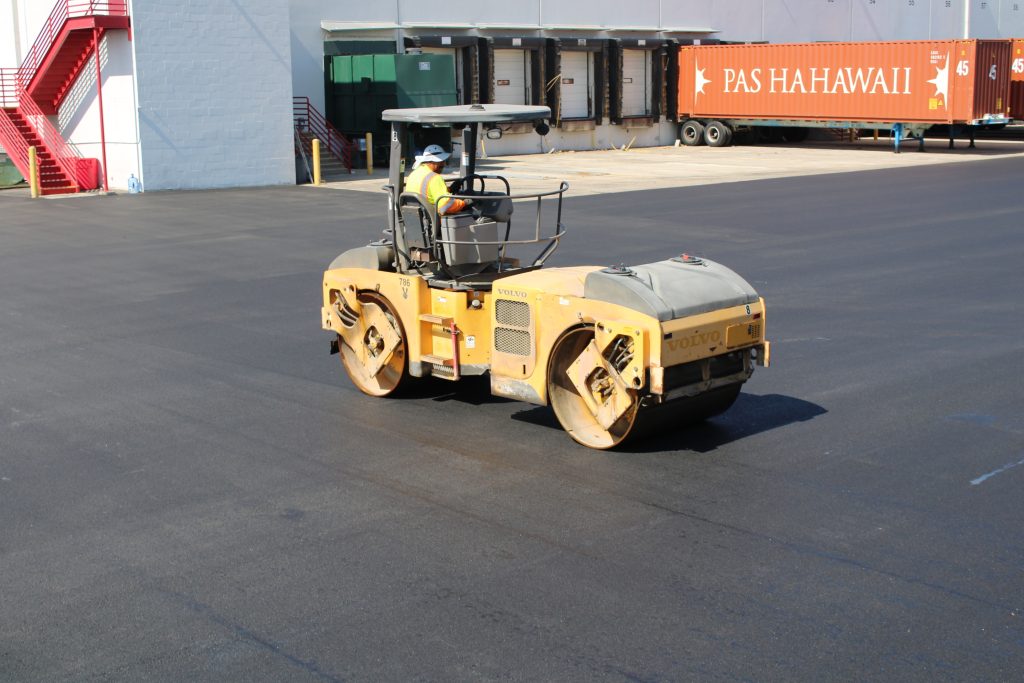
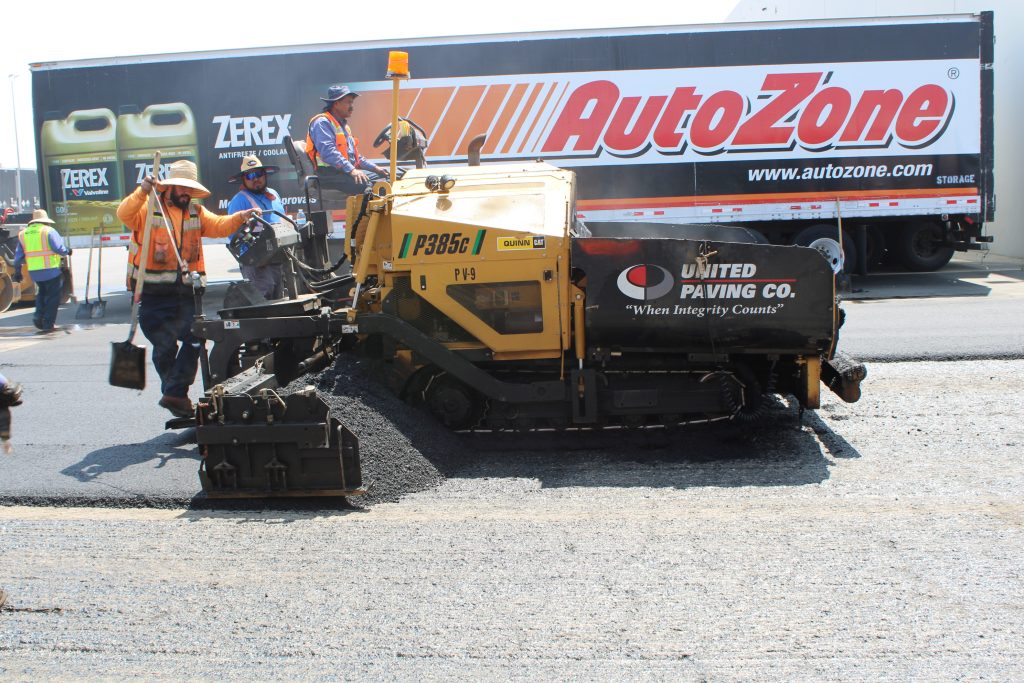
New construction, removal and replacement, and fine grading across all five bands — heat-grade mixes as the county baseline, truck-duty sections for the logistics belts, institutional documentation for the civic core, and reconstruction that respects the heritage grids it works inside.
Asphalt Repair and Maintenance
Diagnosis-first repair for the county’s oldest pavement stock — honest triage across districts that span 120 years of construction, fall crack sealing before the storm season, and standing programs for the institutional and portfolio owners a county seat concentrates.
Seal Coating
Protection on the compressed inland cycle — commercial, institutional, and HOA application with structural triage first, academic-calendar scheduling in the university district, and re-striping restored in every scope.
Concrete Installation & Repair
Pads, approaches, ramps, and flatwork engineered to their loads — with the heritage specialty this city requires: finishes and boundaries matched to historic streetscapes, and ADA upgrades integrated into character-sensitive settings.
Frontage concrete for the city that invented the region’s grand streets — mature-streetscape repair done at the cause, curb and flowline reconstruction for real storm cells, and the eight-department permit run as contractor scope.
Striping & ADA Compliance
Layouts and marking for institutional campuses, university-district lots, retail corridors, and logistics parks — UV-honest materials, compliance upgrades timed to the re-stripe moment, and fire lanes held to inspection standard.
Get Your Free Asphalt Paving Proposal
Our estimating and project management team will develop the right scope of work for your budget, performance goals, and visual expectations. Estimates and recommendations are free. Call (951) 739-9200 or submit the form below.
The County Seat's Market: Institutions, Heritage, and the New Logistics South
Riverside’s paving demand spans more property types than any city we serve, in identifiable bands. The civic and institutional core — downtown’s government, court, and office district, the Mission Inn blocks, the medical campuses — buys pavement the way institutions do: documented specs, presentation standards, and phasing that respects public-facing operations. The heritage neighborhoods and corridors — the Wood Streets, the historic districts, Magnolia Avenue’s citrus-era spine — carry the city’s oldest working pavement inside its most character-conscious settings, where repairs must respect streetscapes that residents actively protect. The university district — UCR, the Eastside, and the commercial blocks that serve tens of thousands of students — runs on an academic calendar that smart scheduling treats as law. The industrial belts — Hunter Park in the north, Sycamore Canyon Business Park and the March-adjacent south — bring the region’s logistics boom to Riverside’s edges, with truck-duty engineering to match. And the broad residential west — Arlington, La Sierra, and their corridors — carries the everyday commercial and HOA work of a city of a third of a million. Five bands, one contractor, and proposals written in whichever language the property speaks.
Working in a City That Remembers: The Heritage Standard
Riverside protects its past more actively than any city in our range — historic districts with design standards, neighborhoods that organize around their streetscapes, and a civic identity built on the citrus-era fabric — and pavement work inside that fabric carries obligations a generic bid never anticipates. The practical translations: repairs and replacements in character-sensitive settings planned to blend — concrete finishes and scoring matched to the district’s existing vocabulary, sawcut boundaries at joints so new work reads as original, and the restraint to fix what’s failing without modernizing what isn’t; mature streetscapes worked around rather than through — established trees, parkway plantings, and the irrigation that sustains them treated as constraints in the plan, not surprises in the change order; and where properties sit within designated districts, the awareness that exterior work can touch review processes — a wrinkle we flag during scoping so approval questions surface before schedules are promised. None of this makes heritage work slower in competent hands; it makes it specifiable — and the county seat has taught us that the bid which acknowledges the district’s rules is the one its property owners can actually accept.
Why Property Owners Choose United Paving Co.
Licensed California Contractor
verify our license anytime through the CSLB license check.
Over 25 years in the asphalt and concrete industry
Serving properties from Los Angeles through San Diego County
Active members of the property-management community.
BOMA, IREM, CAI, ICSC, AGC, and more.
Materials and Methods
Free on-site written estimates
We provide services in California, Arizona, and Nevada.
The Eight-Department Permit: Riverside's Machine, Explained
Riverside’s encroachment permitting is the most institutionally layered in our service area, for a structural reason: the city owns its utilities. Riverside Public Utilities runs the water and electric systems, which means the pipes and wires under the right-of-way belong to the same government issuing the permit — so an encroachment permit here routes for approval through the departments with a stake: Water, Electric, Fire, Police, Parks, Planning, Traffic, and always Public Works, with each able to attach conditions and the Public Works Director signing last. The city’s own processing guide lays out the sequence — application at no fee, multi-department routing, and processing fees collected only if granted (currently $283.86 for single-family homeowners, $935.94 for commercial and industrial properties, with type-specific fees where the work adds them). For property owners the translations are practical: right-of-way projects here deserve schedule honesty (multi-department routing takes the time it takes, and we build it in rather than discover it), utility coordination is doubly serious (the city’s own water and electric infrastructure sits under its streets, making mark-outs and clearances a first-order step), and the contractor advantage is fluency — we’ve run this machine enough to route applications clean the first time, which is where the real schedule is won. All contractor scope with us: application, routing, conditions, and the inspection that follows.
Hiring a Paving Contractor in Riverside - FAQs
Why do Riverside right-of-way permits involve so many departments?
Because the city owns what's under its streets: Riverside Public Utilities runs the municipal water and electric systems, so encroachment permits route through every department with a stake — utilities included — before the Public Works Director signs. It's more routing than neighboring cities, not more mystery; we build the timeline in and route applications clean the first time.
Our property is in a historic district. Does that change a pavement project?
It changes the design conversation and sometimes the approval path: finishes, boundaries, and streetscape treatment planned to the district's character, and exterior-work review flagged where designations require it. Handled at scoping, it's specification; discovered mid-project, it's delay — which is why we ask the district question first.
Can work near UCR be scheduled around the academic calendar?
That's the district's law and our default: major work slotted into breaks and summer, term-time projects phased around peak class-change traffic, and student-housing properties scheduled against move-in and move-out weeks. The calendar is published; there's no excuse for colliding with it.
We manage an institutional property — what should a bid include for our procurement process?
The documentation institutions run on: written specs per zone, itemized scope, insurance and licensing exhibits, phasing and traffic-control plans, and references at institutional scale. County-seat procurement has standards; our proposals are formatted to pass them the first time.
Areas We Serve Near Riverside
Throughout Riverside — 92501 (downtown and the civic core), 92506 and 92507 (Canyon Crest, Victoria, UCR, the Eastside, and Hunter Park), 92503 and 92505 (Arlington, La Sierra, and the western corridors), 92504 (the central city and Magnolia corridor), and 92508 (Orangecrest, Mission Grove, and the March-adjacent south). Nearby: our contractor pages for Corona, Perris, and Menifee.