
Asphalt Paving in Riverside, CA
Resurfacing the Original City, Specified to Institutional Standard
Riverside owns the county’s deepest inventory of pavement worth saving: decades of commercial lots, campus drives, and corridor frontages whose structure still serves but whose surfaces have spent their years under full inland sun. That makes this city the capital of the resurfacing conversation — mill-and-overlay done to engineering standard, not just black-over-gray — and its institutions make it the capital of the documented bid. United Paving Co provides asphalt paving in Riverside, CA across the whole span: new construction and reconstruction where projects demand it, resurfacing engineered the right way where structure allows it, and the submittal-grade proposals and live-facility phasing the county seat’s properties actually require.
Mill and Overlay, Explained: Why the Grinder Comes Before the Paver
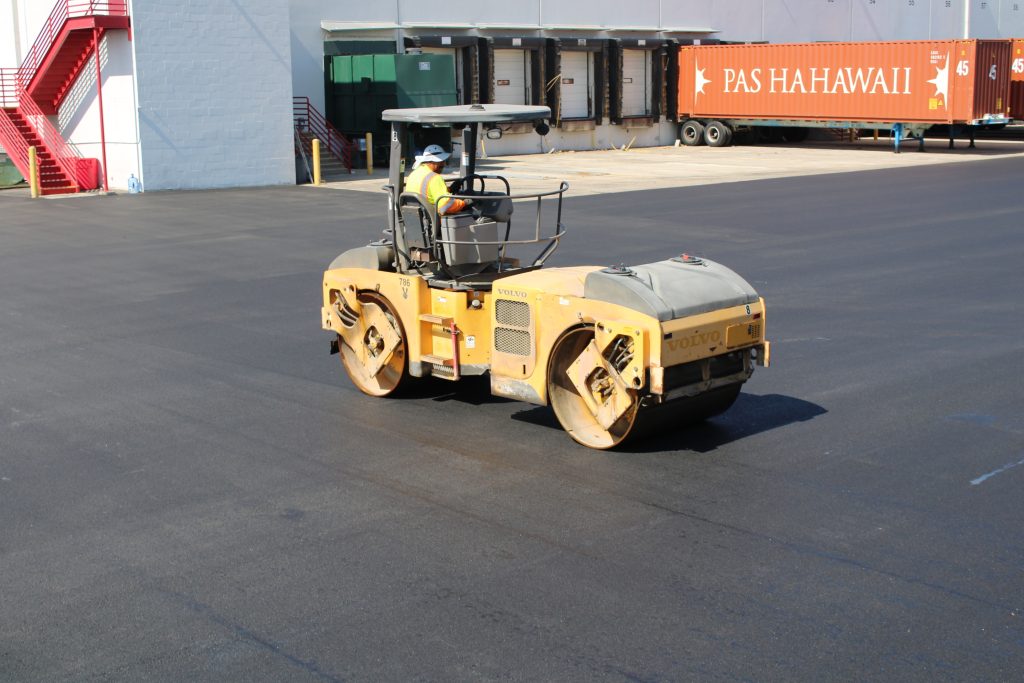
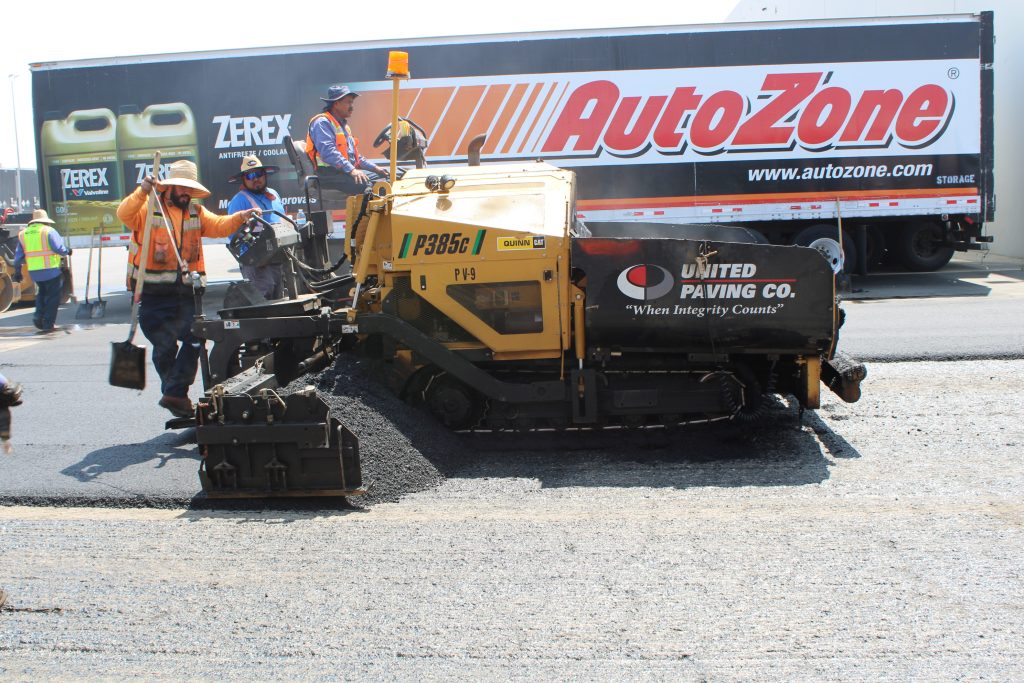
Here’s the resurfacing engineering every owner of aging-but-sound pavement should understand, because it separates a real overlay from an expensive mistake. The tempting version — just pave a new layer over the old surface — fails on geometry before it fails on materials: every inch added on top raises the pavement, and the lot’s whole built environment was set to the old elevation. Curb reveal shrinks (a curb that stood full height now stands half, and its gutter capacity shrinks with it); drainage grades flatten or reverse where the new mat feathers into fixed edges; doors, dock plates, and ADA landings meet pavement that crept up toward them; and every crack in the buried surface begins its patient journey upward through the new one — reflective cracking, the ghost of the old lot reprinting itself. Milling solves the geometry: a cold planer grinds off the aged surface to engineered depth — commonly matching the new lift, so the finished lot returns to its original elevations — taking the oxidized, cracked layer away instead of entombing it, restoring curb reveal and drainage relationships, and leaving a textured, bondable base for the new mat (with a tack coat gluing old to new, because an overlay is a laminate and laminates live on their bond). The material bonus deserves its sentence: milled asphalt doesn’t go to a landfill — reclaimed asphalt pavement is remelted into new mix, making asphalt America’s most recycled material and your old surface a feedstock rather than a disposal fee. The bid-reading translation: a resurfacing proposal should state milling depth, overlay thickness, and tack — “overlay lot” without those numbers is geometry left to chance, and the curbs will keep the score.
Get Your Free Asphalt Paving Proposal
Our estimating and project management team will develop the right scope of work for your budget, performance goals, and visual expectations. Estimates and recommendations are free. Call (951) 739-9200 or submit the form below.
Your Pavement Maintenance Timeline
| When | What | Why |
|---|---|---|
| Year 1 | First seal coat (after full cure) | Locks in binder before UV oxidation starts |
| Every 3–5 years | Re-apply seal coat | Ongoing UV and moisture protection in our high-sun climate |
| Annually (fall) | Crack sealing | Closes entry points before winter rains reach the base |
| As needed | Patching, striping refresh | Addresses isolated damage; maintains ADA compliance |
| Year 15–25+ | Overlay or reconstruction | Even well-maintained pavement eventually reaches structural end-of-life |
The Institutional Bid: What County-Seat Procurement Actually Requires
Riverside concentrates institutional buyers — government, courts, medical campuses, the university, school and college districts — and their pavement projects run on documentation standards that a one-page estimate cannot enter. The package that passes procurement, and the one our institutional proposals are built as: scope and specification in writing — zones mapped, sections stated (thickness, base, mix, and binder grade), quantities itemized so comparisons and audits have numbers to hold; the compliance exhibits — license classifications, insurance certificates at institutional limits, bonding capacity where projects require it, and the safety documentation facility risk managers ask for by name; the execution plan as a document — phasing maps, traffic-control plans for anything touching circulation, work-hour commitments, and the stakeholder-notification matrix (who gets told what, when) that keeps a public-facing facility’s departments from learning about their own project from the cones; and closeout deliverables — as-built documentation and warranty terms stated up front, because institutional files outlive the people who let the contract. One more layer belongs in the open: public agencies’ own construction typically carries public-works requirements (prevailing wage and registration among them) that private commercial work doesn’t — a distinction we navigate correctly on the right side of, and flag early so procurement paths are matched to project types from the first conversation. The practical value for any owner, institutional or not: this package is simply what a complete paving bid looks like — and asking your bidders for its pieces is the fastest audit of who’s prepared to be held to their number.
Our Asphalt Paving Services In Riverside
Resurfacing, Mill & Overlay
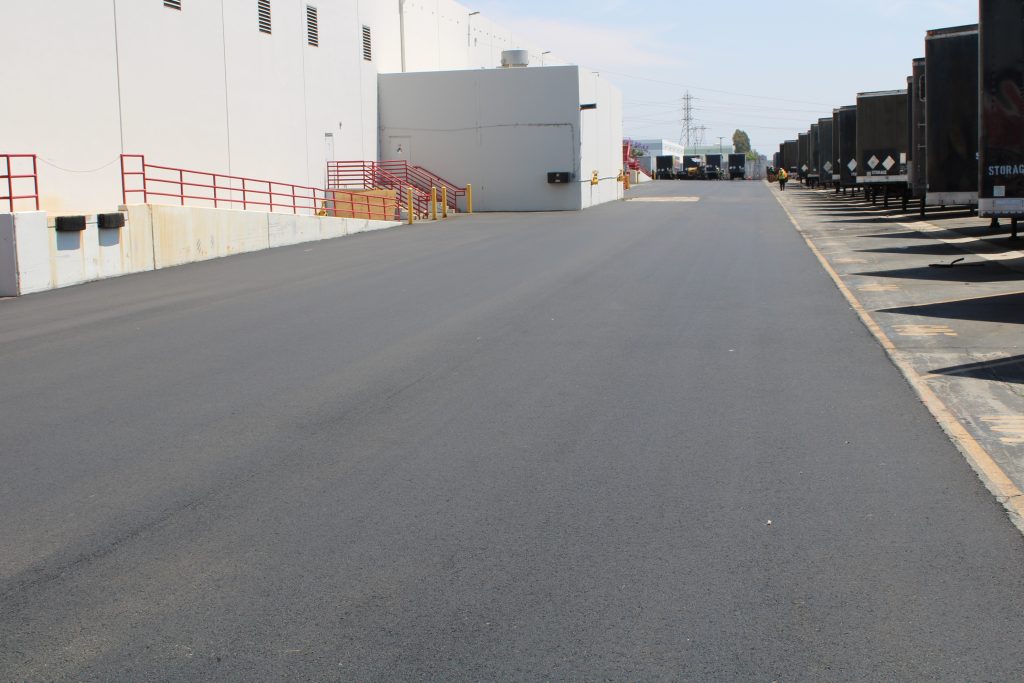
The county seat’s signature service: aged surfaces milled off to engineered depth and rebuilt with new hot-mix — grades and drainage preserved, curb reveal maintained, and the damaged layer removed rather than buried — for the commercial lots, institutional drives, and corridor frontages where sound structure deserves a new surface instead of a demolition bill.
New Construction & Reconstruction
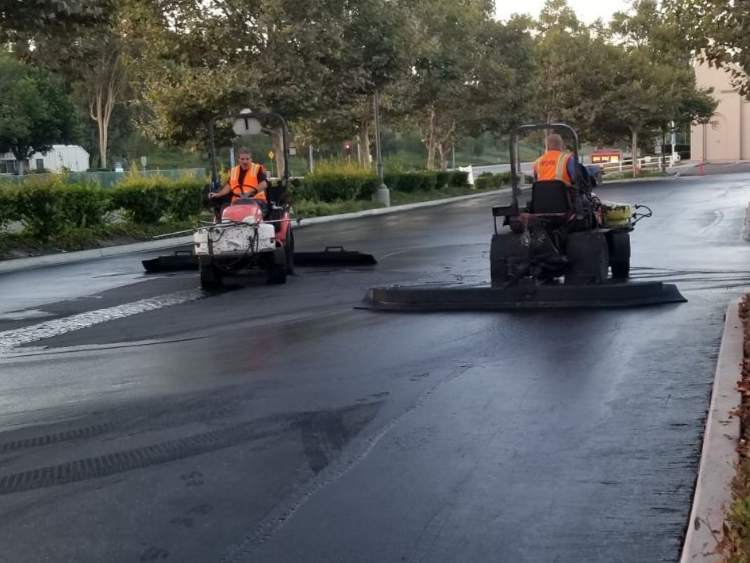
Ground-up paving and full-depth rebuilds across the city’s bands — heat-grade mixes as the baseline, truck-duty sections for Hunter Park and the Sycamore Canyon logistics belt, zone-stated specs on every proposal, and heritage-conscious detailing where projects touch the historic grids.
Fine Grading & Site Work
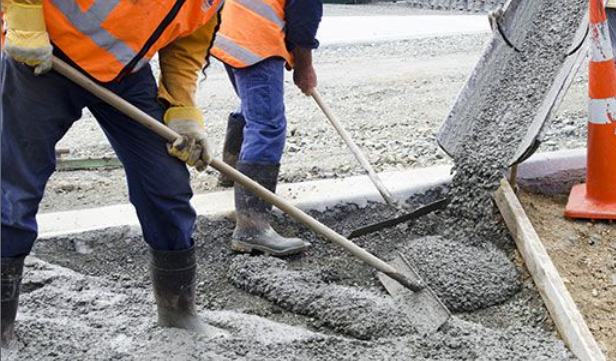
Drainage-first grading for the city’s flats and its arroyo-cut edges, subgrade correction where old lots reveal their era, and erosion-control compliance carried as standard scope — with the eight-department encroachment machine run for any work touching the public right-of-way.
Paving a Live Campus: Choreography for Facilities That Can't Pause
The county seat’s defining job sites are the ones that never close for the work: medical campuses whose emergency access is legally and morally non-negotiable, the university district running on an academic clock, civic facilities with daily public traffic. Paving them is sequencing discipline. Emergency access is the fixed star — fire lanes and emergency routes stay continuously open through every phase, ambulance and after-hours access is planned with facility operations rather than assumed, and the phasing map is drawn around those constants before any production logic. Accessible routes never blink — an active facility must keep compliant paths from accessible parking to entrances through every phase, which means temporary route designation, signage, and slope-honest detours planned as deliverables, not improvisations; a campus that’s ADA-compliant except during construction isn’t compliant. The calendar is a design input — university work slots into breaks and summer; medical campuses phase around clinic schedules and shift changes; civic sites respect court calendars and public-counter hours; and night work carries the lighting, noise, and notification planning that lets it be invisible by morning. And the stakeholder map is half the project — security, facilities, department heads, and the transit and delivery services a campus depends on all get the schedule in advance, because on an institutional site the smoothest project is the one nobody had to ask about. This is a different discipline than repaving a store’s lot, and it prices differently for honest reasons — the choreography is scope — but it’s the difference between a campus that got new pavement and a campus that got a month of complaints with pavement attached.
Why Riverside Property Owners Choose United Paving Co.
Licensed California Contractor
verify our license anytime through the CSLB license check.
Over 25 years in the asphalt and concrete industry
Serving properties from Los Angeles through San Diego County
Active members of the property-management community.
BOMA, IREM, CAI, ICSC, AGC, and more.
Materials and Methods
Free on-site written estimates
We work throughout Corona — 92879 (central: the Circle City core and North Main corridor), 92880 (the industrial north toward the Eastvale line), 92881 (the south: Eagle Glen, Dos Lagos, and the Ontario Avenue corridor), and 92882 (the west: Sierra del Oro, Green River, and the older westside neighborhoods) — plus the Temescal Valley communities of 92883, where county jurisdiction applies and we handle the difference as standard scope.
How a Quality Asphalt Paving Project Works, Step by Step
Most pavement failures trace back to shortcuts in the first three steps below — the ones buried underground when the job is “done.” Here’s the full process, so you know what to expect and what to ask any contractor bidding your project:
1. Site Evaluation & Soil Assessment
San Marcos sits on a mix of decomposed granite, sandy loam, and clay-heavy soils depending on where you are — and each behaves differently under load. Clay expands when saturated and shrinks when dry, flexing whatever sits on top of it. A contractor who quotes your project without evaluating the subgrade is guessing with your money.
2. Demolition & Excavation (for replacement projects)
Failed asphalt and contaminated base are removed and hauled off — and old asphalt is one of America's most recycled materials, routinely reprocessed into new pavement, as documented by the Asphalt Institute. We excavate to the depth the new pavement section requires, not just deep enough to hide the old problems.
3. Subgrade Preparation & Aggregate Base
The subgrade is compacted and proof-rolled to expose soft spots, which are dug out and rebuilt. Then Class II aggregate base is placed and compacted in lifts. This layer carries the structural load; the asphalt on top mostly protects it and provides the driving surface.
4. Fine Grading for Drainage
Surfaces are graded to a minimum slope (typically 1–2%) toward drains, gutters, and flowlines. Standing water after a storm is the most common visible symptom of grading that was skipped or done wrong.
5. Hot-Mix Asphalt Placement
Hot-mix asphalt arrives at roughly 300°F and must be placed and compacted before it cools. Thickness depends on use: a residential driveway section differs substantially from a truck-trafficked commercial lot. This is why a bid quoting "asphalt paving" without specifying compacted thickness isn't comparable to one that does.
6. Compaction & Finishing
Rollers compact the mat to target density while it's still workable. Proper compaction is the single biggest factor in pavement durability — under-compacted asphalt lets in air and water and ages years faster.
Riverside Asphalt Paving - FAQS
Why can't you just pave a new layer over our old lot without grinding first?
Because the lot's geometry was built to the old elevation: an un-milled overlay shrinks curb reveal, flattens drainage, creeps up on doors and ADA landings, and buries cracks that reflect through within seasons. Milling removes the spent layer and returns the lot to its designed grades — the overlay then renews the surface without rewriting the site.
What happens to the asphalt you grind off?
It gets recycled — milled material (reclaimed asphalt pavement) goes back to the plant and into new mix, which is why asphalt ranks as the country's most recycled material. Your old surface leaves as feedstock, not landfill, and the sustainability line in an institutional bid is real, not decorative.
How do you pave a medical campus without ever blocking emergency access?
By drawing the phasing around access first: emergency routes and fire lanes held continuously open, alternate paths designated and signed before any closure, ambulance access coordinated with facility operations per phase, and night windows used where daytime circulation can't flex. The access plan is a deliverable in the proposal — ask every bidder for theirs.
Our facility's procurement office needs more than a price. What should we request from bidders?
The full package: written zone specs with binder grades, license and insurance exhibits, bonding where required, phasing and traffic-control plans, a notification matrix, and closeout terms. It's what a complete bid looks like anyway — and requesting it sorts prepared contractors from optimistic ones in one email.
Businesses front our lot on a busy Magnolia-corridor block. Can access survive the project?
With arterial-frontage choreography, yes: phases sized so entrances alternate rather than close, signage that tells corridor traffic the businesses are open before it tells them about the work, and the encroachment and traffic-control approvals for anything touching the street carried as our scope through the city's multi-department process.
We're building on the Sycamore Canyon logistics belt. What should the pavement spec include?
Duty-honest sections from day one: zones mapped to the building's real movements (gates, dock approaches, trailer positions, car parking), heat-grade binder as the regional baseline, and the heaviest sections placed where the trucks actually work rather than averaged across the acreage. Getting the spec into the development drawings early is cheaper than every alternative.