
Asphalt Repair and Maintenance in Riverside, ca
Fixing the Cuts, the Ghosts, and the Backlog
Riverside’s pavement carries the scars of a full-service city: trench cuts from a century of water, electric, sewer, and telecom work — many sunk into the rectangular potholes every driver here knows — and overlay upon overlay whose buried histories telegraph up through the newest surface as reflective cracks. Add the maintenance backlogs that institutional properties accumulate across decades, and repair in the county seat is three disciplines in one. United Paving Co provides asphalt repair and maintenance in Riverside, CA with all three practiced daily: utility-cut restoration built not to sink, reflective-crack management that keeps old ghosts sealed, and the standing maintenance agreements that turn a facility’s backlog into a managed program.
Our Asphalt Repair and Maintenance in Riverside
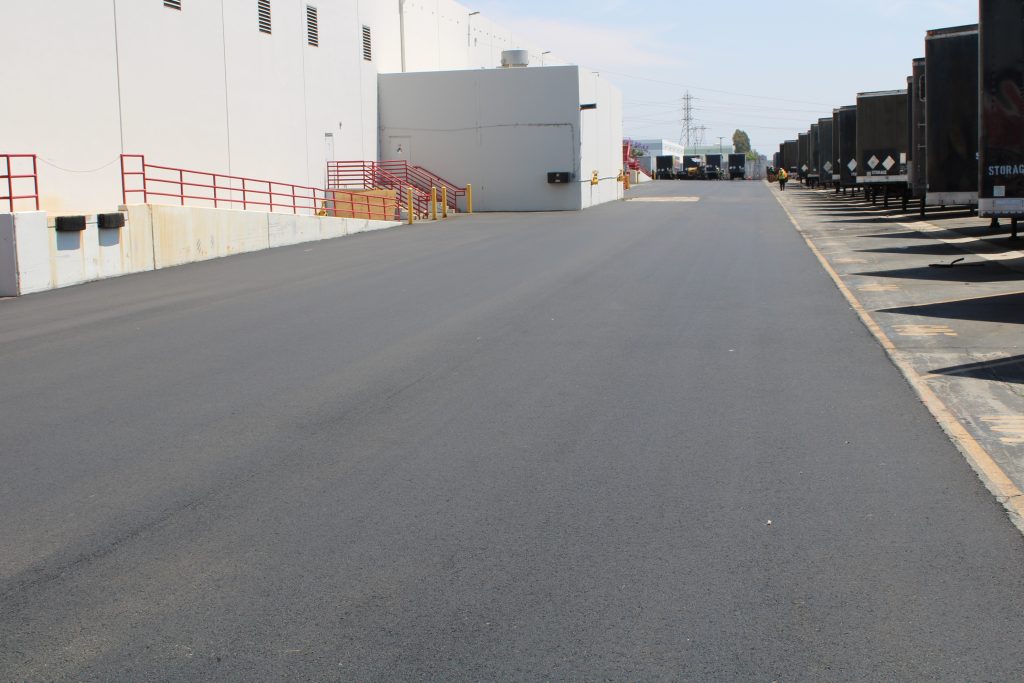
Patching & Failed-Zone Reconstruction
Remove-and-replace repair to the permanent standard — failed zones sawcut clean, excavated to sound material, base rebuilt and compacted, hot-mix restored to the location’s duty — across the civic core’s lots, the corridors, the university district, and the logistics belts, phased so public-facing and freight-moving properties keep operating.
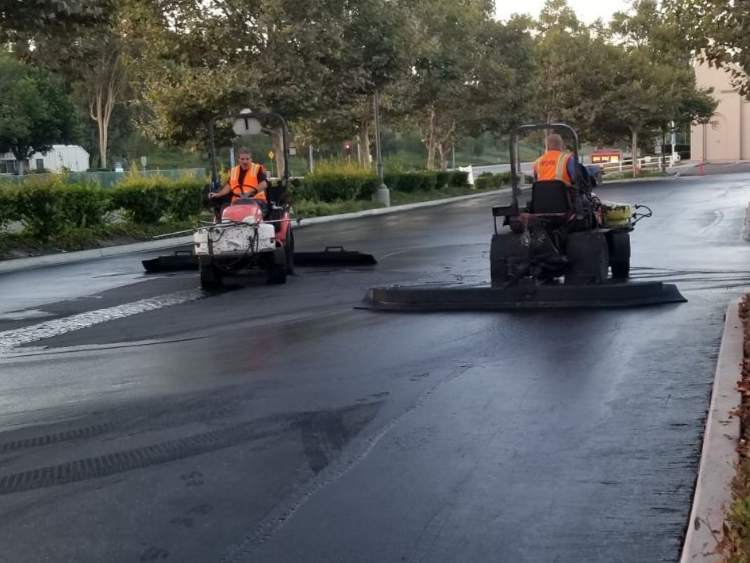
Utility-Cut & Trench Restoration
The full-service-city specialty: trench cuts through parking lots and drives restored to the engineering standard that keeps them flush — proper backfill compaction verified in lifts, edges cut back to sound pavement in the T-section that outlasts the patch-the-hole version, and coordination with utility work so the restoration is planned, not improvised behind the backhoe.
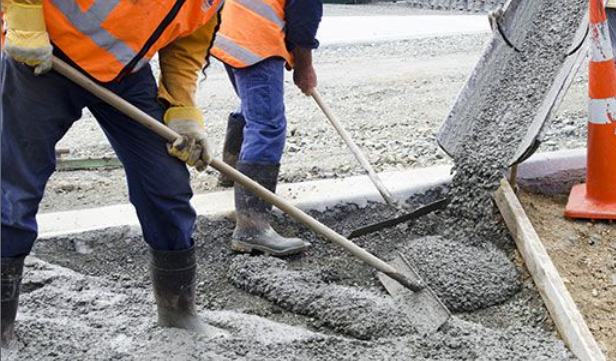
Crack Sealing, Programs & On-Call Agreements
Hot-applied crack sealing on the fall calendar — with the city’s reflective-crack inventory managed on its own schedule — plus standing maintenance programs and term agreements for the institutional and portfolio owners a county seat concentrates: response tiers, unit pricing, and annual condition reporting in one document procurement can approve once.
Get Your Free Asphalt Repair and Maintenance Proposal
Send us photos or schedule a site walk — our estimators will priority-rank what actually needs repair now, what can wait, and what maintenance will keep you off the expensive end of the curve. Call (951) 739-9200 or submit the form below!
Why Utility Cuts Sink: The Anatomy of the Rectangular Pothole
Every Riverside driver knows the shape: a neat rectangle of patch, an inch or two below the pavement around it, thumping under every tire. It’s the signature of a trench restoration that skipped its engineering, and the failure is structural, not cosmetic. When a trench is cut for a water line, conduit, or lateral, two things are destroyed along with the asphalt: the compacted base that took methodical effort to densify during original construction, and the pavement’s continuity — an intact mat distributes each wheel load across a wide area, while a cut edge bears alone. The failing version of restoration treats the trench as a hole to fill: backfill placed fast and compacted lightly (or trusted to “settle in,” which it obligingly does — downward, for years), and patch poured to the cut’s exact edges, leaving the new asphalt’s border resting on disturbed ground and the old asphalt’s edge unsupported. Physics then runs its program: the under-compacted column consolidates under traffic, the patch rides its backfill down, water collects in the resulting depression and accelerates everything, and the rectangle becomes the pothole that gets re-patched — onto the same sinking foundation — on a cycle. The restoration that ends the cycle is shaped like a T: backfill placed and compacted in verified lifts to engineered density (or replaced with flowable fill where the trench’s geometry defeats compaction), and the pavement cut back wider than the trench on each side — the T’s arms — so the new patch bears on undisturbed base at its edges and ties into sound pavement, with the joint sealed against the water that probes every seam. It costs more than the fill-the-hole version, once — versus the subscription. The owner’s translation: when utility work crosses your lot, the restoration spec is where the next five years get decided, and “contractor to patch trench” without compaction and cutback language is the sinking version, pre-purchased.
Living With the Ghosts: Managing Reflective Cracks on Overlaid Pavement
A large share of Riverside’s commercial pavement is an overlay — sometimes an overlay of an overlay — and overlaid pavement carries a specific inheritance: reflective cracking, where the joints and cracks of the buried surface slowly reprint themselves upward through the new mat as thermal movement works the old pattern against the new layer. Knowing you own an overlay changes crack management in three practical ways. Reflective cracks are working cracks — they open and close with temperature because the buried structure beneath them moves — so they can’t be sealed once and forgotten like a shrinkage line: they belong on a recurring seal schedule, inspected and resealed as the flexible sealant fatigues, because each is effectively a joint now, and joints are maintained, not cured. The pattern is the map: reflective cracks arrive in the geometry of the old surface — straight lines where its joints ran, its old crack web re-emerging — which makes them diagnosable at a glance and, usefully, predictable: the pattern that’s reprinted so far tells you what’s still coming. And they change the resurfacing conversation: the reflective inventory is the honest measure of how much life the overlay has left — sparse, sealed lines are a maintained middle age, while a densely reprinted surface is the buried lot announcing that the next resurfacing needs to address the structure (deeper milling, isolation treatments, or reconstruction of the failed zones) rather than adding another layer for the pattern to climb through (the process engineering lives on our Asphalt Paving in Riverside page. The management program is unglamorous and effective: map the pattern, seal on the recurring calendar, watch the density trend year over year — and make the resurfacing decision from the trend, not the surprise.
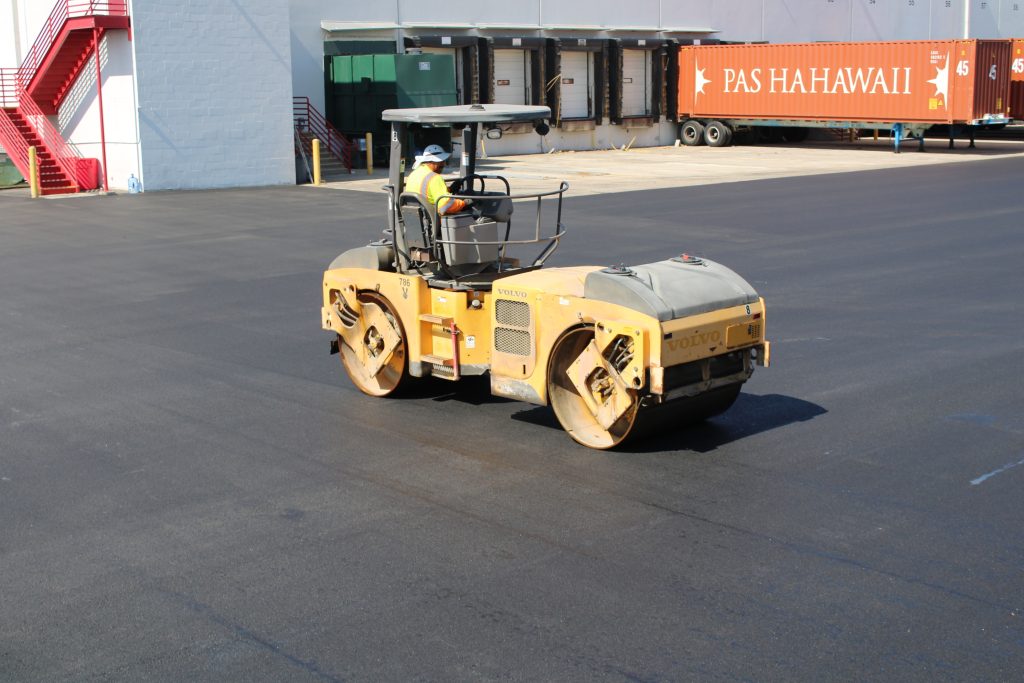
Your Pavement Maintenance Timeline
| When | What | Why |
|---|---|---|
| Year 1 | First seal coat (after full cure) | Locks in binder before UV oxidation starts |
| Every 3–5 years | Re-apply seal coat | Ongoing UV and moisture protection in our high-sun climate |
| Annually (fall) | Crack sealing | Closes entry points before winter rains reach the base |
| As needed | Patching, striping refresh | Addresses isolated damage; maintains ADA compliance |
| Year 15–25+ | Overlay or reconstruction | Even well-maintained pavement eventually reaches structural end-of-life |
The Term Agreement: Maintenance as a Contract, Not a Series of Emergencies
Institutional properties — the campuses, districts, agencies, and large portfolios the county seat concentrates — don’t buy repairs well one purchase order at a time: every incident becomes its own procurement, response times float, and the backlog grows in the gaps. The structure that fixes it is the term maintenance agreement, and its anatomy is worth knowing whether you sign one with us or anyone. Response tiers with clocks: hazards (an active-lane pothole, a trip edge at an entrance) on a committed emergency response; operational repairs on a scheduled-days tier; cosmetic and preventive work batched into planned windows — each tier with its response time in writing, because “we’ll get to it” is not a facilities plan. Unit pricing set once: patching, sealing, and standard repairs priced per unit up front, so mid-term work orders execute without re-bidding and budget forecasting has real numbers — the procurement office approves the framework once instead of the incident forty times. The annual rhythm: a scheduled condition walk that feeds a ranked repair plan and the fall crack-sealing campaign, so the agreement runs preventively rather than waiting to be summoned — the whole point being that a property under term maintenance generates fewer emergencies to respond to. And the record: every walk, repair, and recommendation documented in a running file — the deferred-maintenance defense, the budget justification, and the institutional memory that survives staff turnover, in one place. For facility managers the pitch is simple arithmetic: the agreement converts pavement from a recurring surprise into a line item with a service level — and the properties that run this way are the ones whose backlogs shrink instead of compound.
Why Riverside Property Owners Choose United Paving Co
Licensed California Contractor
verify our license anytime through the CSLB license check.
Over 25 years in the asphalt and concrete industry
Serving properties from Los Angeles through San Diego County
Active members of the property-management community.
BOMA, IREM, CAI, ICSC, AGC, and more.
Materials and Methods
Free on-site written estimates
We work throughout Riverside — 92501 (downtown and the civic core), 92506 and 92507 (Canyon Crest, Victoria, UCR, the Eastside, and Hunter Park), 92503 and 92505 (Arlington, La Sierra, and the western corridors), 92504 (the central city and Magnolia corridor), and 92508 (Orangecrest, Mission Grove, and the March-adjacent south).
Riverside Asphalt Repair and Maintenance - FAQs
A utility company cut through our lot and their patch sank within a year. Now what?
Now the restoration gets done to standard: the sunken patch and its under-compacted backfill come out, the trench is rebuilt in verified lifts (or flowable fill), and the pavement is cut back into a T so the new patch bears on undisturbed base. Also worth knowing: utility work often carries restoration obligations — your paper trail with the utility matters, and our assessment documents what their patch should have been.
Straight cracks keep appearing in our resurfaced lot in an oddly regular pattern. What are they?
Reflective cracks — the buried surface's joints and cracks reprinting through the overlay as temperature works the old pattern against the new mat. They're manageable, not alarming: recurring seal schedule, pattern mapped, density watched year over year — and the trend, not any single crack, tells you when the next resurfacing conversation starts.
Why do reflective cracks reopen after we sealed them?
Because they're working cracks — the structure beneath moves with temperature, so the crack flexes daily and the sealant fatigues on a schedule like any joint material. Resealing on cycle is the design, not a product failure; a reflective crack sealed once and expected to stay sealed was misdiagnosed as a static crack.
What response time should a facility actually demand for a hazard repair?
A committed clock in writing, tiered by severity: emergency hazards measured in hours-to-next-day, operational repairs in scheduled days, preventive work in planned windows. The number matters less than its existence — a maintenance relationship without response commitments is a vendor list, not an agreement.
Our campus has years of deferred small repairs. Program or one big project?
Usually a hybrid the assessment sorts: genuine hazards and base-involved failures batched into a catch-up project now, everything else absorbed into the term agreement's ranked annual rhythm — because buying the whole backlog at emergency posture overpays for the half that could wait its turn in a program.
Do trench restorations need city permits?
On your private lot, generally no — the standard is engineering, not permission. The moment the cut touches the public right-of-way, Riverside's encroachment machinery applies with its multi-department routing, and utility coordination gets doubly serious in a city that owns its own water and electric. We sort the jurisdiction at the estimate, as always.