
Concrete installation and repair in Poway, CA
Concrete Installation & Repair in Poway, CA — Built for Hooves, Water, and the Loads That Visit a Working Property
Concrete in Poway serves two populations no other city in our service area combines: the business park’s trucks and the horse country’s horses — and the second is the more demanding client. A campus dumpster pad needs to carry a refuse truck; a barn apron needs to carry a shod, thousand-pound animal without letting it slip, drain wash water without ponding it, and survive decades of hooves, trailers, and hose-downs. United Paving Co provides concrete installation & repair in Poway, CA across both worlds: commercial pads, approaches, and ADA work engineered to their loads in writing — and the equestrian and rural flatwork that most concrete crews have simply never been asked to think about.
Our Concrete Services in Poway
Equestrian & Rural Property Concrete
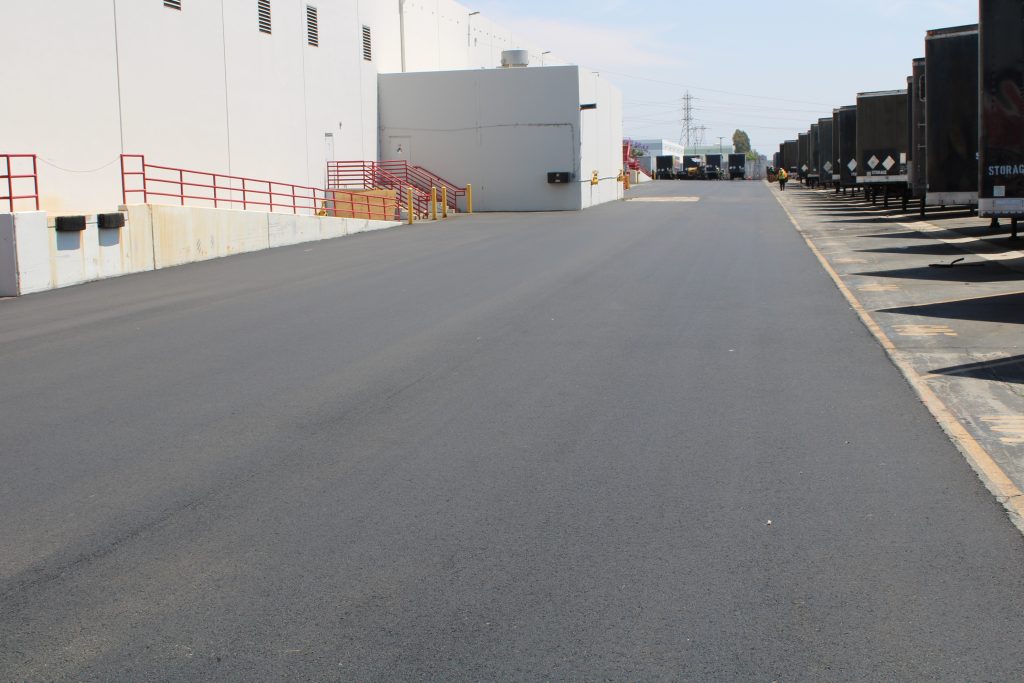
The country specialty: barn aisles and aprons, wash racks, feed-area pads, trailer parking pads, and gate and garage aprons where long driveways end — each designed for its real users: traction finishes specified for hooves and wet boots, gentle drainage that moves water without unnerving footing, edges and transitions detailed where concrete meets dirt, arena sand, and asphalt, and thickness honest for the gooseneck that parks on it.
Commercial, Campus & ADA Concrete
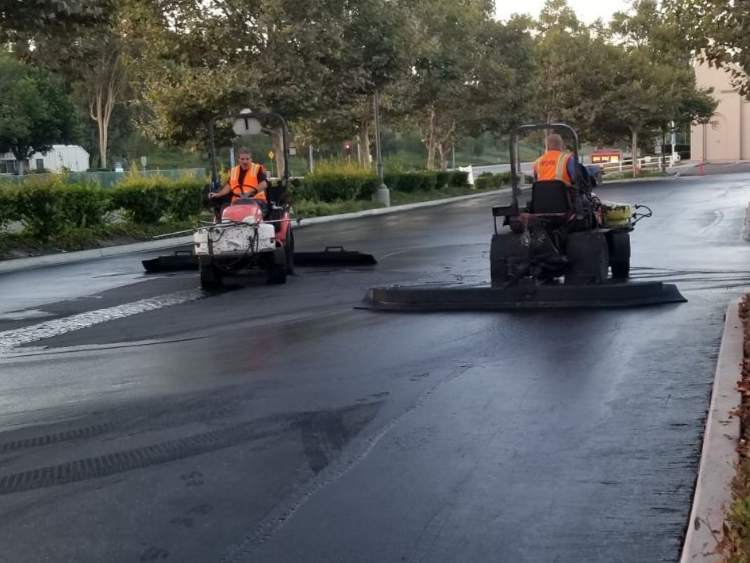
The business park and corridor standard: dumpster pads sized to the refuse truck’s full path, dock aprons and equipment pads specified to their freight, walkway flatwork, and ADA ramps and accessible routes built to current federal and California standards — every load-bearing element with its design load stated on the proposal, because “concrete pad” without a number is a guess with a price tag.
Repair, Replacement & Right-of-Way Work
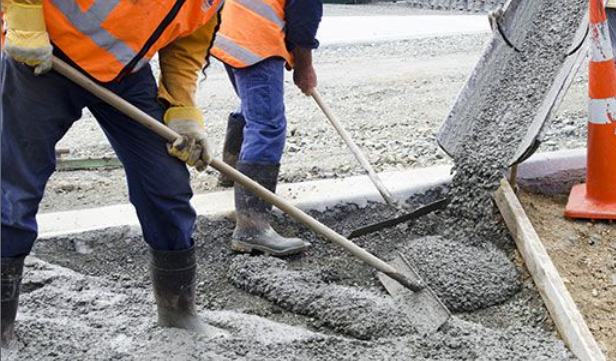
Diagnosis-first repair of cracked, settled, and spalled flatwork — cause identified before concrete is quoted, since replacing panels over unfixed base or drainage schedules the sequel — plus driveway approaches and curb work in city right-of-way, permitted through Poway’s Development Services and built to city standards as contractor scope.
Get Your Free Concrete Installation and Repair Proposal
From a single dumpster pad to a full site’s flatwork, our estimators will scope the work with the specs in writing. Call (951) 739-9200 or submit the form below.
Traction Is a Specification: How Concrete Finish Becomes Safety Engineering
Here’s the concrete decision almost nobody discusses and every Poway ranch owner lives with daily: the finish — the surface texture troweled or dragged into fresh concrete — is a safety specification, and choosing it wrong builds a hazard into the property for thirty years. The menu runs from slick to aggressive. A steel-troweled smooth finish belongs indoors and nowhere near animals or slopes: wet, it approaches skating rink. A broom finish — the fine parallel ridging dragged across the surface — is the standard outdoor answer, giving boots and paws reliable grip and hooves a reasonable one. For the demanding cases — wash racks where water runs constantly, barn aisles where a slip means a injured animal, sloped aprons where gravity joins the problem — the spec escalates: heavy broom or grooved finishes that give a shod hoof genuine purchase, specified deeper where the surface stays wet, and oriented across the direction of travel so the grip works against the slide. Slope interacts with all of it: the same finish that’s safe on flat ground can be marginal on a graded apron, which is why finish and grade get chosen together, not separately. And one honest trade-off completes the education: aggressive textures grip better and clean harder — manure and mud hold in deep grooves — so the right answer varies by zone even on one property: heavy texture in the wash rack, standard broom on the aisle, and the balance stated per pour on the proposal. If a concrete bid for animal areas doesn’t name its finishes, the crew is planning to make that safety decision with whatever’s on the truck.
The Wash Rack Done Right: Water, Footing, and a Surface That Lasts
A wash rack is the hardest-working concrete on an equestrian property — soaked daily, stood on by animals that weigh half a ton per pair of legs, scrubbed, and expected to stay safe for decades — and it’s a small pour that rewards real design. The water plan comes first: enough slope to clear water steadily (standing water breeds algae, and algae on concrete is the slip hazard that finds you eventually) but gentle enough that animals stand square and relaxed — a graded balance, typically pitched to a drain or a designed discharge edge, with the runoff routed somewhere legitimate rather than into the neighbor’s paddock or against the barn’s foundation. The footing plan is the finish discussion above, applied at maximum: heavy texture where the water lives, because wet concrete plus soap is the property’s slickest condition. The durability plan is what keeps the rack from aging badly: proper thickness for the traffic (a rack that doubles as trailer turnaround carries trailer loads), curing done patiently so the surface that takes decades of scrubbing starts at full strength, and joints placed so the inevitable cracks land where they’re planned instead of wandering through the standing zone. Industry guidance from the American Concrete Institute codifies the finishing and curing practice this work leans on; the ranch translation is simpler — a wash rack is a small slab with three jobs, and a bid that prices it like a patio has read one of them.
Why Poway Property Owners Choose United Paving Co.
Licensed California Contractor
verify our license anytime through the CSLB license check.
Over 25 years in the asphalt and concrete industry
Serving properties from Los Angeles through San Diego County
Active members of the property-management community.
BOMA, IREM, CAI, ICSC, AGC, and more.
Materials and Methods
Free on-site written estimates
We work throughout Poway — 92064 — including the South Poway Business Park and Scripps Poway Parkway corridor, the Poway Road commercial corridor, Old Poway, Green Valley, Garden Road, Rancho Arbolitos, StoneRidge, Bridlewood, and the rural and equestrian neighborhoods of the north and east.
Where the Driveway Ends: Aprons, Gate Pads, and the Concrete That Takes the Torque
Long rural driveways concentrate their hardest concrete duty at their endpoints, and those small pours punch above their square footage. Garage and barn aprons live at the transition where vehicles arrive, turn, and brake — torque and steering loads that ordinary flatwork shrugs off in a suburb but that compound on Poway’s sloped approaches, where an apron may also be holding a grade transition and shedding the driveway’s water past the structure instead of into it. Gate pads take a duty nobody prices until it fails: every vehicle entering the property stops there, often on a slope, often turning — and on properties with electric gates, the pad also hosts the hardware whose alignment a settling slab slowly ruins. Trailer pads are standing-load duty at its most local: landing gear and axles parked for days in the same spots, arguing for honest thickness and, where the gooseneck always drops in the same place, reinforcement positioned for the point load. The design thread through all three: these pours interact with the driveway’s grade and drainage, so they’re detailed with the asphalt plan, not after it — the apron that ignores the driveway’s water becomes its catch basin, and the transition joint between concrete and asphalt gets built supported and sealed, because an unsupported seam at the property’s highest-traffic point is the first crack you’ll meet every morning (the paving side of that story lives at [Asphalt Paving in Poway] — internal link).
Poway Concrete Installation and Repair - FAQs
What finish should a barn aisle actually have?
A genuine broom finish at minimum — animals need texture their hooves can trust, and smooth-troweled aisles are slip incidents on a schedule. Where aisles stay wet or slope, the spec escalates to heavy broom or grooving, oriented across travel. The finish belongs on the proposal by name, not left to the crew's habit.
Our wash rack ponds water and grows algae. Can it be fixed without full replacement?
Sometimes — shallow ponding can respond to surface grinding or a drainage retrofit at the discharge edge — but a rack whose grade was poured wrong usually earns its replacement, done right: proper pitch, heavy texture, routed discharge. The algae isn't the problem; it's the symptom marking where the water was told to stay.
How thick does a trailer pad need to be?
Thicker than a patio and honest for the trailer: parked landing-gear and axle loads set the spec, with reinforcement placed for the point loads where the same rig drops in the same spot. It's a small pour — the upgrade from "patio spec" to "trailer spec" costs little and lasts the ownership.
Can you pour concrete around our animals' schedule?
Yes — it's a Poway habit: staging away from stalls and turnouts, loud phases against your routine, cure areas fenced so curious noses stay off green concrete, and the calendar built around feedings, turnout, and the trailer's comings and goings. Tell us the property's rhythm; the pour fits inside it.
Why did our gate pad crack and start misaligning the gate?
Usually settlement — a pad poured on unprepared ground at a spot that takes every entry's stopping load, often on grade. The rebuild that lasts compacts the base properly, sizes the slab to the duty, and remounts the hardware on concrete that's done moving.
Do you handle the standard commercial work too, or just the ranch specialty?
Both, at the same written-spec standard: business park pads, dock aprons, walkway flatwork, and ADA ramps and routes across the corridor — with design loads stated per element, because the campus deserves the same honesty as the barn.
Areas We Serve NEAR Poway
We work throughout Poway — 92064 — including the South Poway Business Park and Scripps Poway Parkway corridor, the Poway Road commercial corridor, Old Poway, Green Valley, Garden Road, Rancho Arbolitos, StoneRidge, Bridlewood, and the rural and equestrian neighborhoods of the north and east. See our concrete pages for Escondido, San Marcos, and Miramar.