
Concrete installation and repair in miramar, CA
Concrete Installation and Repair — The Petroleum-Proof Half of the Corridor's Pavement
Our Miramar sealing page explains why the corridor’s fluids slowly dissolve asphalt. This page is the other half of that story: concrete doesn’t care. Portland cement concrete is mineral, not petroleum — oil, diesel, and hydraulic fluid stain it but can’t return it to liquid — which is why the smartest properties on the auto row and in the fleet yards put concrete exactly where the chemistry and the cycle counts are worst. United Paving Co provides concrete installation and repair in Miramar, CA on that logic: service-bay aprons, fluid-zone slabs, fleet wear points, and the corridor’s site concrete, designed for the duty that asphalt keeps losing.
Our Concrete Services in Miramar
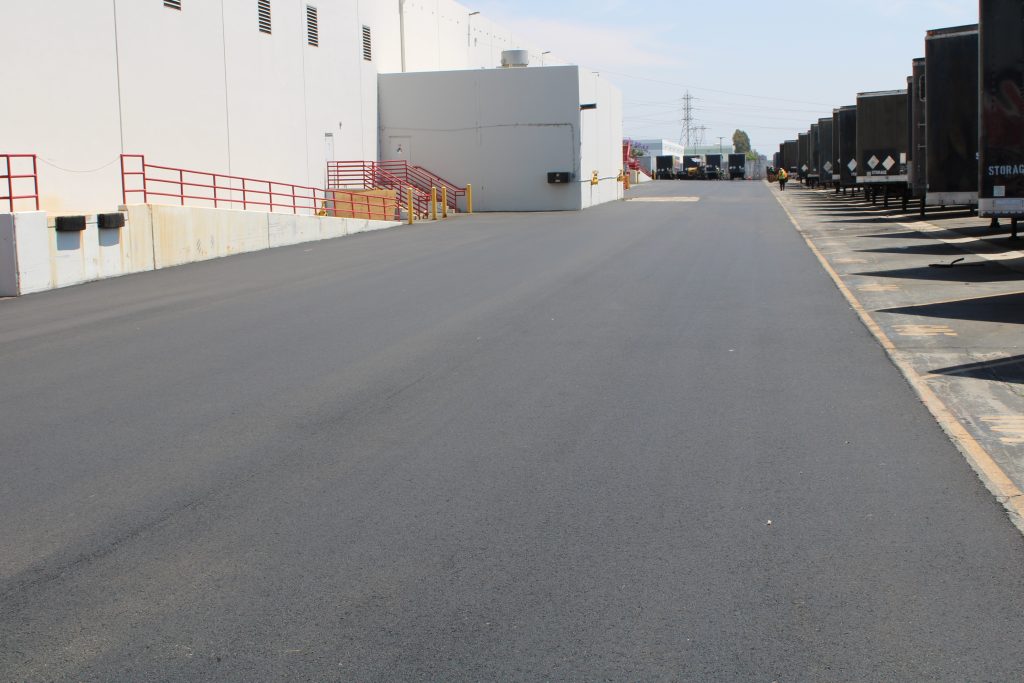
Service-Bay Aprons & Fluid-Zone Slabs
The corridor’s signature conversion: the apron where vehicles queue, drip, and pivot at every bay door — asphalt’s worst assignment and concrete’s natural one — built with the thickness, reinforcement, and joint layout the bay’s daily cycle count demands, and finished for degreaser-and-pressure-wash cleanability that asphalt never offers.
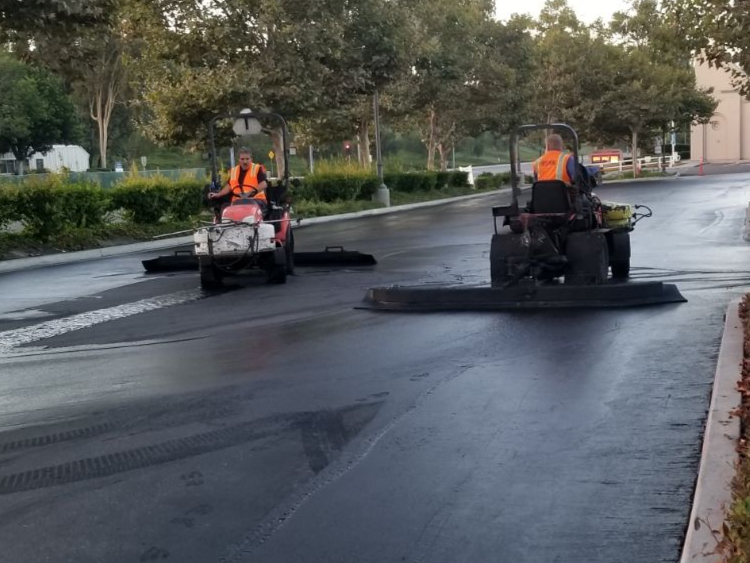
Fleet Wear Points: Gates, Scales, Dollies & Fuel Islands
Concrete at the spots where fleet operations concentrate punishment — gate throats and scale approaches taking every cycle, trailer dolly pads carrying tons on square inches, fuel-island surrounds where spill exposure is a design assumption rather than an accident — each specified to its equipment and stated in writing on the proposal.
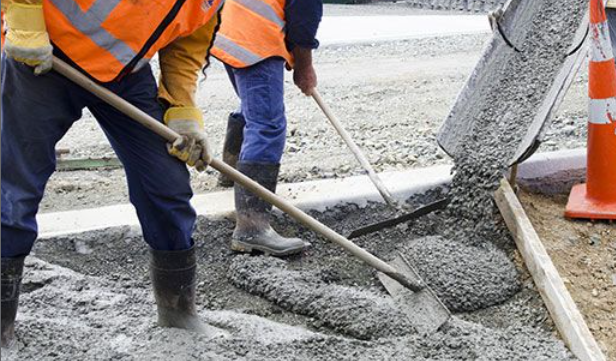
Site Concrete, Repair & ROW Work
Dumpster pads sized for the refuse truck’s full path, equipment pads, walkways, and diagnosis-first repair of the corridor’s existing concrete — plus driveway approaches and curb work in the public right-of-way, built to the San Diego Regional Standard Drawings under the city’s permit system.
Get Your Free Concrete Installation and Repair Proposal
From a single dumpster pad to a full site’s flatwork, our estimators will scope the work with the specs in writing. Call (951) 739-9200 or submit the form below.
The Graduation Decision: When a Fluid Zone Earns Concrete
Every Miramar property with drip zones eventually faces the same question, usually while writing the third patch check for the same square of asphalt: at what point does this spot stop being an asphalt-maintenance problem and become a concrete conversion? Our sealing page covers the chemistry that drives the cycle — petroleum softening petroleum (see [Seal Coating in Miramar]; this is the arithmetic that ends it. A zone graduates to concrete when three lines cross.
- First, the patch-cycle math: total what the spot has cost across its repair history — patches, sealer consumed defending it, the disruption of each visit — and project it forward; when the running subscription approaches the one-time conversion cost, the decision has made itself, and on heavy drip zones that crossover typically arrives within a few cycles.
- Second, the exposure verdict: a zone where the fluid source is permanent — the head of every service queue, the parts-wash threshold, the fuel-island surround, the lift-gate position where the same trailer weeps daily — will never stop attacking asphalt, which makes every future patch a scheduled loss; intermittent or fixable exposure (one leaky vehicle, a relocatable operation) can argue for staying with asphalt plus housekeeping.
- Third, the operational bonus that tips close calls: concrete in these zones isn’t just chemically indifferent — it’s cleanable, taking the degreaser-and-pressure-wash regimen that shop housekeeping actually uses, holding brighter reflectance in work areas, and giving fork and jack wheels a rolling surface asphalt never matches. The honest cost of graduating is time-to-strength — heavy-duty use waits on cure, which is why conversions here are phased bay-by-bay or scheduled across shutdown weekends — and the honest scope is smaller than owners fear: the graduation zone is the drip map’s hot spots, not the lot. Asphalt keeps the fields and lanes where its economics win; concrete takes the squares where chemistry has been winning against it all along.
Joints Are the Steering Wheel: How High-Cycle Concrete Is Told Where to Crack
The least understood fact in concrete: it will crack — shrinkage during curing and flexure under load guarantee it — and good design doesn’t prevent cracks, it decides where they go. Joints are that decision: sawcut control joints create deliberate weak lines so shrinkage cracks form there, straight and sealed, instead of wandering across the panel; isolation joints let slabs move independently of buildings and fixed structures; and on the corridor’s high-cycle crossings — gate throats, bay approaches where thousands of axles cross the same lines daily — joint design graduates to load transfer: dowels and thickened edges that carry each wheel across the joint without letting panel edges deflect separately, because differential edge movement under repeated axles is how joints pump, chip, and fail. This is where corridor concrete bids separate: a proposal that shows a joint layout, states its spacing logic, and specifies load transfer at the trafficked crossings has engaged the actual problem; one that quotes square footage with “joints as needed” has scheduled your first repair. Industry design guidance from the American Concrete Pavement Association standardizes this practice; our proposals put your site’s version of it on paper.
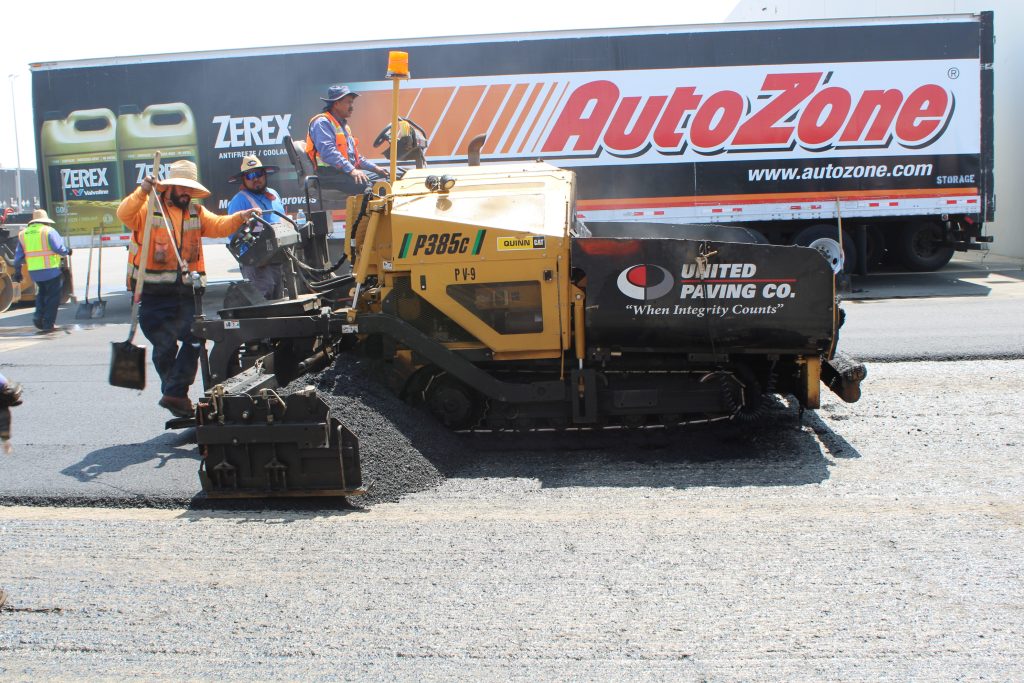
Why Miramar Property Owners Choose United Paving Co.
Licensed California Contractor
verify our license anytime through the CSLB license check.
Over 25 years in the asphalt and concrete industry
Serving properties from Los Angeles through San Diego County
Active members of the property-management community.
BOMA, IREM, CAI, ICSC, AGC, and more.
Materials and Methods
Free on-site written estimates
Throughout Miramar — 92126 (the Miramar Road industrial corridor and adjacent Mira Mesa), 92121 (the western industrial blocks toward Sorrento Valley and Sorrento Mesa), and 92145 (MCAS Miramar and its surrounding federal lands).
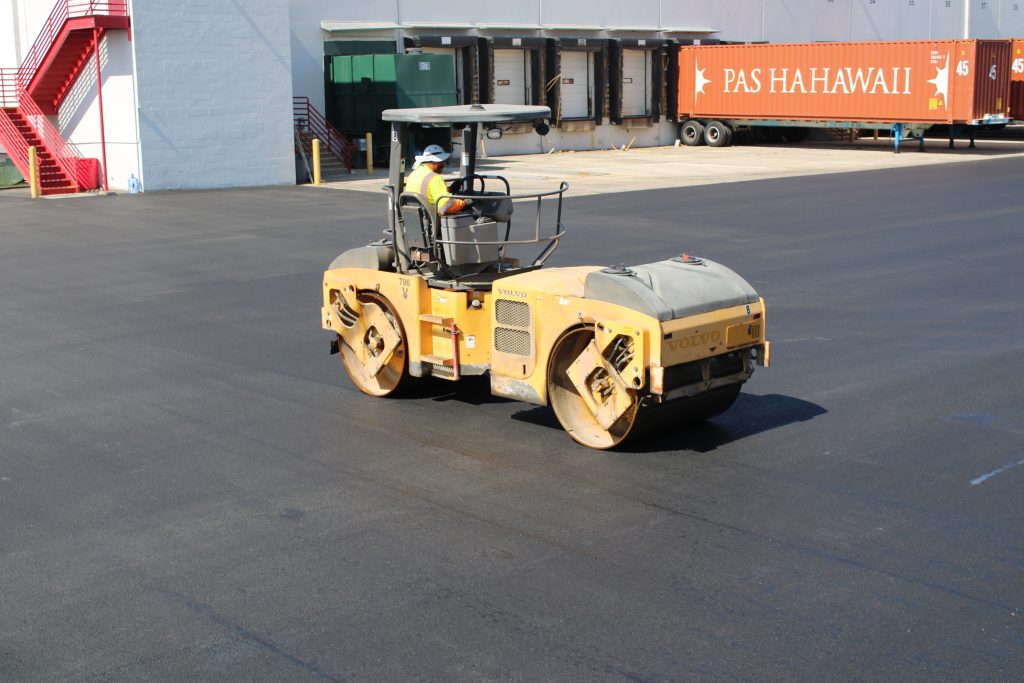
The San Diego Machine, Concrete Edition
Concrete touching the public right-of-way — approaches, curb and gutter, sidewalk connections — runs through the City of San Diego’s Right-of-Way Permit system: plans to the Regional Standard Drawings, standard improvements streamlined under Information Bulletin 165 (with its Rapid Review lane for qualifying smaller scopes), and the Traffic Control Permit choreography — five-working-day agency notifications, 72-hour signage — wherever the work touches Miramar Road’s traffic. Contractor scope, all of it; the corridor’s permit machine is our home field.
Miramar Concrete Installation and Repair - FAQs
Our bay aprons are asphalt and we re-patch them constantly. Is conversion really worth it?
Run the arithmetic you're already living: patch frequency times patch cost times disruption, against one concrete apron built to the bay's cycle count. On drip-and-pivot zones the conversion typically pays inside a few patch cycles — and ends the subscription rather than renewing it.
Oil stains our existing concrete badly. Does that mean it's failing?
Usually no — staining is cosmetic on sound concrete; the mineral binder isn't dissolving the way asphalt does. Degreasing and resealing handle appearance. The failure signs worth acting on are different: joint spalling, edge chipping at trafficked crossings, and panels rocking or stepping under load.
How do we keep bays running during an apron replacement?
Bay-by-bay: one apron sawcut, excavated, poured, and cured while neighbors absorb the traffic — with high-early-strength mixes and weekend pours compressing the closure where a bay's revenue argues for it. The sequencing plan comes with the proposal, not after it.
What should a fuel-island surround be built to?
Assume the spill: reinforced concrete sized to the vehicles it serves, surfaces and joints sealed against penetration, and grading that keeps any release inside the containment path your compliance setup expects — coordinated with, not improvised around, your fuel-system requirements.
Why did the joints on our gate crossing chip and unravel first?
Because that's where the corridor's cycles concentrate and, most often, where load transfer was missing — un-doweled panel edges deflecting separately under every axle until the joint pumped itself apart. The rebuild that lasts puts dowels and edge thickness at exactly those crossings.
Who handles the city side if our new approach touches Miramar Road?
We do — permit track selection, Regional-Standard plans, the notification clock, and inspections, run in parallel with construction planning so San Diego's timeline and yours overlap instead of stacking.
Areas We Serve NEAR Miramar
We work throughout the Miramar community of San Diego — 92126 (the Miramar Road industrial corridor and adjacent Mira Mesa) and 92121 (the western industrial blocks toward Sorrento Valley and Sorrento Mesa) — plus the neighboring Kearny Mesa and Scripps Ranch business areas. See our concrete pages for Otay Mesa, Carlsbad, and Vista.