
Concrete installation and repair in San Marcos, CA
Concrete Contractor — Engineered for the Loads It Actually Carries
Where asphalt takes the traffic, concrete takes the punishment. Dumpster pads crushed twice a week by refuse trucks, loading docks at the Twin Oaks Valley industrial parks, ADA ramps at retail centers along San Marcos Boulevard, driveway approaches connecting private lots to city streets — these are the highest-stress points on any property, and they’re where cheap concrete fails first. United Paving Co installs and repairs commercial and residential concrete throughout San Marcos, engineered for the loads it will actually carry.
Our Concrete Services in San Marcos
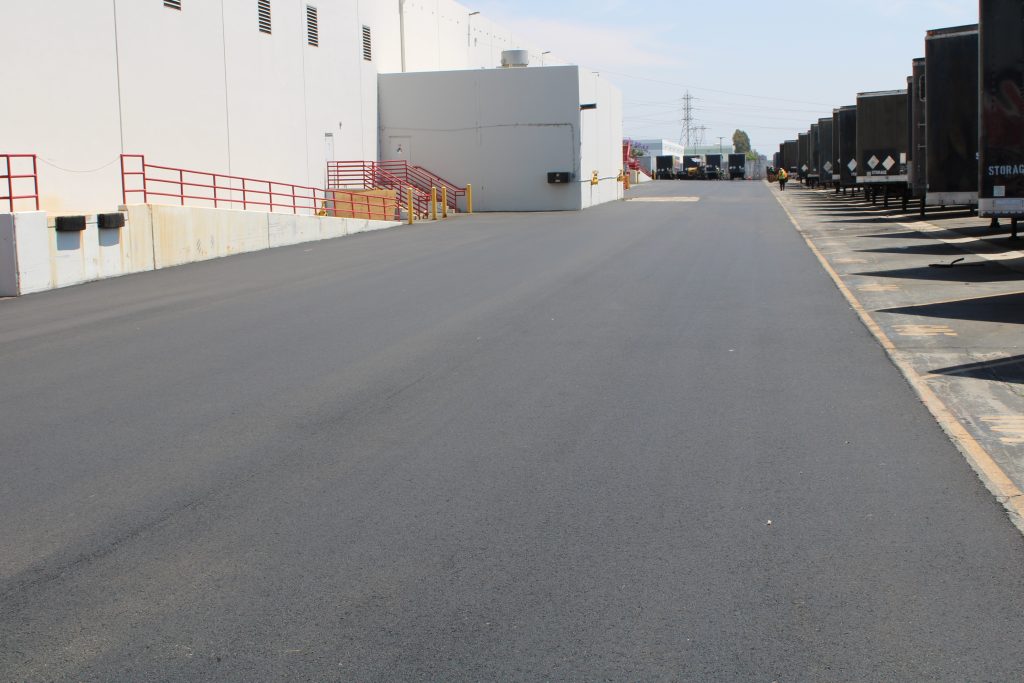
New Concrete Installation
Dumpster enclosure pads, loading docks and truck aprons, drive approaches, equipment pads, walkway and plaza flatwork, and ADA-compliant ramps. Each installation is specified for its real use — a pad that carries a 50,000-pound refuse truck needs different thickness, reinforcement, and joint design than a garden path, and we put those specs in writing on every proposal.
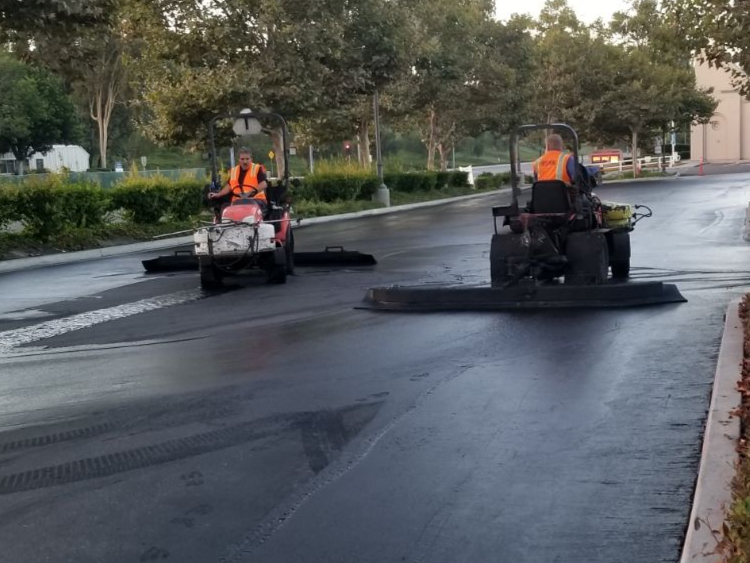
Concrete Repair & Replacement
Cracked panels, settled or heaved sections, spalled surfaces, and failed joints. We diagnose the cause before prescribing the fix — because concrete that failed from a subgrade problem will fail again if you only replace what’s visible on top.
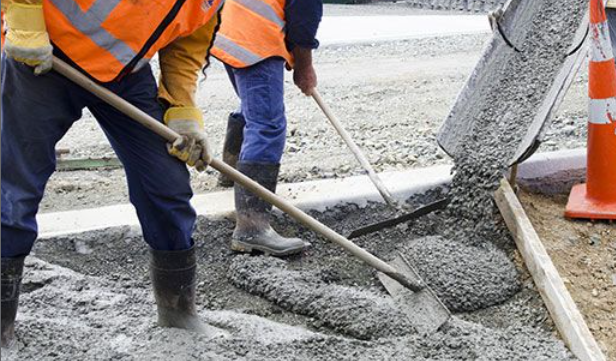
Heavy-Duty & Specialty Work
United Paving Co takes on large-scale concrete that many contractors won’t: 24-hour industrial sites, phased pours around live operations, and facilities with strict safety clearance requirements. If your San Marcos site runs around the clock, we build around your schedule, not ours.
Get Your Free Concrete Installation and Repair Proposal
From a single dumpster pad to a full site’s flatwork, our estimators will scope the work with the specs in writing. Call (951) 739-9200 or submit the form below.
Why San Marcos Property Owners Choose United Paving Co.
Licensed California Contractor
verify our license anytime through the CSLB license check.
Over 25 years in the asphalt and concrete industry
Serving properties from Los Angeles through San Diego County
Active members of the property-management community.
BOMA, IREM, CAI, ICSC, AGC, and more.
Materials and Methods
Free on-site written estimates
Throughout San Marcos — 92069,
92078, 92079
Concrete or Asphalt? Choosing the Right Material
Most San Marcos properties need both, in the right places. Concrete wins at point loads and turning stress: dumpster pads, dock aprons, approaches, and anywhere heavy vehicles stop, start, and pivot — asphalt in those zones ruts and shoves within a few summers, especially in North County heat. Asphalt wins on large-area economics, faster installation, and easier future maintenance for parking fields and streets (see Asphalt Paving in San Marcos). The smart layout puts concrete at the stress points and asphalt across the field — and because United Paving self-performs both, our recommendation isn’t biased by which crew we happen to have.
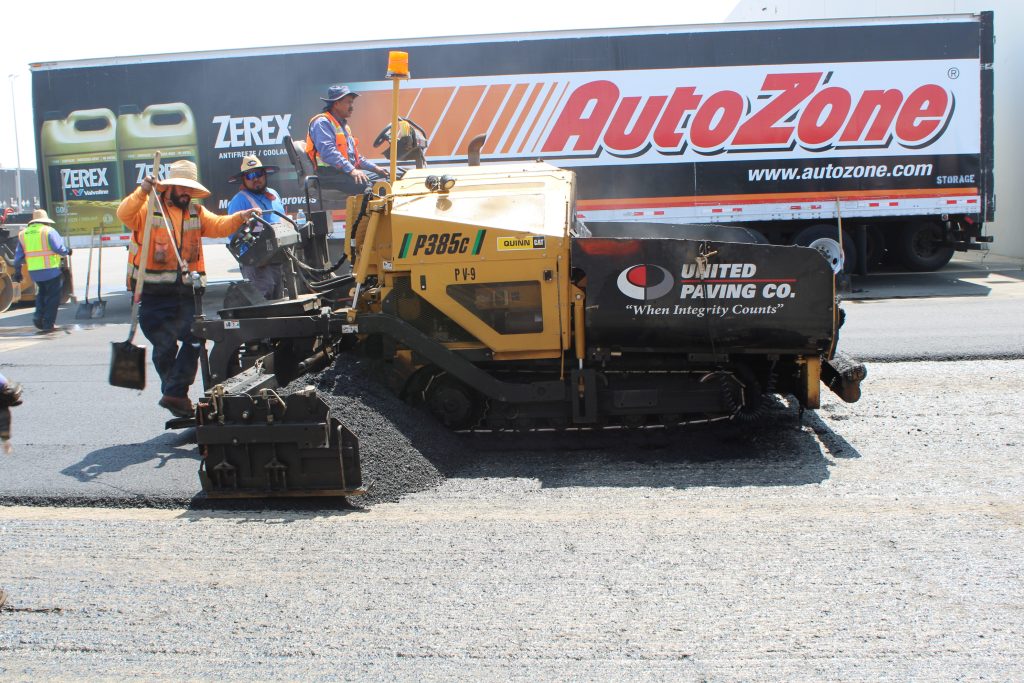
Permits & Right-of-Way Concrete Work in San Marcos
Concrete work regularly crosses into the public right-of-way — driveway approaches, curb cuts, and sidewalk connections all require a right-of-way permit from the City of San Marcos Land Development Division, which publishes its requirements through the city’s permit resources. ADA-related site work also has to meet current accessibility standards (see Striping & ADA Compliance in San Marcos). We handle permits, inspections, and compliance documentation as part of the scope.
Why Concrete Fails in San Marcos — It's Usually the Ground, Not the Concrete.
Most local concrete failures start below the slab. Parts of San Marcos sit on clay-influenced soils that expand during the saturated December–March storm season and shrink through the long dry months. That seasonal movement lifts, drops, and twists rigid concrete panels until they crack — no surface product prevents it. Decomposed granite areas drain better but can erode under slabs where water flow is uncontrolled.
Building concrete that survives here means engineering for movement and water:
- Subgrade preparation and compaction matched to the soil actually on site
- Correct thickness and reinforcement for the design load — guidance long standardized by the American Concrete Institute
- Joint design and spacing that tells the concrete where to crack, instead of letting it decide
- Drainage detailing so water moves off and away from slabs rather than under them
This is also why the repair conversation starts with “why did it fail?” A panel replaced without fixing a subgrade or drainage cause is a repeat customer we’d rather not create.
Built for San Marcos Conditions
Intense UV Exposure
North County averages well over 250 sunny days a year. Ultraviolet radiation oxidizes the asphalt binder, turning pavement gray, brittle, and crack-prone over time. Quality mix design slows this; a seal coating program protects against it long-term.
Variable Soils
From the granite-derived soils of the Twin Oaks Valley to clay pockets elsewhere in the city, subgrade conditions change street to street. Our base preparation is specified to the soil actually under your project — not a one-size-fits-all number. From the granite-derived soils of the Twin Oaks Valley to clay pockets elsewhere in the city, subgrade conditions change street to street. Our base preparation is specified to the soil actually under your project — not a one-size-fits-all number.
Concentrated Winter Rainfall
Most local rain falls December through March, often in short, intense storms. Water is asphalt’s worst enemy: it infiltrates cracks, saturates the base, and produces the alligatored, sunken pavement visible in aging lots across the county. Grading and drainage design are built into every project we pave.
San Marcos Concrete Installation and Repair - FAQs
How thick should a commercial concrete pad be?
It depends entirely on load. Sidewalks and walkways are commonly around 4 inches; dumpster pads and truck-trafficked aprons typically run 6–8 inches with reinforcement, over a properly compacted base. Any bid that quotes a pad without stating thickness, reinforcement, and base prep isn't a comparable bid.
Why did my concrete crack, and can it be repaired?
Hairline cracks within control joints are normal behavior. Wide, offset, or multiplying cracks usually signal subgrade movement or an under-designed slab. Some panels can be individually replaced; the key is diagnosing the cause first so the new panel doesn't inherit the old problem.
How long before new concrete can take traffic in San Marcos?
Foot traffic typically within 24–48 hours; vehicles around 7 days; heavy trucks closer to the 28-day design strength mark. Our mild climate is friendly to curing, though summer pours need attention to moisture retention — which is part of our finishing process.
Do I need a permit to replace my driveway approach?
If it touches the street, curb, or public sidewalk — yes, a City of San Marcos right-of-way permit. The portion entirely on private property generally doesn't. We determine the split and pull what's required.
Should my dumpster pad be concrete even if the lot is asphalt?
Yes, almost always. Refuse trucks concentrate enormous weight through small contact points exactly where they stop — asphalt there deforms within a couple of hot summers. A concrete pad sized for the truck's full approach path is the standard fix, and one of the highest-value small projects on any commercial site.
Can you pour around an operating business?
Yes — phased pours, off-hours scheduling, and maintained access routes are standard for our occupied-site work in retail centers and 24-hour industrial facilities.