
Asphalt Paving in San Marcos, Ca
Asphalt Paving — Specified to the Soil Beneath It
From Restaurant Row to the business parks off Twin Oaks Valley Road, San Marcos runs on well-built pavement. United Paving Co delivers complete asphalt paving services throughout San Marcos — new asphalt construction, full removal and replacement, and precision fine grading — for commercial properties, HOAs, industrial facilities, and homeowners across North San Diego County.
This page covers more than what we do. It explains how asphalt paving actually works, what drives cost in San Marcos specifically, when city permits apply, and how to tell whether your pavement needs repair or full replacement — so you can make an informed decision whether you hire us or not.
Our Asphalt Paving Services In San Marcos
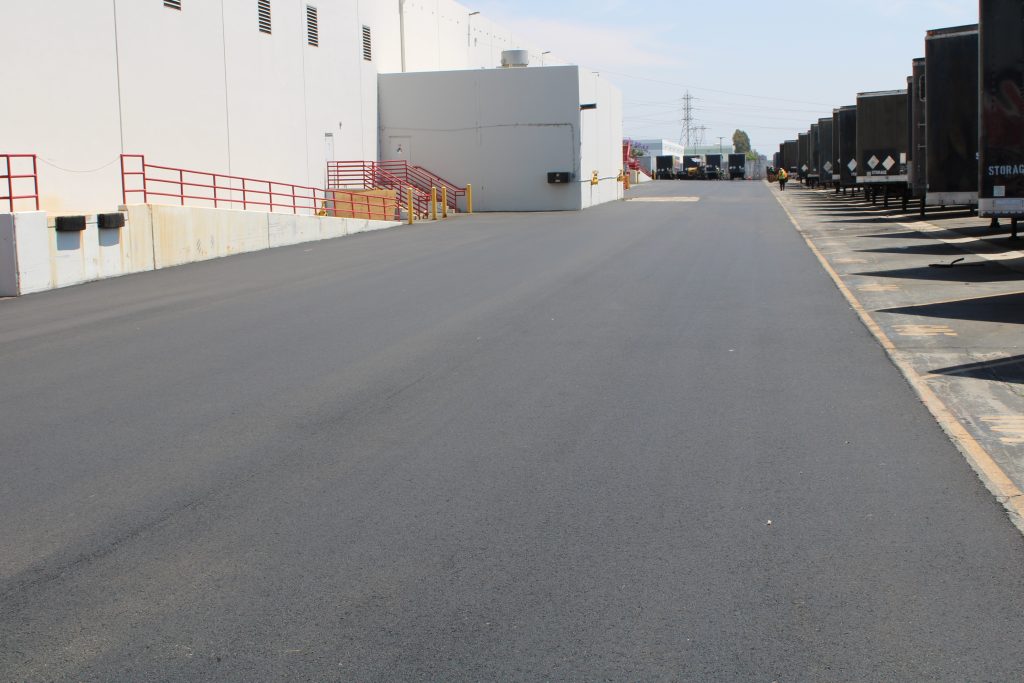
New Asphalt Construction
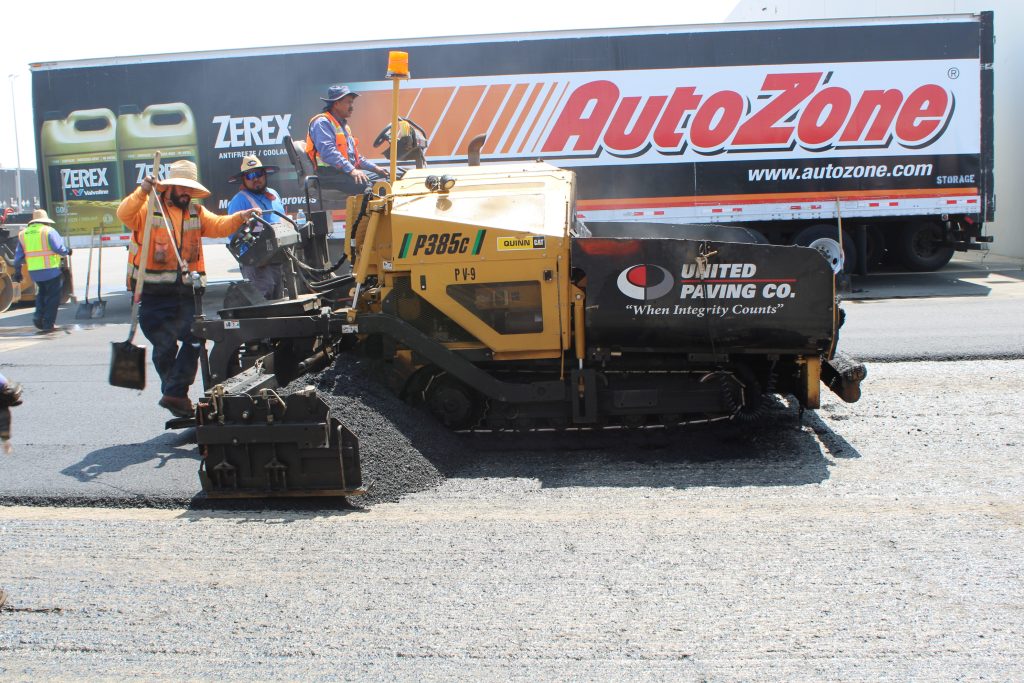
Ground-up paving for new developments, commercial parking lots, private roads, and driveways. We handle subgrade preparation, aggregate base installation, and hot-mix asphalt placement compacted to National Asphalt Pavement Association standards — because the foundation work you never see determines whether pavement lasts 8 years or 25. Ask about fiber-reinforced (Forti-Fi) asphalt for high-stress and heavy-traffic areas.
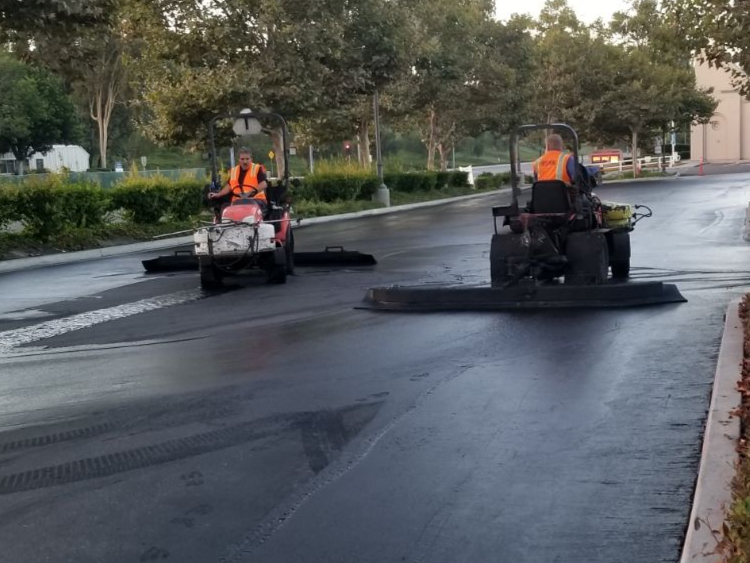
Asphalt Removal & Replacement
When pavement is past the point of repair — alligator cracking across large areas, base failure, severe rutting — patching is throwing money away. We excavate the failed asphalt and compromised base material, rebuild the foundation, and install new hot-mix asphalt. Full-depth reconstruction is the permanent fix for pavement that has reached the end of its service life.
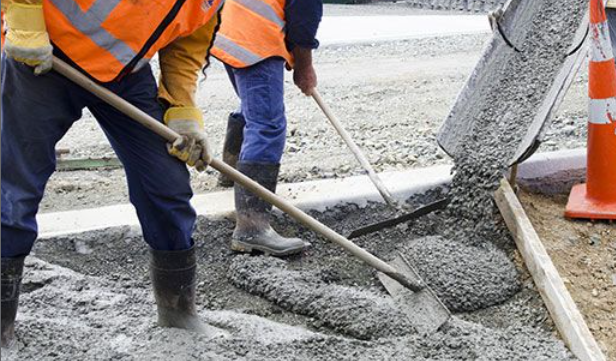
Fine Grading
Proper drainage starts before the first ton of asphalt is placed. Fine grading establishes precise slopes and elevations so water flows to drainage structures instead of pooling on your pavement. In San Marcos, where most of the year’s rain arrives in concentrated winter storms, grading is the difference between a lot that sheds water and one that grows potholes every February.
Get Your Free Asphalt Paving Proposal
Our estimating and project management team will develop the right scope of work for your budget, performance goals, and visual expectations. Estimates and recommendations are free. Call (951) 739-9200 or submit the form below.
Built for San Marcos Conditions
Intense UV Exposure
North County averages well over 250 sunny days a year. Ultraviolet radiation oxidizes the asphalt binder, turning pavement gray, brittle, and crack-prone over time. Quality mix design slows this; a seal coating program protects against it long-term.
Variable Soils
From the granite-derived soils of the Twin Oaks Valley to clay pockets elsewhere in the city, subgrade conditions change street to street. Our base preparation is specified to the soil actually under your project — not a one-size-fits-all number.From the granite-derived soils of the Twin Oaks Valley to clay pockets elsewhere in the city, subgrade conditions change street to street. Our base preparation is specified to the soil actually under your project — not a one-size-fits-all number.
Concentrated Winter Rainfall
Most local rain falls December through March, often in short, intense storms. Water is asphalt’s worst enemy: it infiltrates cracks, saturates the base, and produces the alligatored, sunken pavement visible in aging lots across the county. Grading and drainage design are built into every project we pave.
How a Quality Asphalt Paving Project Works, Step by Step
Most pavement failures trace back to shortcuts in the first three steps below — the ones buried underground when the job is “done.” Here’s the full process, so you know what to expect and what to ask any contractor bidding your project:
1. Site Evaluation & Soil Assessment
San Marcos sits on a mix of decomposed granite, sandy loam, and clay-heavy soils depending on where you are — and each behaves differently under load. Clay expands when saturated and shrinks when dry, flexing whatever sits on top of it. A contractor who quotes your project without evaluating the subgrade is guessing with your money.
2. Demolition & Excavation (for replacement projects)
Failed asphalt and contaminated base are removed and hauled off — and old asphalt is one of America's most recycled materials, routinely reprocessed into new pavement, as documented by the Asphalt Institute. We excavate to the depth the new pavement section requires, not just deep enough to hide the old problems.
3. Subgrade Preparation & Aggregate Base
The subgrade is compacted and proof-rolled to expose soft spots, which are dug out and rebuilt. Then Class II aggregate base is placed and compacted in lifts. This layer carries the structural load; the asphalt on top mostly protects it and provides the driving surface.
4. Fine Grading for Drainage
Surfaces are graded to a minimum slope (typically 1–2%) toward drains, gutters, and flowlines. Standing water after a storm is the most common visible symptom of grading that was skipped or done wrong.
5. Hot-Mix Asphalt Placement
Hot-mix asphalt arrives at roughly 300°F and must be placed and compacted before it cools. Thickness depends on use: a residential driveway section differs substantially from a truck-trafficked commercial lot. This is why a bid quoting "asphalt paving" without specifying compacted thickness isn't comparable to one that does.
6. Compaction & Finishing
Rollers compact the mat to target density while it's still workable. Proper compaction is the single biggest factor in pavement durability — under-compacted asphalt lets in air and water and ages years faster.
Permits & Right-of-Way Work in San Marcos
Paving entirely on private property generally doesn’t require city permits. But any work touching the public right-of-way — driveway approaches, curb cuts, sidewalk or flowline modifications — requires a right-of-way permit from the City of San Marcos Land Development Division. Projects involving significant excavation or fill can also trigger a grading permit under the San Marcos Municipal Code; the city publishes thresholds and exemptions through its permits and licensing resources.
As your contractor, we determine which permits apply, pull them, and coordinate city inspections — before, during, and after construction. Unpermitted right-of-way work can result in stop-work orders and expensive rework, so this isn’t a step to skip.
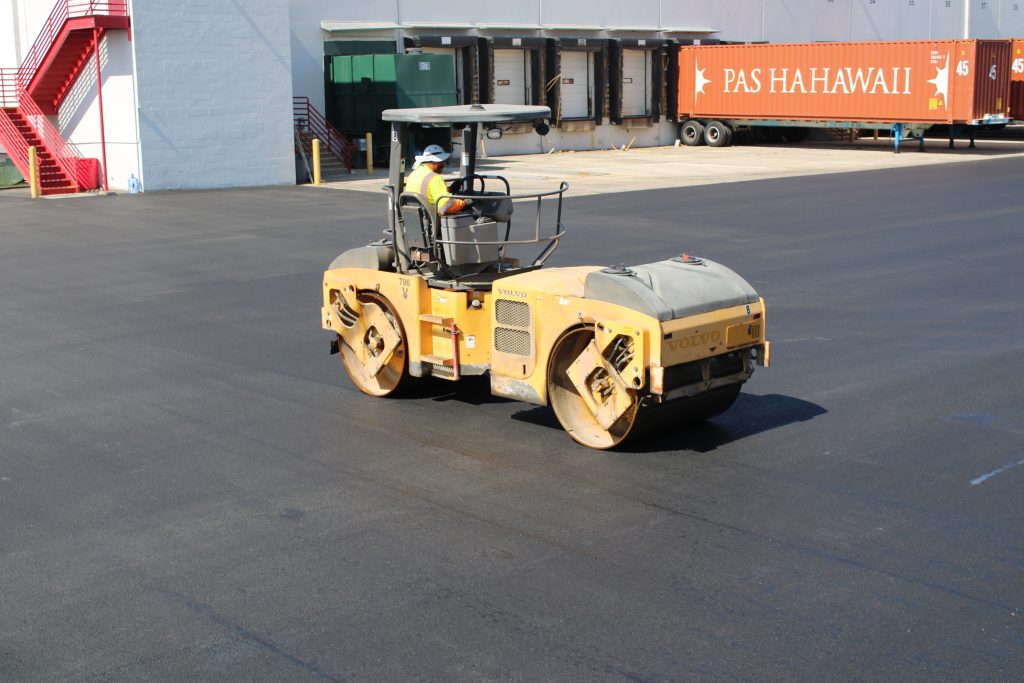
What Does Asphalt Paving Cost in San Marcos?
No honest contractor can quote a real price without seeing the site, but you should understand what moves the number:
- Existing conditions — sound base that needs an overlay vs. failed base needing full reconstruction can change cost per square foot dramatically.
- Project size — mobilization, trucking, and plant minimums mean small projects cost more per square foot than large ones.
- Pavement section — thicker asphalt and base for truck traffic costs more than a car-only driveway section.
- Drainage and grading work — correcting slopes or adding drainage structures adds scope, but skipping it guarantees premature failure.
- Access and phasing — occupied shopping centers and HOAs requiring phased work to stay open cost more than clear, empty sites.
We provide free written estimates for San Marcos properties that itemize
this scope — so you can compare bids on substance, not just the bottom
line.
Your Pavement Maintenance Timeline
| When | What | Why |
|---|---|---|
| Year 1 | First seal coat (after full cure) | Locks in binder before UV oxidation starts |
| Every 3–5 years | Re-apply seal coat | Ongoing UV and moisture protection in our high-sun climate |
| Annually (fall) | Crack sealing | Closes entry points before winter rains reach the base |
| As needed | Patching, striping refresh | Addresses isolated damage; maintains ADA compliance |
| Year 15–25+ | Overlay or reconstruction | Even well-maintained pavement eventually reaches structural end-of-life |
Why San Marcos Property Owners Choose United Paving Co.
Licensed California Contractor
verify our license anytime through the CSLB license check.
Over 25 years in the asphalt and concrete industry
Serving properties from Los Angeles through San Diego County
Active members of the property-management community.
BOMA, IREM, CAI, ICSC, AGC, and more.
Materials and Methods
Free on-site written estimates
Throughout San Marcos — 92069,
92078, 92079
Repair or Replace? An Honest Decision Guide
Repair makes sense when distress covers less than roughly 25–30% of the surface, cracks are isolated, and the pavement doesn’t flex or sink underfoot. Crack sealing, patching, and seal coating can add years of life at a fraction of replacement cost — that’s our Asphalt Repair & Maintenance in San Marcos serviceRepair makes sense when distress covers less than roughly 25–30% of the surface, cracks are isolated, and the pavement doesn’t flex or sink underfoot. Crack sealing, patching, and seal coating can add years of life at a fraction of replacement cost — that’s our Asphalt Repair & Maintenance in San Marcos service
Replacement is the right call when alligator cracking is widespread, depressions hold water, or the surface feels soft under traffic. These are symptoms of base failure, and no surface treatment fixes a failed foundation — money spent sealing over it is wasted.
We’ll tell you which one you actually need. Sometimes the honest answer is the cheapest service.
San MArcos Asphalt Paving - FAqs
Do I need a permit to pave a driveway in San Marcos?
Paving entirely on private property typically doesn't require a right-of-way permit. Any work in the public right-of-way — driveway approaches, curb cuts, sidewalk modifications — requires a permit from the City of San Marcos Land Development Division, and larger excavation can trigger a grading permit. We identify and pull required permits on every project.
How much does asphalt paving cost in San Marcos?
It depends on square footage, base condition, excavation depth, drainage scope, and site access — see the cost section above for how each factor moves the price. Removal-and-replacement runs meaningfully more per square foot than overlays because of demolition and base reconstruction. We provide free written, itemized estimates.
How long does new asphalt last in North San Diego County?
With sound base construction and routine maintenance — crack sealing plus seal coating every 3–5 years — asphalt here typically delivers 20+ years of service. Skipping maintenance in our high-UV climate can cut that lifespan roughly in half.
What's the best time of year to pave in San Marcos?
Nearly year-round. Hot-mix asphalt needs warm, dry conditions for proper compaction, and North County provides them most of the year. We schedule major projects around the December–March rain window, but spring through fall is wide open.
How long before I can drive on new asphalt?
Typically 24–72 hours for vehicle traffic depending on temperature and thickness, though full curing takes longer. New asphalt stays workable in high heat its first summer — avoid sharp power-steering turns in one spot and heavy point loads like trailer jacks during that period.
Should I repair my existing asphalt or replace it completely?
If less than about 25–30% of the surface shows distress and the base is sound, repair and seal coating make sense. Widespread alligator cracking, depressions, and soft spots mean base failure — and no surface treatment fixes a failed foundation. We give you an honest assessment either way.
What's the difference between an overlay and full replacement?
An overlay places new asphalt over the existing surface after repairs — cost-effective when the base is sound. Full replacement removes everything down to the subgrade and rebuilds. Overlaying failed pavement telegraphs the old cracks through the new surface within a couple of years, which is why we evaluate the base before recommending either.
Do you handle commercial and HOA projects in San Marcos?
Yes — commercial lots, industrial yards, HOA private streets, retail centers, and multi-family communities are a large share of our San Marcos work. We phase scheduling to keep businesses operating and residents moving