
Striping and ADA Compliance in OCEANSIDE CA
Refereeing the County's Most Contested Parking
Parking is scarce everywhere; at Oceanside’s apartment communities it’s contested — every stall claimed, every guest space negotiated, and on summer weekends near the coast, every unmarked square of private pavement discovered by someone with a beach chair. In that environment, striping stops being decoration and becomes the referee: the assigned numbers that settle the nightly dispute before it starts, the guest system that works without a manager on duty, the tow signage that makes enforcement possible, and the accessible stalls that serve the residents who depend on them. United Paving Co provides striping & ADA compliance in Oceanside, CA for the whole contest — multifamily allocation systems, beach-pressure defense, corridor and industrial marking, and compliance built to current standards.
The Allocation Problem: Striping as a Community's Parking Constitution
At a rental community, the stall map is a governing document — it allocates the property’s scarcest shared resource — and communities run smoothly or badly on how well the paint expresses the rules. The design disciplines are specific. The ratio comes first: assigned stalls, open resident stalls, and guest spaces divided honestly against the community’s real occupancy and vehicle counts — a property that assigns every stall with no guest relief exports its visitors onto neighbors and street parking; one that leaves too much open invites the strongest-parker economy the assignments existed to prevent. Numbering is a legibility system, not an afterthought: stall numbers matched to a logic residents and towing operators can both follow (unit-matched or sequential, but consistent), painted at sizes readable from a driving position at night — because the 2 AM dispute between a resident and an interloper is settled by whether the number is legible in headlights. Guest parking succeeds on placement and marking together: guest stalls positioned where visiting actually happens (near entries and amenities, not exiled to the back fence that guarantees violations), marked unmistakably as guest territory, and governed by rules the signage states plainly enough to enforce. And the re-stripe is the constitutional moment: every seal-coat cycle erases the whole system (see [Seal Coating in Oceanside] — internal link), which makes each re-striping the zero-cost opportunity to fix what the old map got wrong — rebalance the guest ratio the community outgrew, renumber the sequence that never matched the units, resize the stalls striped for 1980s sedans — and the one moment when getting every assignment restored exactly matters most, because a community re-striped with three numbers transposed spends a month in small civil wars. Our multifamily re-stripes work from the property’s assignment ledger, verified before paint and confirmed after, because at an apartment community the lines aren’t marking pavement — they’re keeping the peace.
Get Your Free Striping or ADA Compliance Proposal
One site walk gives you a mapped, priority-ranked plan for every sidewalk, curb, and flowline issue on the property. Call (951) 739-9200 or submit the form below.
Our Striping and ADA Services in Oceanside
Multifamily Parking Systems & Re-Striping
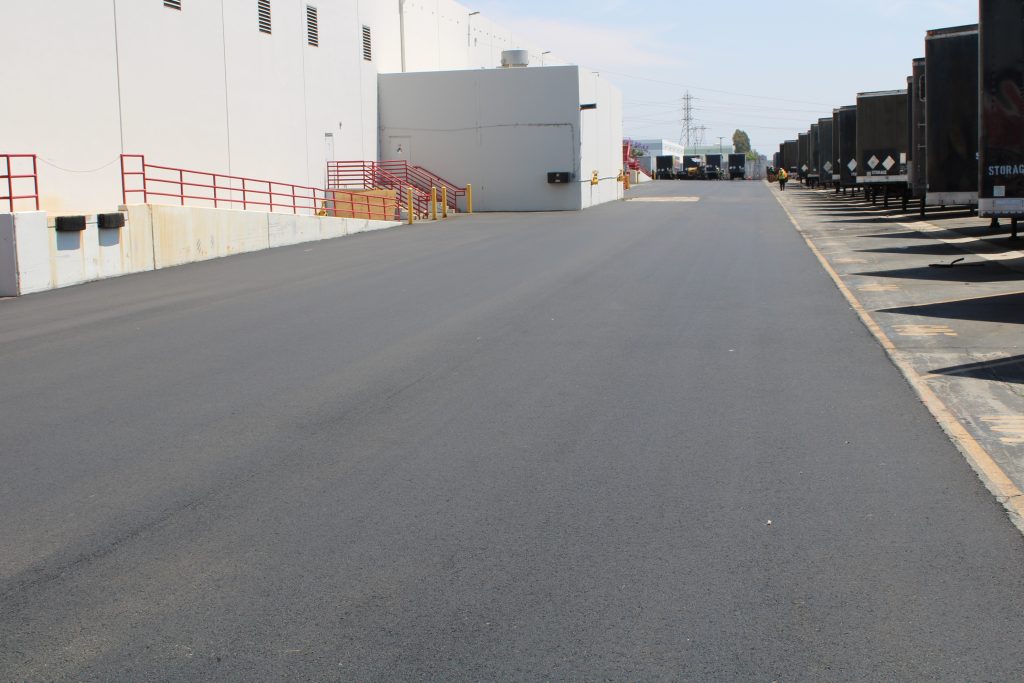
The Oceanside specialty: apartment and condo communities striped as the allocation systems they are — assigned stalls numbered legibly and logically, guest parking marked and positioned to actually work, carport and garage numbering coordinated with unit assignments, red curbs and fire lanes held to enforceable legibility, and full-lot re-striping choreographed on occupied-property protocols with every stall’s assignment restored exactly.
Commercial, Corridor & Industrial Marking
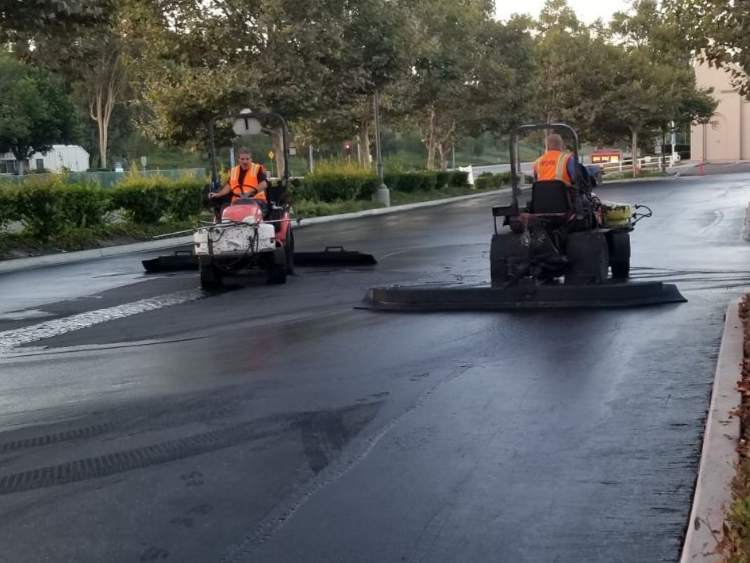
Layout and re-striping for Coast Highway and corridor retail, downtown’s revitalizing frontages, and the inland parks — turnover-tuned stall plans for the tourist blocks, zone and safety marking for the industrial properties, EV and modern-amenity stalls marked with self-enforcing rules, and presentation-grade application on schedules that respect business hours and beach season alike.

ADA Compliance, Stalls & Accessible Routes
Accessible parking scaled to current counts with van stalls and full aisles, compliant signage, slope-verified routes to offices, amenities, and units — engineered for the residential context where accessible parking is someone’s daily stall, not an occasional convenience — and coordination with our concrete crews where ramps and route corrections turn paint findings into built fixes.
The Beach-Pressure Lot: Defending Private Parking in a Destination City
Properties within walking distance of Oceanside’s coast face a parking dynamic inland cities never price: on sunny weekends, the beach’s demand overflows every public option and goes hunting through private lots — and an apartment community’s half-empty midday lot looks like free parking to someone carrying a cooler. Paint and signage are the property’s first and cheapest line of defense, and the system works only as a system. Marking that declares the territory: resident-permit and assigned-stall lots identified unmistakably at every entrance and along the stall lines — ambiguity is the interloper’s permission slip, and a lot whose private status must be inferred will be tested every Saturday. Enforcement that’s actually executable: towing from private property in California runs on signage requirements — posted notices at entrances meeting the state’s specifications for size, content, and placement — and a community whose tow signs are faded, missing, or wrongly placed has enforcement in theory only; we treat tow-authority signage as part of the marking system and keep it to spec. The fire-lane discipline doubles here: beach-pressure days are exactly when desperate parkers test red curbs, and a community’s fire lanes must stay legible enough that violations are unambiguous — for the tow operator, and for the fire marshal whose inspection doesn’t care that the paint faded. And the guest system takes the strain honestly: summer weekends are when residents’ real guests compete with the beach’s freeloaders, which argues for guest marking robust enough to enforce and — at communities that suffer chronic pressure — permit-based guest systems whose rules the striping and signage make administrable. None of this requires hostility; it requires clarity — the beach-adjacent properties that stay peaceful are the ones whose pavement answers the question before anyone has to.

Why Oceanside Property Owners Choose United Paving Co.
Licensed California Contractor
verify our license anytime through the CSLB license check.
Over 25 years in the asphalt and concrete industry
Serving properties from Los Angeles through San Diego County
Active members of the property-management community.
BOMA, IREM, CAI, ICSC, AGC, and more.
Materials and Methods
Free on-site written estimates
We work throughout Oceanside — 92054 (the coast: downtown, the harbor and pier districts, Fire Mountain, and South Oceanside), 92056 (central and east: the El Camino Real corridor, Rancho Del Oro, and the mesa neighborhoods), 92057 (the north and the San Luis Rey valley: College Boulevard corridor, Jeffries Ranch, and the route east), and 92058 (San Luis Rey and the Highway 76 corridor).
Compliance Where People Live: Accessible Parking as a Daily Reality
Accessible parking at a rental community differs from every retail version of the requirement in one defining way: it’s not serving an occasional visitor — it’s someone’s stall, used twice a day, every day, as the front end of their route home. That reality shapes the compliance work. The baseline binds: counts scaled to the lot with van-accessible stalls among them, full access aisles, compliant signage, and slope-verified surfaces, per the federal standards at ADA.gov with California’s stricter overlays — and at communities, the accessible inventory typically spans both worlds: accessible stalls in the guest system for visitors, and accessible-compliant stalls available for assignment to residents who need them, with the assignment process the property manages and the built environment we deliver making both possible. The route is the real product: an accessible stall whose path to the unit, mailbox, office, or amenity crosses unramped curbs, ponding walkways, or slopes beyond tolerance is compliant at the stall and failing at the property — which is why our compliance work walks the route with a level and pairs paint findings with the concrete fixes that complete them (see [Concrete Installation & Repair in Oceanside] . Housing rules add their own layer: residential properties sit under fair-housing and accessibility frameworks that overlap the familiar ADA requirements — reasonable-accommodation requests for parking are a live obligation at rentals, and the property positioned well is the one whose lot already contains compliant stalls to assign when the request arrives. And the maintenance leash stays shortest here: at a community, a faded accessible stall isn’t an abstract violation — it’s a resident’s daily stall losing the markings that protect it, which is why accessible marking leads every re-stripe scope and gets refreshed at first fade regardless of the lot’s broader cycle. Compliance at a rental property isn’t a plaque on the wall; it’s whether the resident who needs the stall can count on it tonight.
Oceanside Striping and ADA Compliance - FAQs
Beachgoers keep parking in our residents' stalls all summer. What actually works?
A system, not a sign: unmistakable private-lot marking at entrances and stall lines, tow-authority signage posted to the state's specifications so enforcement is executable, guest stalls governed by rules the marking makes plain, and fire lanes held legible enough that violations are unambiguous. Clarity does most of the work; enforceability does the rest.
Our re-stripe last year scrambled three stall assignments and residents are still fighting. How is that prevented?
By treating the assignment ledger as the project document: numbers verified against the property's records before paint, restored exactly, and confirmed after — because at a community, a transposed stall number isn't a typo, it's a territorial dispute with your office as the courtroom. It's standard protocol on our multifamily work.
How many guest stalls should a community actually have?
Enough that real guests aren't forced into violations — the honest ratio comes from the property's occupancy, vehicle counts, and visiting patterns, not a universal number. Communities that chronically tow their own residents' guests usually have a ratio problem wearing an enforcement costume; the re-stripe is the free moment to fix it.
A resident requested an accessible stall near their unit. What's involved on the pavement side?
Delivering a compliant stall where the assignment makes sense: correct dimensions and aisle, compliant signage and slope, and a verified accessible route from stall to unit — with concrete fixes where the route needs them. The accommodation process is the property's; the built compliance that makes it grantable is ours.
Our tow company says our signage isn't enforceable. Is that a real thing?
Very real: private-property towing in California depends on posted notices meeting state specifications for content, size, and placement, and lots with faded, missing, or misplaced signs lose enforcement in practice. We audit and restore tow signage as part of the marking system — it's the cheapest component and the one everything else depends on.
How often should a community's lot be re-striped?
On the seal cycle when possible — the erase-and-redraw moment is free — and between cycles, whenever legibility drops on the marks that govern: assigned numbers readable at night, guest and red-curb marking unmistakable, accessible stalls refreshed at first fade regardless. The rule of thumb: the paint should always be more legible than the dispute it prevents.
Areas We Serve NEAR Oceanside
We work throughout Oceanside — 92054 (the coast: downtown, the harbor and pier districts, Fire Mountain, and South Oceanside), 92056 (central and east: the El Camino Real corridor, Rancho Del Oro, and the mesa neighborhoods), 92057 (the north and the San Luis Rey valley: College Boulevard corridor, Jeffries Ranch, and the route east), and 92058 (San Luis Rey and the Highway 76 corridor). See our striping pages for Carlsbad, Vista, and San Marcos.