
Sidewalks, Curbs and Gutters in Oceanside, CA
Sand, Storm Flow, and Sixty Years of Sidewalk
Oceanside’s frontage concrete works two shifts no other North County city assigns together. Along the beach blocks, gutters run a permanent second job: carrying not just storm water but the sand a beach town endlessly delivers to its curb lines. Across the older coastal grid — downtown, South O, the neighborhoods that predate modern standards — sidewalks wear sixty years of utility cuts, patch generations, and mismatched repairs like geological strata. United Paving Co provides sidewalks, curbs & gutters in Oceanside, CA for both shifts: drainage concrete designed and maintained for a city with sand in its system, walkway networks consolidated out of their patchwork past, and the city’s Right-of-Way/Beach Access permit process run start to finish as contractor scope.
The Sand Budget: How a Beach City's Gutters Live With Their Second Cargo
Here’s the drainage fact unique to coastal blocks: an Oceanside gutter never carries just water — it carries a sand budget, continuously deposited and never self-clearing. The supply lines run year-round: wind lifts beach sand inland block by block; thousands of beachgoers track it up every walk street and crosswalk; and coastal landscaping sheds its own decomposed granite into the mix. Once in the gutter, sand behaves nothing like leaf litter: it doesn’t decompose, doesn’t float away on the next flow, and settles out of moving water the instant velocity drops — which makes it both the flowline’s most honest inspector and its most patient saboteur. The inspector role first: sand marks hydraulic truth, banking precisely where flow slows, so a persistent sand bar mid-run is a grade problem announcing itself — the flowline has a flat spot or a settlement, and the deposit is the survey. But the saboteur role compounds: each sand bar becomes its own small dam, slowing flow further, catching more sand, and converting a marginal grade into a standing-water frontage one storm at a time — while the trapped moisture works on the gutter’s joints and the pavement beside it. The management translation runs both directions. Maintenance: on beach blocks, curb-line sweeping is drainage maintenance, not cosmetics — a scheduled clearing of the sand budget before storm season is among the cheapest flood-prevention a coastal property buys, and reading the deposits before sweeping them (light, even dusting = normal supply; recurring bar at the same station = grade failure) turns the chore into the inspection. Design: where we rebuild beach-block gutters, the sand load shapes the spec — flowline grades held toward the firm end of the range so ordinary flows keep sand moving, flat spots engineered out with extra care, and transitions detailed so the budget passes through instead of banking. A beach town can’t fire its sand; it can only build gutters that were told the truth about their job.
Get Your Free Sidewalk, Curb & Gutter Services Proposal
One site walk gives you a mapped, priority-ranked plan for every sidewalk, curb, and flowline issue on the property. Call (951) 739-9200 or submit the form below.
Our Sidewalk, Curb & Gutter Services in Oceanside
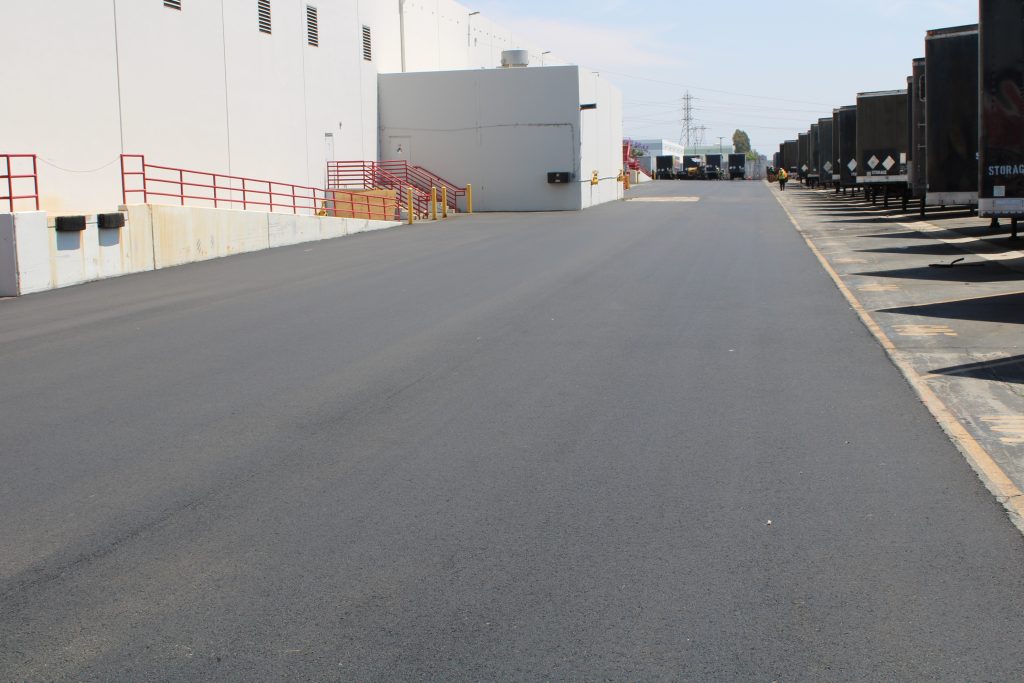
Sidewalk Repair, Replacement & Consolidation
Panel replacement, offset grinding, and the older-grid specialty: consolidation rebuilds that replace a block’s worth of accumulated patchwork with continuous, uniform walkway — repair boundaries sawcut at joints, causes fixed alongside concrete, and ADA ramps and accessible connections built to current standards where routes demand them.
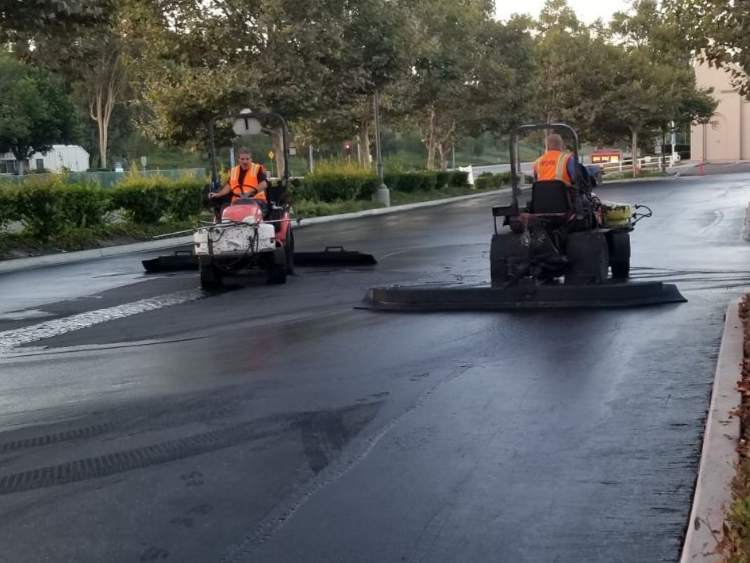
Curb, Gutter & Flowline Reconstruction
Settled and broken curb runs rebuilt to grades that carry real storm flow, flowlines restored where ponding and sand bars have marked the failures, and beach-block gutter work designed with the sand load in mind — because a coastal gutter that ignores its second job fails at both.
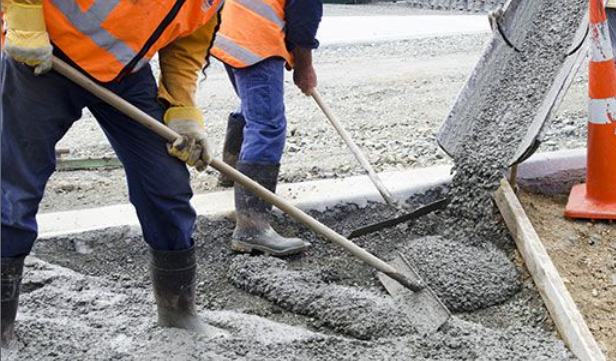
Alley Aprons, Approaches & Right-of-Way Concrete
The connective concrete of the older grid: alley aprons rebuilt to the refuse-truck duty they actually carry where alleys meet streets, driveway approaches and curb cuts permitted and built to city standards, and frontage work of every kind processed through Oceanside’s Engineering Division with the Traffic Control Plan drafted wherever the street requires it.
The Patchwork Problem: Reading Sixty Years of Sidewalk in One Block
Walk any older Oceanside block and the sidewalk tells its history in rectangles: original panels gone gray, a utility company’s cut patched in darker concrete, a plumber’s trench line, three generations of repair jobs in three textures — a walkway assembled by decades of separate decisions, none coordinated. The patchwork isn’t just ugly; it’s structurally predictive. Every cut-and-patch is a joint the original design never planned, and unplanned joints are where differential settlement lives: each patch sits on its own backfill, compacted to its own era’s standard (or not), so panels age at different rates and the offsets concentrate exactly at the patch boundaries — which is why older-grid trip hazards cluster along the utility scars rather than randomly. The repair strategy question follows: patch-by-patch response replaces the worst rectangle each year, adds another texture to the collage, and never gets ahead of the settlement pattern — while consolidation replacement takes the block’s chronic runs in one mobilization: continuous pours at uniform grade on uniformly compacted base, planned joints replacing the accumulated scars, one aging clock replacing a dozen. The math favors consolidation more than owners expect — mobilization is the fixed cost of every small pour, so ten panels replaced across five years cost meaningfully more than ten panels replaced at once — and the result finally stops generating annual hazards instead of rotating them. Two refinements complete the older-grid practice: where districts carry historic character, finish and scoring patterns get matched deliberately so new runs read as belonging; and where the grid’s alleys cross the walking path, the apron gets rebuilt to its real duty — a sidewalk-grade crossing that refuse and delivery trucks mount weekly is a sidewalk failing on schedule, and the apron spec (thickness, reinforcement, and a pedestrian path carried level through the crossing) is what retires the cycle.

Why oceanside Property Owners Choose United Paving Co.
Licensed California Contractor
verify our license anytime through the CSLB license check.
Over 25 years in the asphalt and concrete industry
Serving properties from Los Angeles through San Diego County
Active members of the property-management community.
BOMA, IREM, CAI, ICSC, AGC, and more.
Materials and Methods
Free on-site written estimates
We work throughout Oceanside — 92054 (the coast: downtown, the harbor and pier districts, Fire Mountain, and South Oceanside), 92056 (central and east: the El Camino Real corridor, Rancho Del Oro, and the mesa neighborhoods), 92057 (the north and the San Luis Rey valley: College Boulevard corridor, Jeffries Ranch, and the route east), and 92058 (San Luis Rey and the Highway 76 corridor).
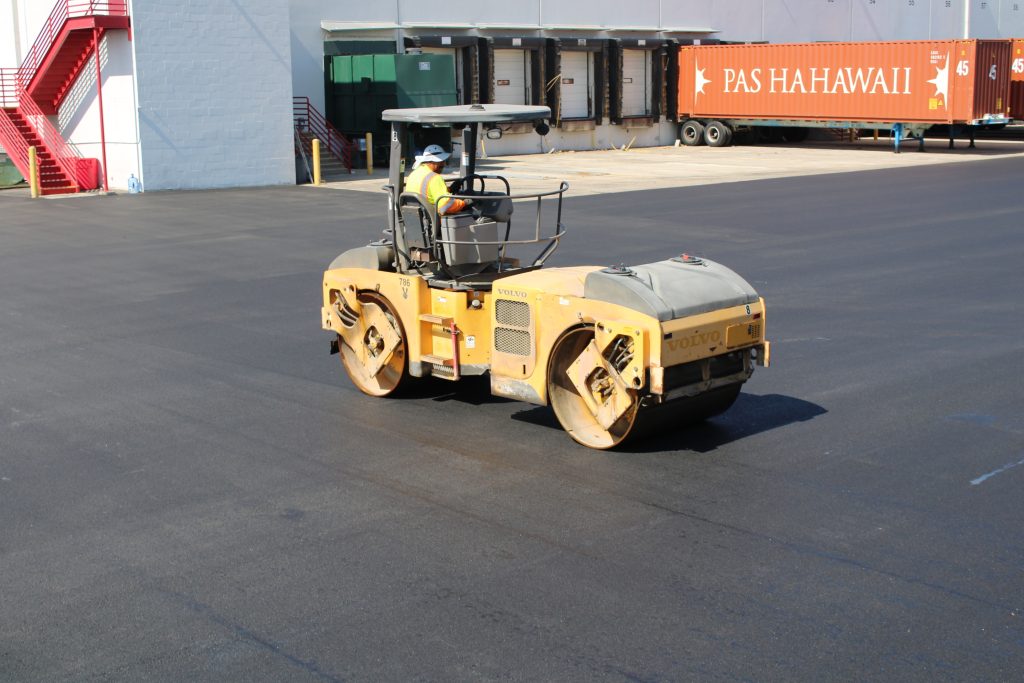
Permits, the Oceanside Way: ROW/Beach Access, the Curb Warning, and the Monument Rule
Frontage work here sits squarely in the territory Oceanside’s own guidance flags with the sentence we quote on every estimate: never assume your property ends at the curb. Sidewalks, parkways, curb and gutter, alleys — all typically public right-of-way, and all governed by the city’s Right-of-Way/Beach Access Permit through the Engineering Division, with a Traffic Control Plan supplementing wherever work disturbs traffic and — a detail with teeth — a Survey Monument Preservation Certification wherever excavation could disturb the city’s survey markers. Private improvements already sitting in the right-of-way can trigger an Encroachment Removal Agreement, a wrinkle owners of older frontages sometimes inherit without knowing it. The working rhythm rewards fluency: each permit gets an assigned inspector as single point of contact, and the December–March storm season sets the real calendar — gutter and flowline work belongs on the fall schedule, because a broken flowline spends every winter feeding the failures beside it. All contractor scope with us: property line and permit path confirmed at the estimate, TCP drafted where needed, monument documentation handled before a shovel moves, and the inspector relationship worked as the asset it is.
Oceanside Sidewalks, Curbs and gutters - FAQs
The same sand bar reforms in our gutter after every sweeping. Regrade or keep sweeping?
The recurrence is the answer: a bar that rebuilds at the same station is marking a flat spot or settlement in the flowline — sweeping treats the symptom on a subscription. A laser check confirms the grade failure; rebuilding that run restores flow, and the sand goes back to passing through instead of banking.
Our block's sidewalk is a quilt of patches and colors. Do we really have to replace all of it?
Not all — but the chronic runs, yes, and together: consolidation replaces the settlement-prone patchwork in one mobilization at better unit cost than years of panel-by-panel response, and finally stops the annual hazard rotation. The assessment separates the quilt's stable squares from its failing seams before anything is priced.
Why do our trip hazards keep appearing along the same lines year after year?
Because those lines are utility scars: old cuts patched on their own backfill settle at their own rate, concentrating offsets at the patch boundaries. Grinding buys time; the cure is replacing the scarred run as one uniform pour on uniformly compacted base.
The curb at our alley entrance breaks every couple of years. What's the fix?
Duty-honest reconstruction: alley mouths carry refuse and delivery trucks across sidewalk-grade concrete weekly, and standard-spec aprons fail on that schedule. Rebuilt to real thickness and reinforcement — with the pedestrian path carried level through the crossing — the apron stops being an annual line item.
There's an old planter and mailbox pad in our parkway strip. Is that a problem?
Possibly an inherited one: private improvements in the right-of-way can require an Encroachment Removal Agreement or removal when frontage work happens — Oceanside's rules on the parkway zone are explicit. We flag existing encroachments during scoping so the permit process meets no surprises.
When should gutter repairs be scheduled, realistically?
Fall, ahead of the December–March storms: a settled flowline repaired in October protects its own joints and the adjacent pavement all winter; the same repair in March arrives after the season already collected its damages. Beach blocks add the pre-season sand clearing to the same calendar.
Areas We Serve NEAR Oceanside
We work throughout Poway — 92064 — including the South Poway Business Park and Scripps Poway Parkway corridor, the Poway Road commercial corridor, Old Poway, Green Valley, Garden Road, Rancho Arbolitos, StoneRidge, Bridlewood, and the rural and equestrian neighborhoods of the north and east. See our sidewalk and curb pages for Escondido, San Marcos, and Miramar.