
Striping and ADA Compliance in Corona, CA
Lines That Fight the Sun, Lots That Meet the Standard
Paint has a hard life everywhere; in Corona it has a short one. The same inland UV that grays our asphalt bleaches traffic marking on the fast clock — which makes material selection, not application, the real striping decision here. And beneath the paint sits the compliance question this city’s sixty-year spread of parking lots poses constantly: which projects obligate which upgrades, and when does a simple re-stripe become a code conversation? United Paving Co provides striping & ADA compliance in Corona, CA with hometown answers to both: marking specified to survive our sun, multi-tenant industrial campuses given systems instead of turf wars, and the upgrade-trigger question answered straight before the work is priced.
Fade Physics: Why Inland Marking Ages Fast, and What Material Buys What
Traffic marking fails here the same way asphalt binder does — by sunlight — and understanding the mechanism turns repaint budgeting from guesswork into selection. Waterborne traffic paint is pigment held in a resin film, and our UV attacks both: the resin’s molecular bonds break down at the surface (the same photodegradation that chalks house paint), releasing pigment as powder, while the binder film thins under the added grinding of traffic — so inland lines don’t so much wear off as bleach and chalk away, and the process runs fastest exactly where visibility matters most: on sun-exposed, south-facing, shade-free pavement, which describes most parking lots in this valley. The material ladder answers the physics with escalating stubbornness. Standard waterborne paint remains the economical workhorse — right for stall fields and evolving layouts — on an honest inland refresh clock of one to two years for exposed, trafficked lines, not the three that milder climates or optimistic bids promise. High-build paint — the same chemistry applied at roughly double film thickness — buys meaningfully longer life for modest premium and is our default recommendation for Corona drive lanes, arrows, and legends. Thermoplastic and preformed materials — melted or laid as thick, pigment-saturated films — resist UV at a different order entirely and earn their cost at the marks that carry safety and legal weight: crosswalks, stop bars, fire-lane stenciling, and accessible-stall systems, where fade isn’t a cosmetic issue but a compliance one. The budgeting translation: a Corona lot marked entirely in standard paint is on the shortest possible repaint subscription, while a layered spec — paint where change is cheap, durable materials where fade costs most — usually wins the five-year math. And one timing rule protects every material: marking applied over fresh seal coating needs the coat cured first, because lines laid on an uncured surface bond to sealer that’s still moving — the peeling-stencil failure that traces back to a calendar, not a product.
Get Your Free Striping or ADA Compliance Proposal
One site walk gives you a mapped, priority-ranked plan for every sidewalk, curb, and flowline issue on the property. Call (951) 739-9200 or submit the form below.
Our Striping and ADA Services in Corona
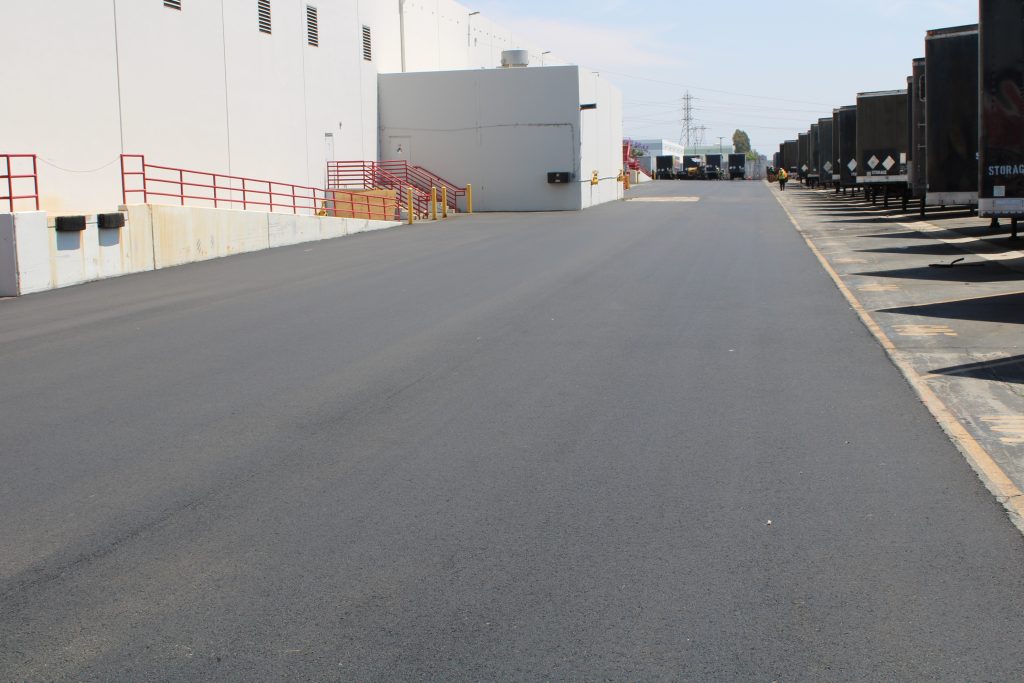
Commercial, Industrial & Campus Marking
Full-lot layout and re-striping across all three Coronas — the 91-corridor parks’ truck courts, docks, and fire lanes; the corridors’ retail turnover lots; and the campuses between — with materials matched to our UV reality, layouts drawn for the traffic they govern, and off-hour application that keeps tenants operating.
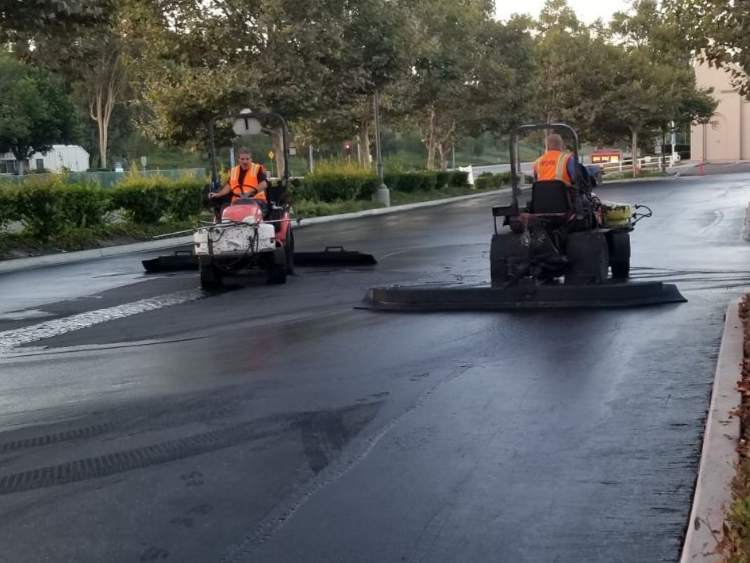
HOA & Community Marking
Street marking, red curbs, guest systems, and stenciling for the south’s master-planned communities — coordinated with sealing cycles so the erase-and-redraw moment is free (see [Seal Coating in Corona], documented for boards, and refreshed on the honest inland schedule.

ADA Stalls, Routes & Compliance Upgrades
Accessible parking scaled to current counts with van stalls and full aisles, compliant signage, slope-verified routes, and the upgrade work this city’s older lots accumulate — delivered with the trigger framework below applied honestly, and coordinated with our concrete crews where ramps and route corrections turn findings into fixes.
The Shared Court: Marking Multi-Tenant Industrial Campuses So Three Companies Can Coexist
The 91 corridor’s industrial parks concentrate a marking problem single-user sites never face: one truck court, one drive aisle system, one bank of docks — serving multiple tenants whose trucks, schedules, and assumptions all arrive at once. Unmarked or under-marked shared pavement resolves that daily by negotiation, and negotiation between two backing trailers is how shared courts get their dents. The marking system that keeps the peace works like a lease drawn on the ground. Dock and door numbering carries the addresses: every position numbered legibly at truck scale, matched to the numbering the leases and the tenants’ dispatchers actually use, so “Door 14” means one thing to every driver the campus receives. Tenant zones get boundaries where the leases define them: assigned yard areas, staging squares, and container positions marked so occupancy is visible fact rather than recurring dispute — and common circulation marked as common, because the aisle that reads as nobody’s territory stays drivable. Shared circulation gets the full traffic treatment: one-way flows where court geometry demands them, keep-clear hatching at doors and blind approaches, and truck-court arrows scaled for cab-height reading. Fire lanes hold the whole system’s spine — continuous, legible, and uncompromised by any tenant’s staging creep, because the fire marshal’s inspection reads the campus as one property no matter how many names are on the suites. And the landlord owns the referee role: shared-pavement marking is common-area scope, specified once for the campus rather than improvised tenant by tenant — which is why our multi-tenant proposals are written to the property manager with a tenant-communication plan attached, and why re-marking rides the campus’s seal cycle where one exists. The payoff is measured in what stops happening: blocked docks, staging disputes, and the slow-motion turf war that unmarked shared pavement always eventually hosts.
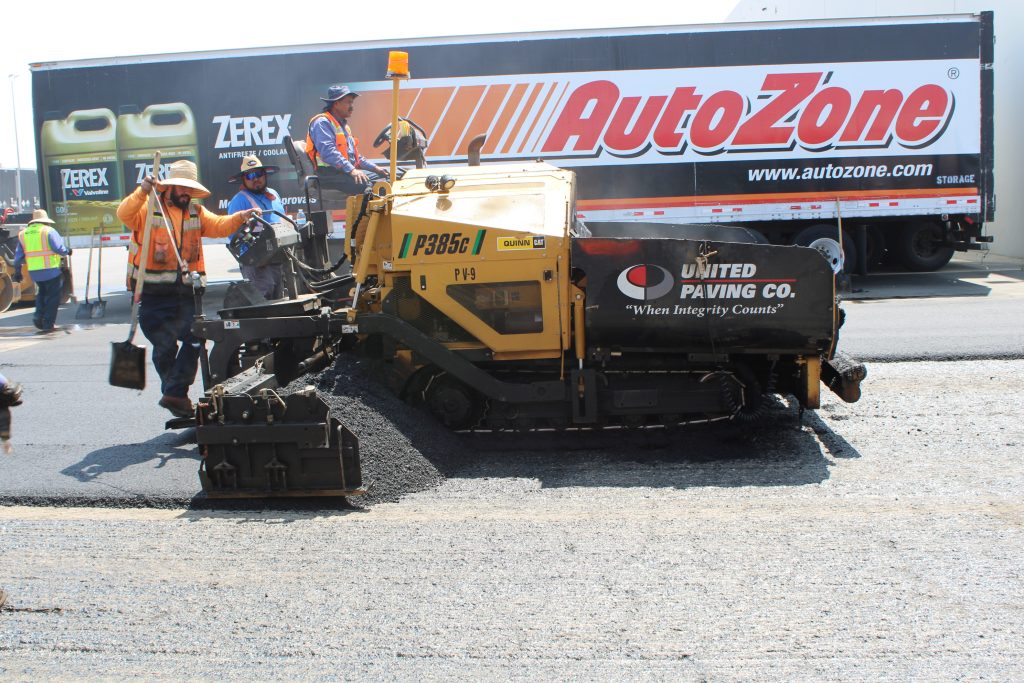
Why Corona Property Owners Choose United Paving Co.
Licensed California Contractor
verify our license anytime through the CSLB license check.
Over 25 years in the asphalt and concrete industry
Serving properties from Los Angeles through San Diego County
Active members of the property-management community.
BOMA, IREM, CAI, ICSC, AGC, and more.
Materials and Methods
Free on-site written estimates
We work throughout Corona — 92879 (central: the Circle City core and North Main corridor), 92880 (the industrial north toward the Eastvale line), 92881 (the south: Eagle Glen, Dos Lagos, and the Ontario Avenue corridor), and 92882 (the west: Sierra del Oro, Green River, and the older westside neighborhoods) — plus the Temescal Valley communities of 92883, where county jurisdiction applies and we handle the difference as standard scope.
The Trigger Question: When Does Work Obligate an Upgrade?
Every owner of an older Corona lot eventually asks the same question — if we touch it, what do we owe? — and the honest answer is a framework, not a scare. The compliance baseline is continuous: accessible-parking obligations under the federal standards at ADA.gov and California’s building code apply to public-serving properties as an ongoing duty (barrier removal where readily achievable, in the federal framing), which means a lot can carry obligations no project triggered. Work then adds the alteration layer: projects that alter a parking facility — reconstruction, resurfacing beyond maintenance, reconfiguration — generally obligate bringing the altered elements to current standards, with California’s code applying its own triggers and the path-of-travel principle reaching beyond the paint to the route the parking serves. Between those poles sits the maintenance zone: like-for-like re-striping of a compliant layout is maintenance; re-striping a non-compliant layout reproduces its violations at fresh visibility, which is the trap our assessment exists to catch — the moment the stencils are out is the cheapest moment the lot will ever have to correct counts, van stalls, aisle widths, signage, and slopes, and pricing that correction into the re-stripe is almost always a rounding error against doing it as a standalone project later (or under a demand letter’s schedule). Two honest boundaries complete the framework: slope and route problems are concrete problems wearing paint symptoms — verified with a level, fixed with our concrete crews, never solved by relocating a stencil — and the definitive compliance read on a complex property belongs to a CASp (California’s certified access specialists, whose inspections carry legal-standing benefits we’re glad to work from and build to). What we bring to every Corona striping project is the working version: current-standards knowledge, the trigger framework applied to your actual scope, and the judgment to tell you which side of the maintenance line your project sits on — before the paint, not after the letter.
Corona Striping and ADA Compliance - FAQs
Our lines faded badly in under two years. Did we get cheap paint?
Possibly — or honest paint on an inland clock nobody explained: standard waterborne marking on sun-exposed Corona pavement genuinely runs a one-to-two-year refresh cycle, and bids that promised more were pricing a milder climate. The fix is material selection: high-build for the working lines, thermoplastic where fade costs compliance, standard paint only where change is cheap.
Do we have to upgrade our ADA stalls just to re-stripe the lot?
Like-for-like re-striping of a compliant layout is maintenance. The real question is whether your layout is compliant — because repainting violations renews them at fresh visibility, and the re-stripe is the cheapest correction moment your lot will ever have. Our assessment answers the layout question first; the trigger framework does the rest honestly.
Trucks from the suite next door keep staging in front of our docks. Whose problem is that?
The property's — shared-court conflicts are a common-area marking gap wearing a tenant dispute's costume: numbered doors, marked tenant zones, and common circulation drawn as common turn occupancy into visible fact. The fix runs through the landlord's scope, and it's paint-cheap compared to the weekly friction it retires.
Is a CASp inspection worth it before we spend on compliance work?
For complex or older properties, frequently yes: California's certified access specialists deliver the definitive read, their reports carry legal-standing benefits for proactive owners, and a CASp punch list turns compliance spending from guesswork into a scoped project. We build from CASp reports routinely — and our own assessments tell you whether your property is simple enough to skip straight to the fix.
What are our obligations for fire-lane marking as a landlord?
Keeping the lanes continuously legible and unobstructed to the fire authority's standards — faded red curb and ghost stenciling read as violations at inspection regardless of tenant mix, and staging creep into the lane is the campus's problem, not the offending tenant's alone. Fire-lane marking holds the shortest refresh leash on any property we stripe, in the most fade-resistant material the budget allows.
Our new seal coat is done — how soon can striping go on?
After the coat cures, not before: marking applied over uncured sealer bonds to a surface that's still moving, and peeling lines a month later trace back to that calendar. Cure windows run with the season; we schedule the re-stripe into the sealing scope so the sequence protects both investments — and the lot reopens finished once, not twice.