
Seal Coating in Vista, CA
Specified for the Traffic, Phased for the Tenants
Here’s the sealing mistake Vista’s industrial corridor sees constantly: a multi-tenant park gets coated wall-to-wall with the same product, same dilution, same two passes — and eighteen months later the truck lanes have worn back to gray while the parking bays still gleam. Sealer isn’t one product applied one way; it’s a spec that should change with the traffic on top of it. United Paving Co provides seal coating in Vista, CA scoped zone by zone — parking bays, drive lanes, truck routes — with the additive packages, sand loading, and coat counts each zone’s duty actually requires, and the phasing plans that let an occupied park keep running while it cures.
Zone-Spec Seal Coating: One Lot, Three Duties
Parking bays — cars, low stress — take standard commercial two-coat application and deliver the longest sealer life on the property.
Drive lanes and circulation — constant traffic, moderate loads — get upgraded additive packages and sand loading for traction and wear resistance, because this is where single-spec seal jobs fail first.
Truck routes, gate approaches, and dock zones — the hard duty — get the heavy spec: maximum sand loading, polymer additives, sometimes an extra pass — and an honest conversation, because sealer on a rutting or alligatored truck lane is money spent decorating a structural problem. Those zones need repair before coating, and technical guidance from the Asphalt Institute is blunt about the boundary: surface treatments protect sound pavement; they don’t rehabilitate failed pavement.
The zone approach costs little more than flat-spec sealing and roughly doubles the honest service life of the coating where it’s stressed — which is the entire point of buying it.
Seal Coating Services in Vista
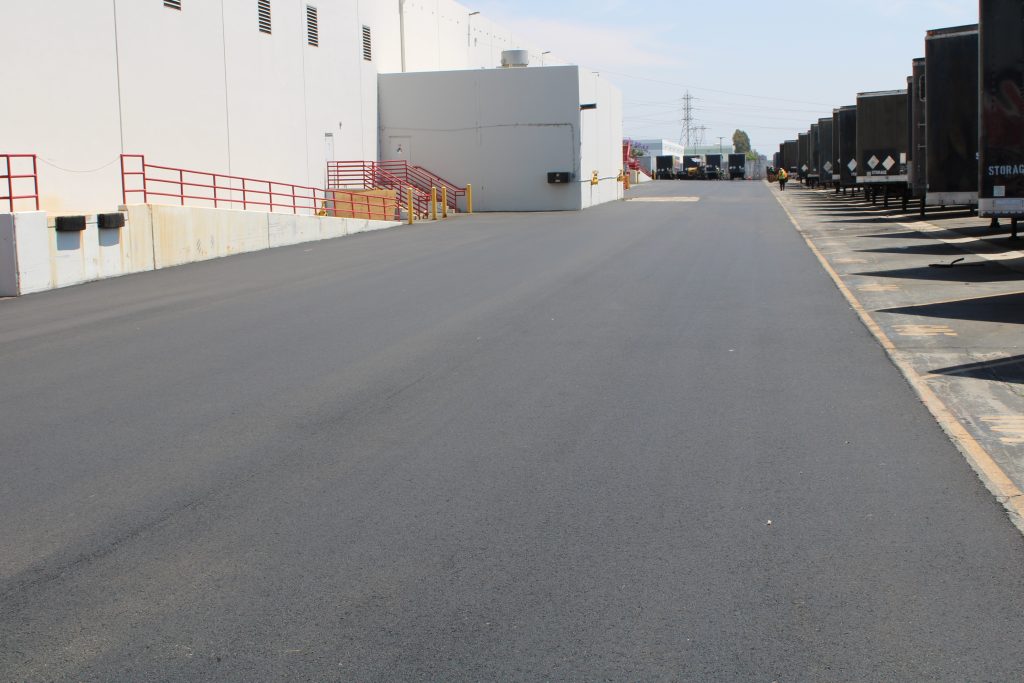
Zone-Specified Seal Coating
Vista’s signature application: the property mapped into duty zones before a gallon is quoted. Parking bays get standard two-coat commercial application; drive lanes get upgraded additives and sand loading for the constant circulation that wears flat-spec jobs first; truck routes, gate approaches, and dock zones get the heavy spec — maximum sand loading, polymer additives, extra passes where duty demands. One property, one project, three specs — priced honestly against what each zone actually endures.
Pre-Coat Preparation & Crack Sealing
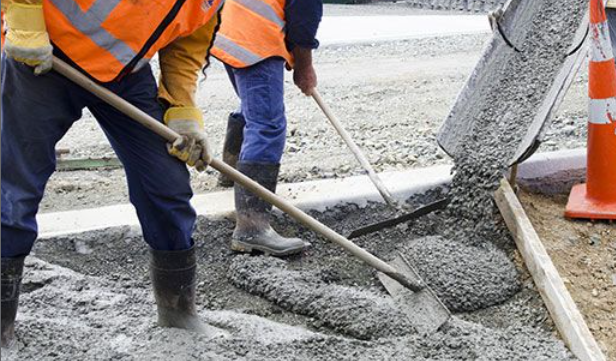
The unglamorous half that determines whether the coating lasts: surfaces cleaned and oil spots primed so sealer bonds over Vista’s forklift-and-freight contamination, hot-applied crack sealant closing every joint before coating — doubly critical on the city’s hillside properties, where cross-slope runoff hunts open cracks all winter — and structural failures flagged for repair before sealing, because coating a rutted truck lane decorates a problem instead of treating it (see [Asphalt Repair in Vista].
Rotation Programs & Compliance Re-Striping
Standing seal rotations for Vista’s multi-building parks and HOA streets: zones cycled on 3–5 year schedules tuned to their duty, coordinated with fall crack sealing, one budget document across the portfolio. Every project closes with full re-striping — stalls, arrows, fire lanes, and accessible markings restored or corrected to current standards, since sealer erases the lot’s entire legal marking system on its way to protecting the pavement (see [Striping & ADA Compliance in Vista]
Get Your Free Seal Coating Proposal
Our estimators will assess your pavement, tell you honestly whether it needs repair before coating, and scope a program that fits your budget cycle. Call (951) 739-9200 or submit the form below.
Where Sealer Earns Its Keep on a Vista Property — and Where It's the Wrong Tool
Sealer's Territory: Sound Pavement Doing Normal Work
Parking bays are sealer’s best return anywhere on the property — low stress, full UV exposure, aging from sun rather than load, which is exactly the damage sealer prevents. Drive lanes and circulation belong here too, with the right spec: constant traffic abrades standard sealer off in a couple of seasons, so these zones get sand-loaded, additive-fortified application that holds. Truck staging and leak zones are the case most owners miss — where trucks idle and trailers park, diesel and hydraulic drips chemically soften unprotected asphalt, and fuel-resistant sealer formulations protect against that chemistry, not just sunlight. And hillside streets and sloped lots qualify with one condition: cracks sealed first, because runoff crossing a slope probes every open joint on its way downhill — on Vista’s hill properties that rule is the whole ballgame.
Not Sealer's Job: Failed Pavement and the Wrong Material
Rutted or shoved truck lanes are structural failures — the section under the wheels is losing the argument with the axle loads, and sealer follows the failed shape it’s sprayed onto, ruts and all. That money belongs in reconstruction of the affected lanes (see [Asphalt Repair in Vista] ; sealing them is repainting a dent. Failing dock aprons are usually a material conversation, not a coating one — the most load-concentrated asphalt on the site is often asphalt that shouldn’t be asphalt, and these zones typically graduate to concrete rather than another cycle of coat-and-crack (see [Concrete Installation & Repair in Vista].
Why Vista Property Owners Choose United Paving Co
Licensed California Contractor
verify our license anytime through the CSLB license check.
Over 25 years in the asphalt and concrete industry
Serving properties from Los Angeles through San Diego County
Active members of the property-management community.
BOMA, IREM, CAI, ICSC, AGC, and more.
Materials and Methods
Free on-site written estimates
Throughout Vista — 92081 (South Vista: Shadowridge and the Sycamore Avenue/Palomar business park corridor), 92083 (West Vista: the Townsite neighborhoods and South Santa Fe corridor), and 92084 (North and East Vista: downtown, Vista Village, and the foothill neighborhoods).
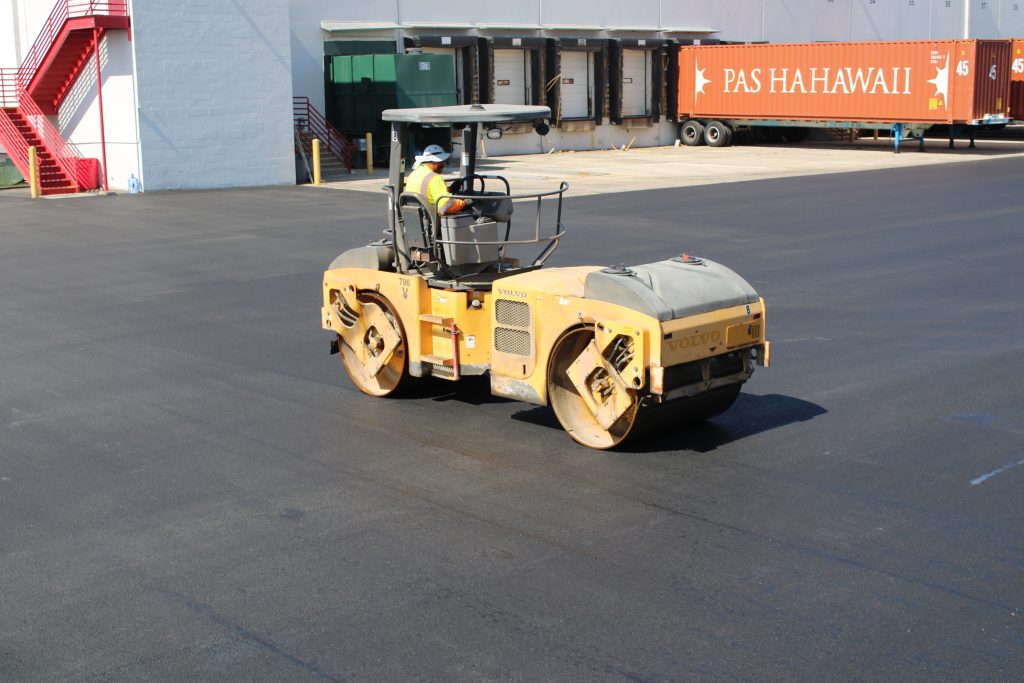
Curing Around Commerce:The Phasing Craft
Vista Seal Coating - Faqs
Why do our drive lanes gray out years before the parking bays do?
Because they're doing years more work between coats. Circulation lanes take every vehicle on the property every day; bays take one parked car at a time. If both got the same spec on the last project, the lanes were under-specified from the start — zone-spec application is the correction, and it's how we quote by default.
What is sand-loaded sealer, and does our property need it?
Sand (or aggregate) mixed into the sealer adds traction and wear resistance — it's the difference between a coating that polishes off under truck tires and one that holds. Standard bays don't need it; drive lanes benefit from moderate loading; truck zones need it heavy. It's a per-zone answer, which is the point of walking the property before quoting.
Can you seal an industrial park without disrupting operations?
Yes — that's a phasing design problem, and it's half the job. Every tenant keeps access every day; sections cure behind barricades on a published schedule; trucks reroute, not park. The plan and the tenant notices are part of our scope.
What's the right sealing cycle for a Vista property?
By zone: truck-trafficked areas every ~3 years, standard commercial surfaces 3–5, quiet HOA streets toward 5. Vista's moderate climate sits between coastal and inland aging rates, so duty matters more than weather in setting the cycle here.
Should we seal the truck lanes at all if they're showing wear?
Depends what "wear" is. Surface abrasion and fading: yes, heavy-spec sealing is exactly the treatment. Rutting, shoving, or alligatoring: no — that's structural, and sealer over it is cosmetic. We'll tell you which you have zone by zone before quoting.
Do wet winters limit the sealing calendar?
Only in windows. Outside December–March storm systems, Vista's calendar is generous, and warm months cure fast. We watch forecasts and schedule sections accordingly — weather delays are managed inside the phasing plan, not bolted onto the end.
Areas We Serve NEAR vista
We work throughout Vista — 92081 (South Vista: Shadowridge and the Sycamore Avenue/Palomar business park corridor), 92083 (West Vista: the Townsite neighborhoods and South Santa Fe corridor), and 92084 (North and East Vista: downtown, Vista Village, and the foothill neighborhoods). See our seal coating pages for San Marcos, Carlsbad, and Escondido.