
Seal Coating in Escondido, CA
Escondido Seal coating — Read Your Pavement's Age in Grayscale
Drive any commercial corridor in Escondido and you can read pavement age in grayscale. Jet black: sealed in the last year or two. Charcoal: due. Pale gray with visible aggregate: years of UV damage already banked, cracks on the way. That fade isn’t cosmetic — it’s the asphalt binder oxidizing out of the surface, and in the inland valley, heat accelerates the chemistry beyond anything coastal lots experience. United Paving Co provides seal coating in Escondido, CA for parking lots, private streets, and industrial yards, on cycles built for how fast pavement actually ages here.
The Inland Aging Problem — and What Sealing Buys Back
Oxidation needs two inputs: UV and heat. Escondido delivers both at volume — 250+ sunny days and summer afternoons deep into the 90s, without the marine layer that shades and cools Carlsbad or coastal Vista. The result is a compressed aging timeline: binder that stays flexible for years near the coast turns brittle sooner here, and brittle pavement cracks under the same traffic it used to shrug off.
Seal coating interrupts that chemistry. A properly applied sealer takes the UV hit so the binder doesn’t, sheds water before it finds entry points, and resists the oil and fuel dripping that stains and softens unprotected asphalt. The service-life math is documented well beyond contractor marketing: the Federal Highway Administration’s pavement preservation research exists precisely to quantify how much life surface treatments add to structurally sound pavement — and “structurally sound” is the operative phrase, which is where Escondido’s older lots need an honest assessment first.
What Seal Coating Does — and Doesn't Do — for Escondido Pavement
Sealer gets oversold in inland markets precisely because the before-and-after looks so dramatic here — gray, sun-beaten pavement turning jet black photographs like a miracle. So let’s separate the chemistry from the cosmetics.
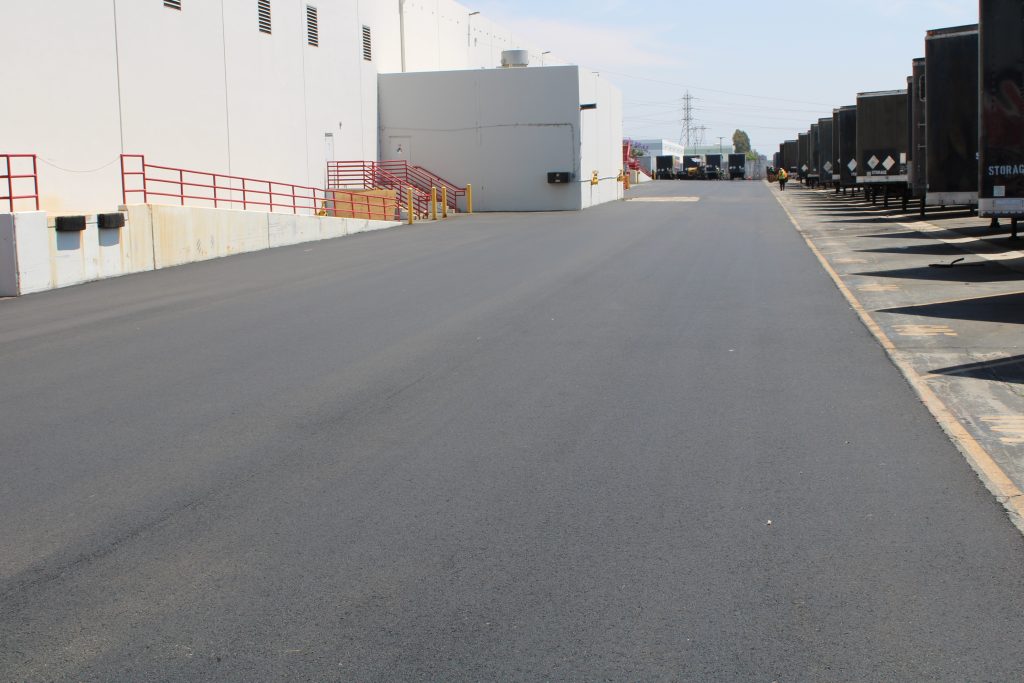
What it does in this climate:
Escondido asphalt loses its binder to heat-accelerated UV oxidation faster than coastal pavement, and sealer’s real job is to stand in the way of that reaction — absorbing the UV hit so the binder underneath stays flexible instead of turning brittle. It closes the surface against winter storm water, which matters doubly here because the valley’s rain arrives compressed into a December–March window that saturates anything left open. It resists the oil and fuel contamination that decades of parked cars grind into older lots. And yes, it restores the black — which on a commercial corridor like East Valley Parkway is a legitimate business signal, not vanity.
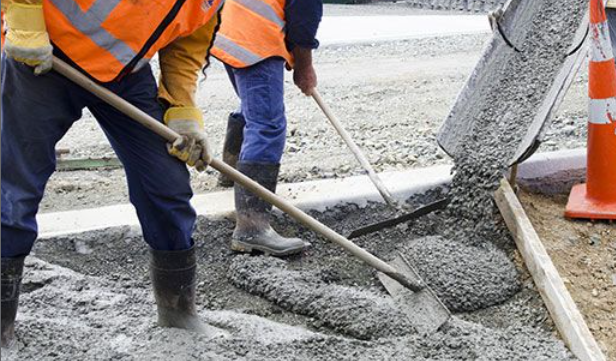
What it can't do, no matter what a bid promises:
It cannot put binder back into pavement that has already gone brittle all the way through — sealing very late is protection for what’s left, not restoration of what’s gone. It cannot bridge alligator cracking or hold together a failing base; on Escondido’s older lots, coating over structural failure is the most common way owners pay twice. It cannot fix ponding — sealer follows the grade it’s given, and a low spot stays a low spot, now in black. And it cannot substitute for crack sealing — the two treatments close different openings, and any bid that skips hot-applied crack sealant before coating is leaving the winter’s front door open.
Get Your Free Seal Coating Proposal
Our estimators will assess your pavement, tell you honestly whether it needs repair before coating, and scope a program that fits your budget cycle. Call (951) 739-9200 or submit the form below.
The Escondido Cycle: Earlier Than the Coast
The standard commercial guidance is a seal coat every 3–5 years. Inland conditions compress that: high-traffic retail on East Valley Parkway and Centre City Parkway belongs at the 3-year end, quieter HOA streets in Felicita or Old Escondido can stretch toward 4–5, and new asphalt takes its first coat around year one, after full cure. Pair the cycle with annual fall crack sealing — closing the summer’s new cracks before the December–March storms exploit them — and you’re running the same preservation playbook that keeps agency-managed pavement alive for decades, at parking-lot scale.
| When | What | Why |
|---|---|---|
| Year 1 | First seal coat (after full cure) | Locks in binder before UV oxidation starts |
| Every 3–5 years | Re-apply seal coat | Ongoing UV and moisture protection in our high-sun climate |
| Annually (fall) | Crack sealing | Closes entry points before winter rains reach the base |
| As needed | Patching, striping refresh | Addresses isolated damage; maintains ADA compliance |
| Year 15–25+ | Overlay or reconstruction | Even well-maintained pavement eventually reaches structural end-of-life |
Sealing Old Pavement: The Escondido Triage
A large share of Escondido’s commercial and HOA pavement dates to the 60s–90s, and old pavement forces a question newer cities rarely face: is this surface still a candidate for sealing at all? We put every lot we assess into one of those three lanes before quoting — and we’ll tell you which lane you’re in even when it’s not the answer that sells sealer.
Seal it
When the pavement is gray but sound — cracking is linear and sealable, no alligatored zones, no soft spots. These lots gain the most from coating, because they've been losing binder the longest and every year unsealed compounds the damage.
Repair first, then seal
When there are failed patches, alligatored corners, or drainage low spots. Sealing over structural failure buys a season of appearance and nothing else — those areas need patching before coating (see [Asphalt Repair & Maintenance in Escondido] — internal link).
Don't waste the money
When base failure is widespread. At that point sealer is paint on a structural problem, and the honest conversation is reconstruction (see [Asphalt Paving in Escondido] — internal link).
Why Escondido Property Owners Choose United Paving Co
Licensed California Contractor
verify our license anytime through the CSLB license check.
Over 25 years in the asphalt and concrete industry
Serving properties from Los Angeles through San Diego County
Active members of the property-management community.
BOMA, IREM, CAI, ICSC, AGC, and more.
Materials and Methods
Free on-site written estimates
Throughout Escondido —92025 (Central Escondido) 92026 (Northeastern Escondido and Hidden Meadows. 92027 (Eastern and southeastern Escondido). 92029 (Western/southwestern Escondido)
Where Escondido Changes the Spec
Escondido Seal Coating - Faqs
How often should an Escondido lot be sealed?
More often than a coastal one. Plan on the earlier side of the 3–5 year cycle — 3 years for busy commercial lots, 4–5 for low-traffic streets — because inland heat burns through sealer and binder faster. If your lot has gone gray, the cycle should have started already.
Why did my last seal coat wear off in barely a year?
Usually one of three shortcuts: watered-down sealer, a single coat sold as adequate, or application over an unprepped, contaminated surface. Inland heat and traffic expose thin work fast. Two coats of commercial-grade sealer over a cleaned, primed, crack-sealed surface is the spec that lasts — the gap between those two jobs is exactly what a cheap bid hides, as United Paving's Insights piece on choosing the lowest-priced bid lays out. (internal link)
What's the difference between seal coating and slurry seal?
Seal coating is a protective surface film; slurry seal is a thicker application of asphalt emulsion mixed with fine aggregate that adds a new wearing surface. Older Escondido lots and HOA streets with heavier surface wear are sometimes better candidates for slurry (or a slurry-now, seal-later program). We assess and recommend by condition, not by which truck is closer.
My lot is decades old and fully gray. Is sealing still worth it?
If the structure underneath is sound — yes, and arguably it's the highest-value sealing there is, because the binder loss is furthest along. If assessment finds structural failure, we'll tell you before you spend a dollar on sealer.
Can you seal in an Escondido summer?
Yes — heat shortens cure times, which helps. We schedule application and phased reopening around peak-temperature hours on occupied sites so operations and customers aren't disrupted.
Does sealing change how the lot handles winter rain?
That's a large part of the point. A sealed surface sheds storm water toward drains instead of letting it wick into the surface and down into the base — and in a climate where nearly all annual rain arrives in a three-month window, closing the surface before December is among the cheapest flood insurance a property can buy.
Areas We Serve NEAR Escondido
We pave throughout Escondido — from downtown’s Grand Avenue district to the Auto Park Way and Centre City Parkway commercial corridors, the I-15 business parks, and residential communities from Old Escondido to Felicita and Hidden Meadows. See our asphalt paving pages for San Marcos, Vista, and Carlsbad.