
Concrete installation and repair in Otay Mesa, CA
Concrete Installation & Repair in Otay Mesa, CA — The Material That Doesn't Care How Long the Load Stands
Our Otay Mesa paving pages explain the mesa’s defining physics: asphalt flows — microscopically, permanently — under loads that stay, and this district’s loads stay like nowhere else in the county. This page is the other half of that physics. Concrete is rigid, not viscoelastic; a loaded trailer can stand on a properly designed slab for an hour or a month and the slab does not care. United Paving Co provides concrete installation & repair in Otay Mesa, CA on exactly that principle: the rigid material placed surgically at the yard’s standing points — dolly lines, gate holds, container corners — where no asphalt spec honestly survives, built and phased so a working border yard never stops working.
Our Concrete Services in Otay Mesa
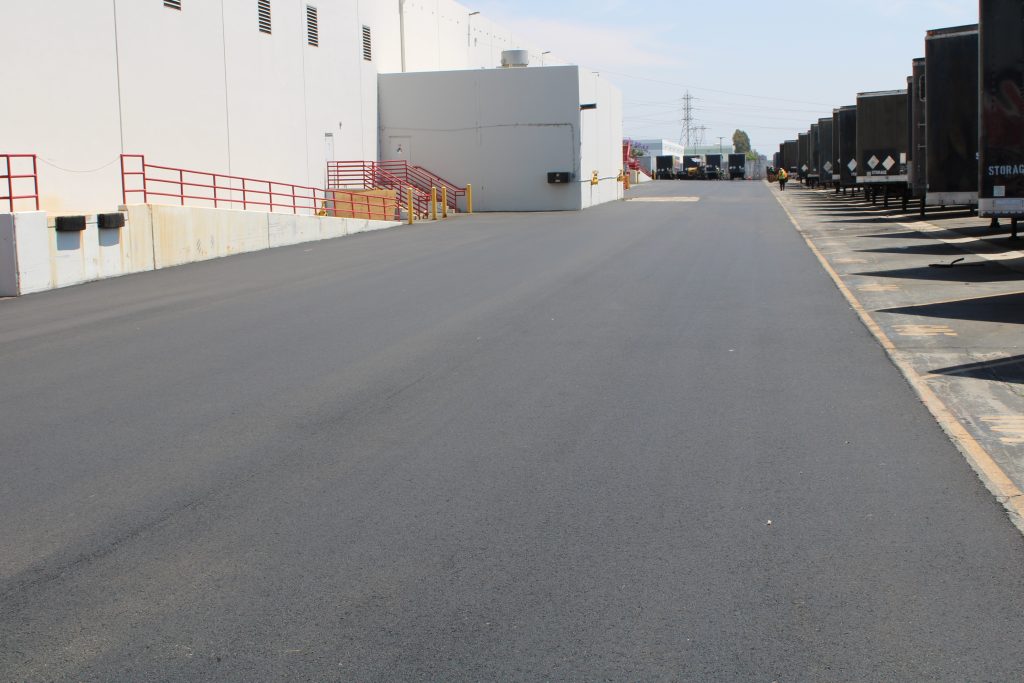
Dolly Strips, Landing-Gear Lines & Container Hardstands
The mesa’s signature concrete: reinforced strips run down trailer parking rows at exactly the landing-gear and axle lines where loaded trailers stand for days, and hardstand pads where containers ground their corner castings — steel-on-pavement point loads that concentrate tons onto contact patches smaller than this page. Designed to the equipment, stated in writing, and placed only where the standing happens, so the economics stay surgical.
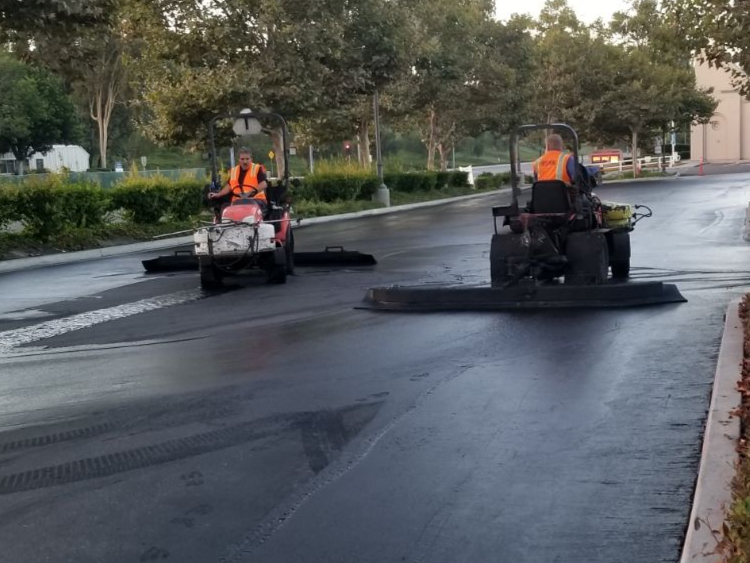
Gate Holds, Scale Approaches & Inspection Lanes
Concrete at the positions where every vehicle on the property stops and stands in sequence — gate throats and hold positions, scale decks and approaches, and the inspection-queue geometry the border district’s operations run on — with joint design and load transfer specified for the same axles crossing the same lines thousands of times.
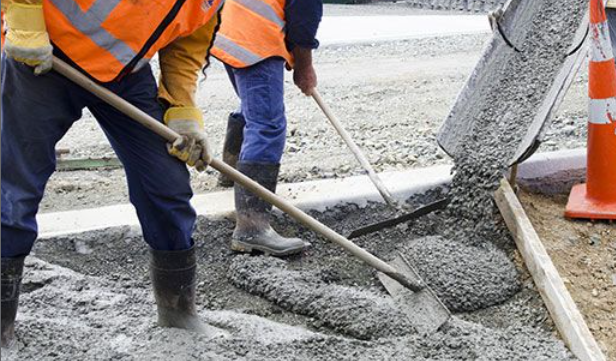
Yard Site Concrete, Repair & Right-of-Way Work
The rest of the concrete a logistics parcel needs: dumpster pads sized to the refuse truck’s full path, equipment pads, dock aprons, diagnosis-first repair of existing slabs, and driveway approaches and curb work in the public right-of-way, built to the San Diego Regional Standard Drawings under the city’s Right-of-Way Permit system.
Get Your Free Concrete Installation and Repair Proposal
From a single dumpster pad to a full site’s flatwork, our estimators will scope the work with the specs in writing. Call (951) 739-9200 or submit the form below.
Rigid vs. Flowing: The Mechanics Behind the Material Decision
Here’s the physics pairing every mesa owner should hold, because it turns the asphalt-or-concrete question from opinion into mechanics. Asphalt’s response to load depends on time: brief loads meet its springy side and recover; sustained loads meet its liquid side and flow — which is why the mesa’s queue lanes rut and its parking rows dent at every standing position. Concrete’s response doesn’t have a time axis: it’s rigid, spreading each load through the slab to the base beneath, identically at second one and hour ten. Its vulnerabilities run on different axes entirely — it cracks by plan (which is what joints are for), it fails when the base beneath it fails (which is why subgrade compaction is half the pour), and at point loads it needs reinforcement positioned where the tension actually develops, which is engineering, not intuition — the reinforcement standards bodies like the Concrete Reinforcing Steel Institute exist to codify. The decision rule that falls out: match the material to the load’s duration profile. Rolling traffic — asphalt’s economics win. Standing loads — concrete’s mechanics win. The mesa’s yards need both, drawn on the same map, and the map is the proposal.
The Strip Strategy: Surgical Concrete, Not Concrete Acreage
The mesa’s concrete mistake runs in both directions. Under-building — asphalt assigned the standing zones — produces the dented parking rows and crushed gate holds across the district. But over-building wastes just as real a number: pouring whole staging fields in concrete when only the lines where steel meets pavement need it. The strip strategy is the disciplined middle: map where trailers actually park (the rows repeat — landing gear lands within the same narrow bands), run reinforced concrete strips down exactly those bands, and let economical asphalt carry everything that merely rolls between them. Same logic at containers (hardstand pads at the stacking positions, not the whole yard), at gates (the hold positions and throat, not the approach acreage), and at scales (deck and immediate approaches). The design inputs are your own operations — staging patterns, equipment, dwell — which is why our concrete proposals start from the yard’s movement map, and why a bid quoting mesa concrete by the acre instead of by the line hasn’t read the yard. Done surgically, the concrete line-item typically runs a fraction of what owners fear — and ends permanently the damage the asphalt budget was re-buying every year.
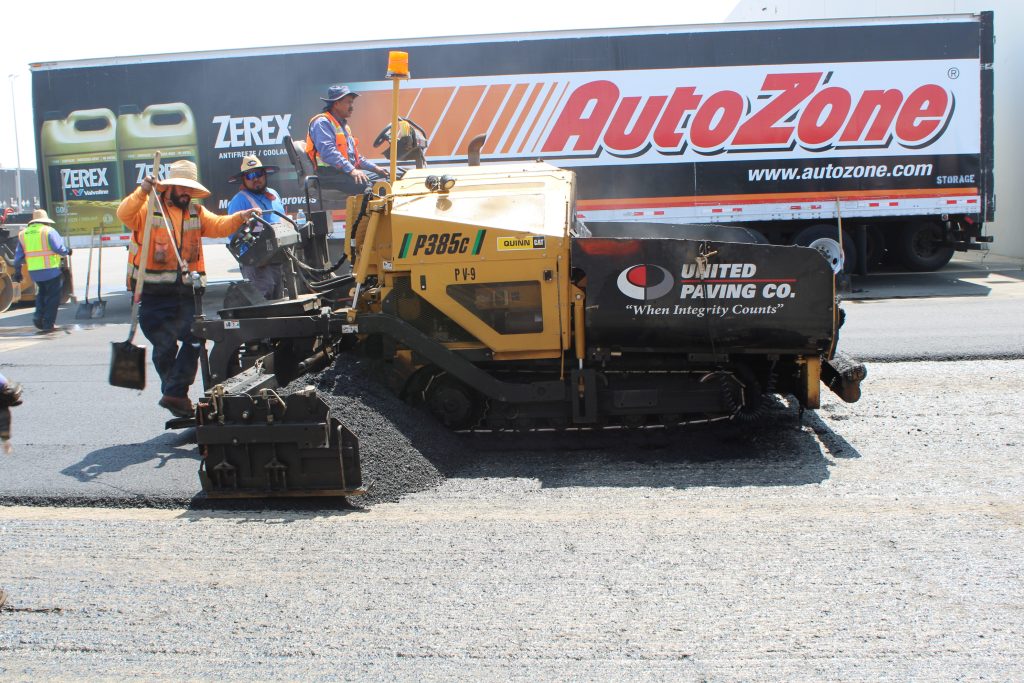
Why Otay Mesa Property Owners Choose United Paving Co.
Licensed California Contractor
verify our license anytime through the CSLB license check.
Over 25 years in the asphalt and concrete industry
Serving properties from Los Angeles through San Diego County
Active members of the property-management community.
BOMA, IREM, CAI, ICSC, AGC, and more.
Materials and Methods
Free on-site written estimates
Throughout the Otay Mesa community of San Diego — 92154 (the core industrial district: the Otay Mesa Road, Airway Road, and Siempre Viva corridors and the port of entry logistics blocks), 92179 (East Otay Mesa: the SR-11 corridor parcels toward the Otay Mesa East port site), and 92173 (neighboring San Ysidro to the west) — plus the SR-905/SR-125 corridor and Ocean View Hills.
Opening-Day Math: Cure Time on a Yard That Can't Wait
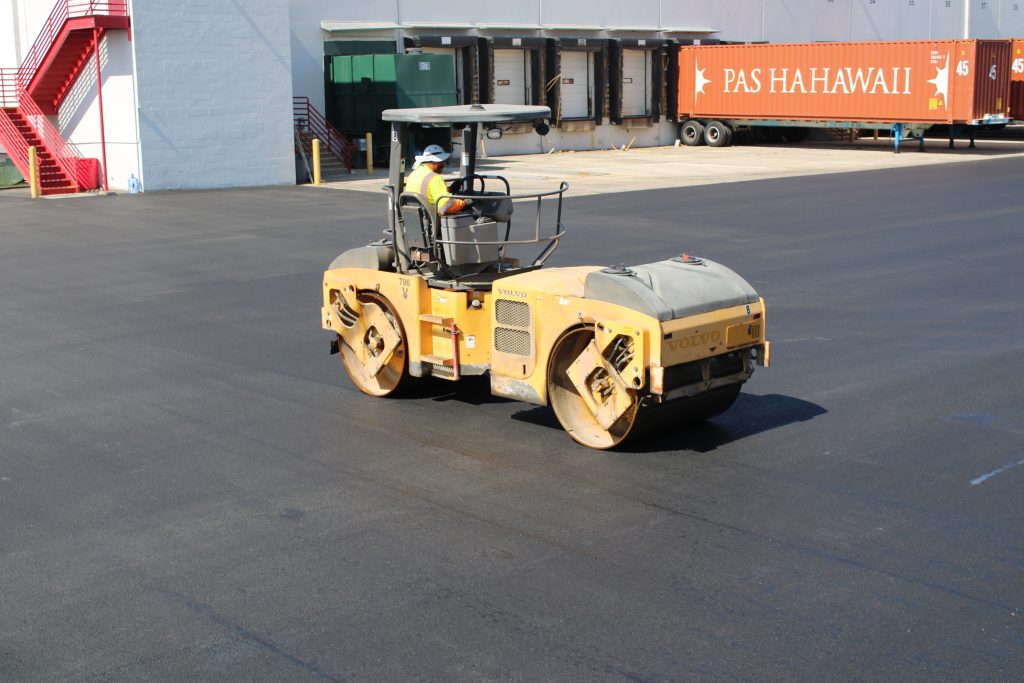
Concrete’s honest cost on a working yard isn’t the price per foot — it’s the calendar: conventional mixes want roughly a week before heavy traffic and near 28 days for full design strength, and a drayage yard doesn’t have a spare month. The craft that closes the gap is scheduling engineering. High-early-strength mixes compress trafficable timelines dramatically — days instead of weeks for many duties — at a premium that pencils easily against idle staging rows. Phased pours rotate the yard around the work: one parking row’s strips poured while trailers stage on its neighbors, one gate hold rebuilt while the second gate carries the cycle, sections sequenced with dispatch so capacity dips but never disappears. Weekend and surge-gap scheduling puts the shortest-fuse pours where the border’s rhythm breathes — the same overnight-and-lull calendar our mesa asphalt work runs on. And temporary staging assignments — marked, communicated, enforced — keep drivers off green concrete, because the only cure schedule that matters is the one the yard actually respects. Every Otay Mesa concrete proposal we write includes the phasing plan and the reopening dates alongside the specs: on this mesa, when you get your yard back is part of the price, and it belongs in writing.
Otay Mesa Concrete Installation and Repair - FAQs
Our trailer rows dent the asphalt at every parking position. How much concrete do we actually need?
Less than you fear: reinforced strips down the landing-gear and axle bands — the narrow lines where steel actually stands — not the whole field. The rows' repetition is your friend: trailers park where the striping says, so the standing loads land in mappable bands, and the concrete goes exactly there.
What should a container hardstand be designed for?
The corner castings: a grounded container delivers its weight through four small steel points, which is the most concentrated standing load on any mesa property. Hardstand design starts from the stacking height and the casting geometry — thickness, reinforcement, and joint layout all follow from those numbers, and they belong on the proposal.
How long is a gate out of service when its hold position is rebuilt?
With high-early mixes and a weekend pour, days rather than weeks — and on two-gate properties, phasing keeps one gate cycling throughout. The reopening date goes in the proposal, because on a drayage yard the calendar is part of the spec.
Can concrete strips be added to an existing asphalt yard?
Cleanly — sawcut the bands, excavate and compact, pour reinforced strips, and tie the asphalt back at supported edges. It's the mesa's most common retrofit, and the strip-to-asphalt joint detail is where the work earns its keep: an unsupported seam there just moves the failure line sideways.
Why did our existing yard slabs crack randomly instead of at the joints?
Usually one of two design absences: joints spaced or cut too late to control shrinkage, or base support that failed unevenly beneath — concrete telegraphs its subgrade. Diagnosis before repair matters here, because replacing panels over an unfixed base schedules the sequel.
Does the city permit apply to concrete inside our yard?
Interior yard concrete is your schedule and ours — no ROW permit. The city's system engages when the work touches public streets: approaches, curb, sidewalk connections, all built to Regional Standards under San Diego's permits, which we run as contractor scope with the notification clocks built into the timeline.
Areas We Serve NEAR Otay MEsa
We work throughout the Otay Mesa community of San Diego — 92154 (the core industrial district: the Otay Mesa Road, Airway Road, and Siempre Viva corridors and the port of entry logistics blocks), 92179 (East Otay Mesa: the SR-11 corridor parcels toward the Otay Mesa East port site), and 92173 (neighboring San Ysidro to the west) — plus the SR-905/SR-125 corridor and Ocean View Hills. See our concrete pages for Miramar, Carlsbad, and Vista. (internal links)