
Sidewalks, Curbs and Gutters in Vista, CA
Walkways, Curbs & Gutters Engineered for a City on Hills
Flat cities get to treat sidewalks as simple concrete. Vista doesn’t. On the city’s rolling terrain, every walkway is a slope calculation — running grade, cross slope, where a ramp is required and where stairs are honest — and every curb and gutter is a hydraulic structure managing water that arrives moving fast. United Paving Co provides sidewalk repair and maintenance in Vista, CA and full curb, gutter, and walkway construction with the hillside engineering built in, for the business park frontages, HOA communities, and foothill neighborhoods where flat-land concrete habits are exactly what’s failing.
Water Runs Downhill Fast: A Short Course in Hillside Drainage
Here’s what changes on a grade — and why the same gutter design that works in a flat valley city fails on a Vista hillside. Drainage engineering cares about two things: how much water arrives, and how fast it’s moving. Flat ground is a volume problem — water ambles to the drain, and the worst outcome of a failed gutter is a puddle. Slopes are a velocity problem: the December–March storms send runoff downhill with real speed, and moving water carries energy that ponding water doesn’t. Energy is what does damage. It’s why a settled joint that would cause a harmless puddle in the flatlands becomes a launch ramp here — runoff jumps the gutter line, scours the soil beside it, undercuts the sidewalk above it, and delivers its accumulated force to whatever sits at the bottom of the run.
A hillside curb-and-gutter system manages that energy through geometry. The curb face keeps fast water channeled instead of sheeting across walkways. The gutter pan’s grade keeps it moving — but not so steep, so long, that velocity builds past what the inlets can capture, which is why long Vista slopes are broken up with catch basins partway down rather than one drain at the bottom. Direction changes and inlets are where energy concentrates, so those transitions need the tightest construction on the whole run. And the discharge point — where the system finally releases its collected water — has to land on infrastructure built to take the force: a storm structure or protected channel, never bare soil. This is the same logic public road builders apply through federal urban drainage design practice; a private hillside frontage is simply the small-scale version of the identical physics.
You can read a failing hillside system after any decent storm, and it’s worth teaching your maintenance walk to look for it: water tracks or debris trails outside the gutter line mean the channel is being jumped mid-slope — find the settled or misaligned joint feeding it, usually uphill of where the evidence shows. Scoured or eroded slope faces beside the curb mean escaping water is cutting soil, and the sidewalk above that cut is next. Sediment fans at the bottom of a run mean the system is moving earth, not just water — erosion is happening somewhere upstream. And alligatored or sinking asphalt where the slope meets a parking lot means the runoff’s energy has been discharging into the pavement base, sometimes for years (that repair story lives on our [Asphalt Repair in Vista]. Every one of these is cheaper to fix at the gutter than at its consequences: a rebuilt curb run costs a fraction of the slope stabilization, sidewalk replacement, or pavement reconstruction it prevents — and on a hill, the sequence matters, because restoring continuity top-down stops feeding every failure below it.
Get Your Free Sidewalk, Curb & Gutter Services Proposal
One site walk gives you a mapped, priority-ranked plan for every sidewalk, curb, and flowline issue on the property. Call (951) 739-9200 or submit the form below.
Our Sidewalk, Curb & Gutter Services in Vista
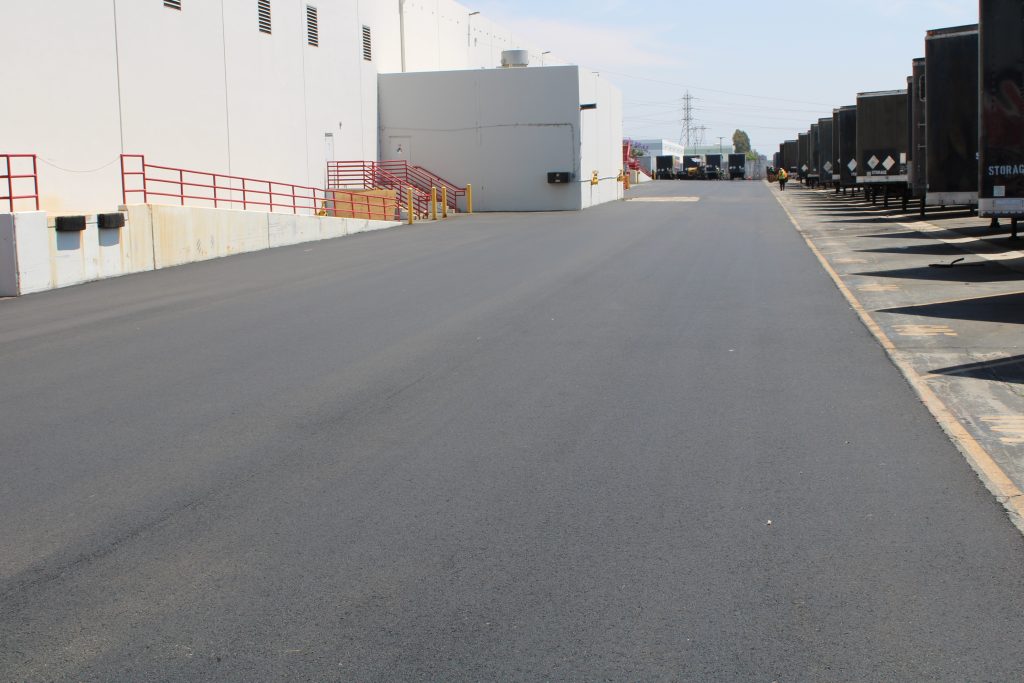
Sloped-Route Sidewalk Repair & Construction
Panel replacement and new walkway construction with the grades handled honestly: running slopes kept within accessible limits where the route allows, cross slopes held tight even where the terrain argues, and transitions between panels that don’t turn settlement into trip hazards on an incline — where a lifted edge trips harder than the same offset on flat ground.
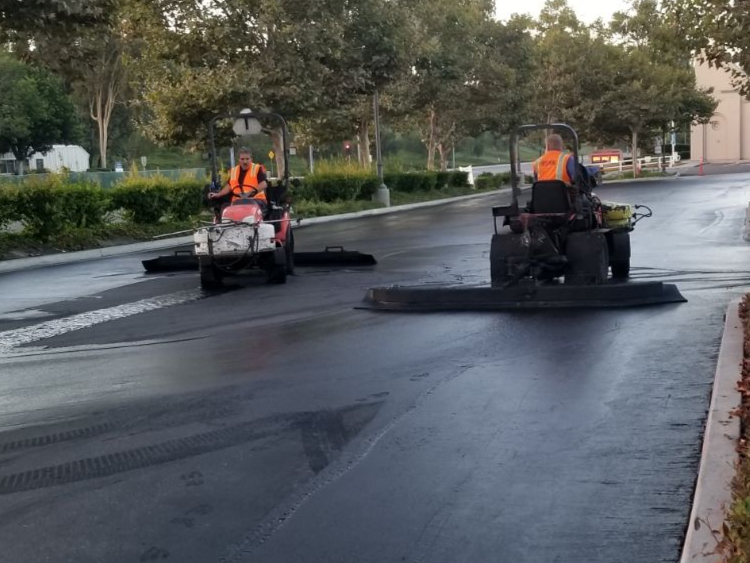
Ramps, Steps & Grade Transitions
The hillside specialty: compliant ramps with landings where accessible routes climb, concrete steps with correct risers and handrails where slopes exceed what any ramp can serve, and the judgment call between them made from the federal accessibility guidelines for public rights-of-way — the Access Board’s PROWAG standards — rather than from whatever the last contractor poured.

Hillside Curb, Gutter & Flowline Work
Curb and gutter rebuilt as the velocity-control system it is on a slope: sections that keep storm water channeled at speed, energy managed at direction changes and inlets, and grades restored where settlement has let fast-moving runoff jump the gutter and cut into landscaping or pavement base downhill.
Slopes, Offsets, and the Sharper Liability Math
Trip hazards obey the terrain too. A vertical offset on a downhill run catches a descending walker’s toe at the worst point in their stride — the same half-inch lip that’s an annoyance on flat ground is a genuine fall mechanism on a grade, and Vista’s foothill frontages and stepped business-park walkways accumulate exactly these. Our survey-first approach maps every offset with its slope context, matches each to its least-cost compliant fix — grinding where the panel is sound, replacement where it isn’t, regrade where the slope itself is the defect — and hands owners and boards a ranked, priced plan instead of an open question.
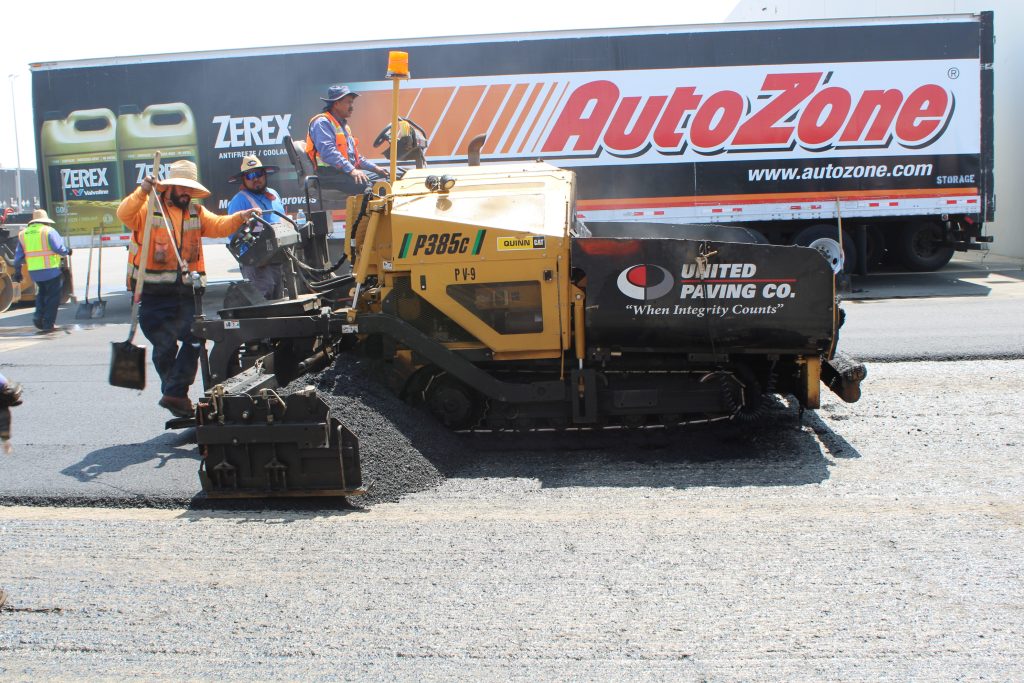
Why Vista Property Owners Choose United Paving Co.
Licensed California Contractor
verify our license anytime through the CSLB license check.
Over 25 years in the asphalt and concrete industry
Serving properties from Los Angeles through San Diego County
Active members of the property-management community.
BOMA, IREM, CAI, ICSC, AGC, and more.
Materials and Methods
Free on-site written estimates
Throughout Vista — 92081 (South Vista: Shadowridge and the Sycamore Avenue/Palomar business park corridor), 92083 (West Vista: the Townsite neighborhoods and South Santa Fe corridor), and 92084 (North and East Vista: downtown, Vista Village, and the foothill neighborhoods).
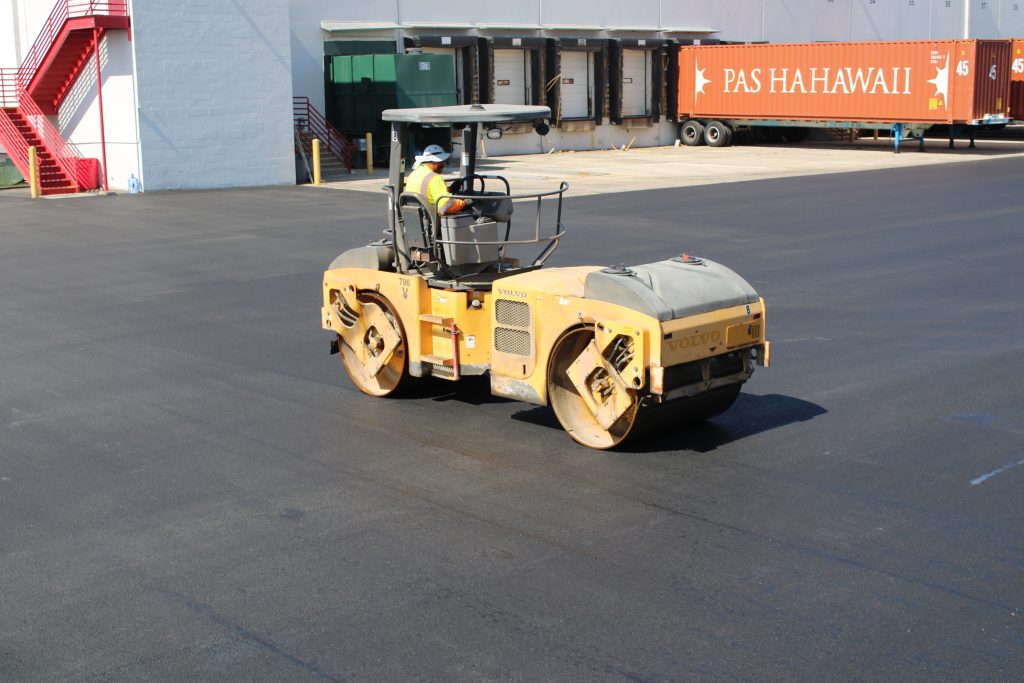
Know Your Frontage: The Anatomy of a Curb & Gutter System
Most owners inherit this infrastructure without ever being told what the parts do — so here’s the vocabulary, because it makes every repair conversation (and every bid comparison) clearer. The curb face is the vertical barrier: it defines the roadway edge, protects pedestrians and landscaping, and on Vista’s slopes does a second job — keeping fast-moving water in the channel when it wants to climb out. The gutter pan is the concrete apron at the curb’s base where water actually travels; its width and cross-slope set how much flow it can carry. The flowline is the invisible part that matters most: the continuous downhill grade along the pan’s lowest path. Water doesn’t follow concrete — it follows grade, and a flowline that’s lost even a little continuity to settlement is a system that’s stopped working, regardless of how sound the concrete looks. The apron and transitions — where gutter meets driveway approaches, ramps, and catch basins — are the joints where systems fail first, because every material change is a chance for differential settlement. When we quote “curb and gutter repair,” the proposal names which of these elements is failing and why; a bid that just says “replace 40 feet of curb” hasn’t diagnosed anything yet.
A Hillside Frontage Owner's Seasonal Checklist
Vista’s rain calendar is compressed — nearly everything falls December through March — which means frontage maintenance has an actual rhythm worth following. In fall (October–November), walk the system before it’s tested: clear leaves and sediment from gutter pans and catch basin grates (a blocked inlet on a slope doesn’t cause a puddle, it causes a bypass — water accelerating past the drain to the next problem downhill); look for new cracks or settled joints since spring; and schedule any repair now, because concrete work is far easier to plan in dry weather than to emergency-schedule between storm systems. During the storm season, observe while the evidence is live: ten minutes in the rain, or right after, shows you what no dry-weather inspection can — where water actually travels, where it jumps the line, where it stands. Photograph it; those images are the cheapest diagnostic tool a property manager owns, and they’re exactly what we ask for when scoping hillside work. In spring, audit what winter did: new offsets between panels (winter soil movement is when they appear), sediment fans and debris trails marking escape points, and any change in how the adjacent pavement rides — softness or new cracking at the slope’s bottom edge means water went somewhere it shouldn’t have. Owners who follow this cycle catch failures as hundred-dollar joint repairs; the ones who don’t meet the same failures later as slope stabilization and pavement reconstruction.
Vista Sidewalks, Curbs and gutters - FAQs
Our sidewalk runs uphill — does it have to be ADA compliant, and can it be?
Accessible-route rules account for terrain: running slope limits, landing requirements, and the point where a ramp system or an alternate route is the answer are all defined in the PROWAG framework. We assess what the grade allows, build the compliant version of it, and document the constraint where the hill itself is the limit.
When are stairs the right answer instead of a ramp?
When the grade would demand a ramp so long or so switchbacked that it fails its own landing and slope rules — common on Vista's steeper frontages. Steps with compliant risers and handrails, paired with an accessible route elsewhere on the site, is often the honest design, and we'll say so rather than pour a ramp that can't pass.
Water jumps our gutter mid-slope every big storm. What's actually wrong?
Almost certainly a continuity break — a settled or misaligned section letting fast-moving water leave the channel. The fix is restoring grade through the failed run and checking the joints above it, because on a hill, the failure you see is often fed by a smaller one upstream.
Is grinding a lifted panel safe on a sloped walkway?
Within tolerance, yes — and it's often the fastest hazard removal available. But the tolerance judgment is stricter on a grade, where the same offset is more dangerous; our survey marks which sloped panels qualify for grinding and which need replacement.
Our HOA has stepped walkways and hillside paths throughout. How do we budget repairs?
The same way we deliver them: a mapped survey with every offset, drainage fault, and failing step ranked by risk and priced by fix. Boards in Vista's hillside communities fund ranked plans — and the slope context in our documentation is what makes the priority order defensible.
Does pedestrian access really have to stay open during the work?
Yes — Vista's traffic-control standards require a maintained or detoured pedestrian path through right-of-way work zones, and on sloped frontages we design that route as carefully as the work itself, including temporary accessible routing where the closure affects one.
Areas We Serve NEAR Vista
We work throughout Vista — 92081 (South Vista: Shadowridge and the Sycamore Avenue/Palomar business park corridor), 92083 (West Vista: the Townsite neighborhoods and South Santa Fe corridor), and 92084 (North and East Vista: downtown, Vista Village, and the foothill neighborhoods). See our sidewalk and curb pages for San Marcos, Carlsbad, and Escondido.