
Sidewalks, Curbs and Gutters in Corona, CA
Frontage Concrete for a City of Sprinklers and Cloudbursts
Corona’s frontage concrete lives between two kinds of water: the irrigation that keeps a desert-climate city green — and quietly teaches tree roots to live directly under its sidewalks — and the winter cloudbursts that arrive violently enough to test every gutter’s capacity in twenty minutes. Add three generations of construction standards, from citrus-era curbs to last decade’s builder-installed HOA walkways, and frontage work here is local knowledge or it’s guesswork. United Paving Co provides sidewalks, curbs & gutters in Corona, CA with the hometown version of that knowledge: parkway systems repaired at the cause, drainage concrete built for the storms we actually get, and the city’s permit counter — plus the county’s, for Temescal Valley — run as standard scope.
The Parkway Problem: What Happens When Trees Live on Sprinklers
Here’s the mechanism behind most of Corona’s lifted sidewalks, and it isn’t the tree’s age — it’s the tree’s water source. In our climate, parkway trees survive on irrigation, and roots grow where water is: a strip watered in short, frequent sprinkler cycles keeps its moisture in the top few inches of soil, so the tree builds its root system shallow — and shallow roots in a four-foot strip have exactly one direction to grow: under the concrete on either side, where (bonus, from the root’s perspective) the soil under a slab stays cool and moist longest. The lifting that follows isn’t misbehavior; it’s a root system doing precisely what the watering schedule trained it to do. That diagnosis changes the repair. Replacing the panel without changing the system is an appointment with the same root in a few years — so parkway repairs done right treat the strip as a system: offending roots addressed at the panel (pruned where an arborist’s rules allow, because cutting the wrong roots destabilizes the tree), root barriers set vertically along the new panel’s edge to redirect growth downward and along the strip, base rebuilt, and — the cheapest, most ignored fix on this page — the irrigation schedule corrected: fewer, deeper waterings that pull roots down toward deep moisture instead of holding them at the surface. Two more irrigation notes earn their place in any Corona frontage plan: overspray that wets concrete daily feeds staining, algae in gutter shade, and the chronic dampness that ages panels and joints — heads and arcs are part of the frontage inspection — and drip conversion in renovated strips solves the shallow-water problem at the source. The owner’s takeaway: if your walks keep lifting, look at the sprinkler timer before you blame the tree — and bring both to the repair, because concrete-only fixes here are subscriptions.
Get Your Free Sidewalk, Curb & Gutter Services Proposal
One site walk gives you a mapped, priority-ranked plan for every sidewalk, curb, and flowline issue on the property. Call (951) 739-9200 or submit the form below.
Our Sidewalk, Curb & Gutter Services in Corona
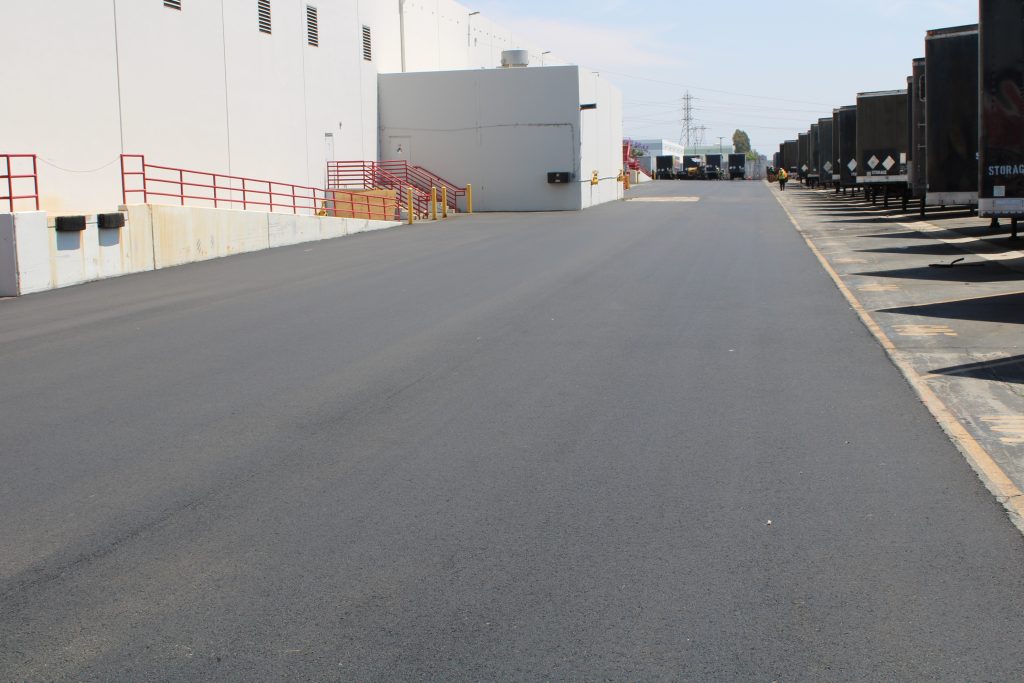
Sidewalk Repair & Replacement
Panel replacement, offset grinding, and walkway reconstruction across all three Coronas — repair boundaries sawcut at joints, causes corrected alongside concrete, root and irrigation conflicts resolved as part of the repair rather than left to re-lift it, and ADA ramps and accessible connections built to current standards where routes and corners demand them.
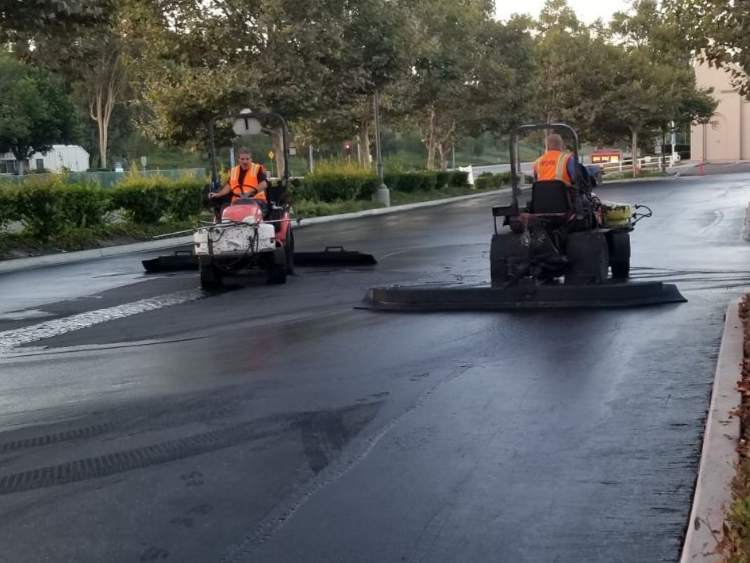
Curb, Gutter & Flowline Reconstruction
Settled and broken curb runs rebuilt to grades that carry real storm flow, flowlines restored where ponding has marked the failures, and capacity-honest reconstruction on the streets where winter cells have shown the system its limits — scheduled on the fall calendar, because gutter repairs bought in October protect everything beside them all season.
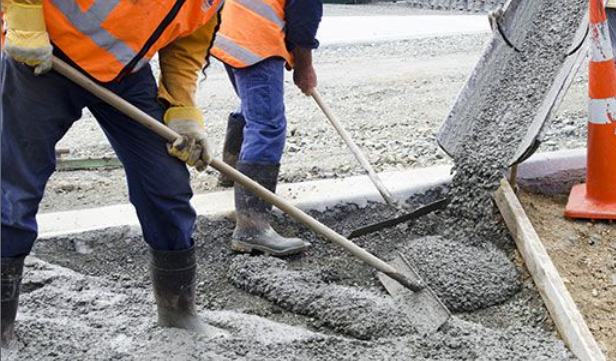
Parkway Strips, Approaches & Right-of-Way Concrete
The connective frontage work: parkway strip renovation where trees, irrigation, and concrete share four feet of ground, driveway approaches and curb cuts permitted and built to standard, and the jurisdiction question — Corona’s Development Services counter or the county’s process for 92883 — confirmed as the first step of every frontage estimate.
Built for the Cloudburst: Gutter Capacity in a City of Intense Storms
Inland storm behavior is its own engineering brief. Corona’s rain doesn’t drizzle in coastal fashion — it arrives in cells: winter systems and occasional summer monsoon surges that can deliver a large share of a storm’s total water in its first violent minutes, which means frontage drainage here is designed against intensity, not just totals. The curb-and-gutter system is the front line of that design: gutters collect each street’s sheet flow and convey it to catch basins, and the whole chain performs only at its capacity — a gutter’s carrying ability set by its cross-section and grade, a basin’s by its inlet. When a cell exceeds the chain, the failure modes are recognizable all over town: overtopping, where gutter flow climbs the curb and takes the sidewalk or the adjacent lot as its floodway; bypass, where water moving too fast or too full skips a catch-basin inlet and doubles the load on the next one downstream; and debris chokes, where the first minutes of a storm deliver a season of leaves and litter to an inlet at once — which is why pre-season clearing along your frontage is genuine flood prevention, not tidiness. For property owners the practical layer is this: chronic storm problems at a frontage are diagnosable — a gutter that overtops every cell is undersized, broken-graded, or choked, and each has a different fix (reconstruction to proper section and grade, flowline restoration, or a maintenance habit) — and repairs that touch the system are capacity decisions, which is why our gutter rebuilds restore or improve the section rather than merely re-pouring the old one’s shortcomings. The calendar writes itself: the December-through-March season is the exam, and October is when the studying happens.
Why Corona Property Owners Choose United Paving Co.
Licensed California Contractor
verify our license anytime through the CSLB license check.
Over 25 years in the asphalt and concrete industry
Serving properties from Los Angeles through San Diego County
Active members of the property-management community.
BOMA, IREM, CAI, ICSC, AGC, and more.
Materials and Methods
Free on-site written estimates
We work throughout Corona — 92879 (central: the Circle City core and North Main corridor), 92880 (the industrial north toward the Eastvale line), 92881 (the south: Eagle Glen, Dos Lagos, and the Ontario Avenue corridor), and 92882 (the west: Sierra del Oro, Green River, and the older westside neighborhoods) — plus the Temescal Valley communities of 92883, where county jurisdiction applies and we handle the difference as standard scope.
Three Generations of Frontage: What Each Corona Era Built, and What It Needs Now
Corona’s sidewalks were poured across three distinct construction eras, and each generation carries its own to-do list. The citrus-era and mid-century core built frontage to its time’s standards — which means today’s owners inherit the gaps: corner after corner without curb ramps (accessibility standards postdate the concrete by decades), narrower walks, thinner sections, and curb-and-gutter geometry from before modern drainage practice. Work in the core is therefore usually upgrade work — repairs that bring the touched frontage to current standards, ramps added where corners and routes require them, and the useful knowledge that reconstruction is the moment the standards gap closes at marginal cost. The boom-decade neighborhoods — the ’80s-through-2000s stock that makes up most of the city — built sound frontage now reaching the age where the first trip hazards, settled gutter runs, and joint failures arrive on schedule: this generation’s need is triage and maintenance — grind the minor offsets, replace the failed panels with causes corrected, seal the joints, and get the frontage onto a cycle before age compounds. And the master-planned south inherits the youngest question: builder-installed frontage, engineered and uniform, now owned by HOAs whose job is documentation and discipline — a baseline condition map while everything is still sound, panel-level records that make future board decisions arithmetic instead of argument, and the small-habits program (joint sealing, irrigation management in those brand-new parkway strips) that keeps the community’s concrete off the repair list for decades. One city, three assignments — and the estimate that doesn’t know which generation it’s standing in is pricing the wrong project.
Corona Sidewalks, Curbs and gutters - FAQs
Our sprinklers seem to water the sidewalk as much as the parkway. Does that actually matter?
More than almost anyone realizes: daily overspray ages panels and joints, feeds gutter algae, and — the bigger issue — short surface watering trains tree roots to live in the top inches of soil, where the only room to grow is under your concrete. Fixing heads, arcs, and the schedule is the cheapest sidewalk repair you'll ever buy.
The city replaced a panel but the same root lifted the new one in three years. Why?
Because the panel was replaced and the system wasn't: same root, same shallow-water training, same four-foot strip. The repair that holds pairs the concrete with root management, a barrier along the new edge, and a watering correction that sends growth downward — the panel is the symptom's address, not the cause's.
A winter storm sent gutter water over the curb and across our parking lot. Is our gutter broken?
It's telling you one of three things: choked (debris at the inlet — the cheap fix), broken-graded (a settled run stalling flow — a reconstruction fix), or undersized for the intensity your street actually receives (a capacity fix). The storm itself did the diagnosis; a walk after the next one, or a laser check between them, names which.
Our corner property in the old core has no curb ramps. Are we required to add them?
Ramp obligations typically attach to work: reconstruction and significant frontage projects bring the touched corners to current standards, which is both the rule and the economical moment — adding ramps during a rebuild costs a detail; retrofitting them standalone costs a project. We flag ramp implications during scoping so nothing arrives as a surprise condition.
Our HOA's frontage is only a decade old and looks perfect. What should we be doing?
Documenting and defending: a baseline condition map while everything is sound (the reference every future decision gets measured against), joint sealing on cycle, and irrigation discipline in the parkway strips before young roots learn bad habits. Communities that start the file in year ten never face the year-twenty-five mystery.
Can we replace our parkway grass with rock or hardscape to end the maintenance battle?
Often yes — but the strip is public right-of-way, so parkway conversions run through the city's permission process, and the design still has to serve the strip's jobs: tree health, sight lines, and drainage. Done right it's a genuine solution; done without the permit it's a future correction notice. We handle the approval as part of any strip renovation.
Areas We Serve NEAR Corona
We work throughout Corona — 92879 (central: the Circle City core and North Main corridor), 92880 (the industrial north toward the Eastvale line), 92881 (the south: Eagle Glen, Dos Lagos, and the Ontario Avenue corridor), and 92882 (the west: Sierra del Oro, Green River, and the older westside neighborhoods) — plus the Temescal Valley communities of 92883, where county jurisdiction applies and we handle the difference as standard scope. See our sidewalk and curb pages for Riverside, Perris, and Menifee.