
Concrete installation and repair in Riverside, CA
Built for a Climate That Moves It Daily
Concrete looks permanent and behaves restless — every slab in Corona grows and shrinks with our temperature swings, twice a day, all year, forever. In a climate where a summer surface can run scorching by afternoon and drop dozens of degrees overnight, that movement is the design problem: slabs jointed for it last decades; slabs poured without respecting it crack on their own schedule and tell you about it within the first year. United Paving Co provides concrete installation & repair in Corona, CA with the hometown climate engineered in — joint layouts designed for inland thermal swings, summer pours run on the craft hot weather demands, and honest answers, crack by crack, about which ones matter.
Our Concrete Services in Corona
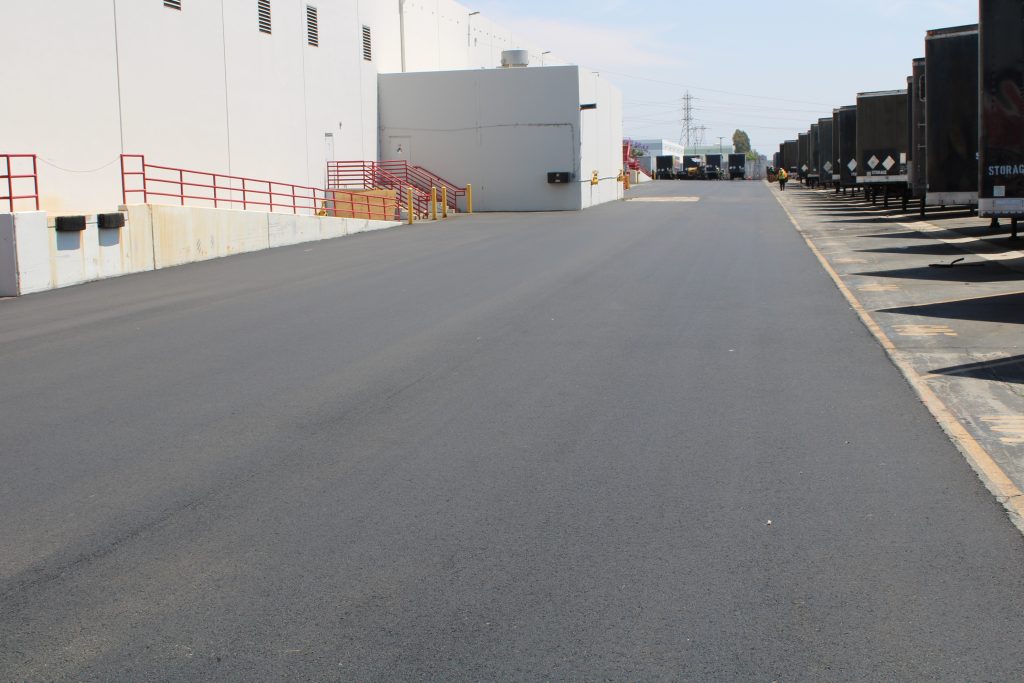
Commercial Pads, Approaches & ADA Work
The load-bearing standard across all three Coronas: dumpster pads sized to the refuse truck’s full path, dock aprons and equipment pads for the industrial north, driveway approaches and storefront flatwork on the corridors, and ADA ramps and accessible routes built to current federal and California standards — every element’s design load stated on the proposal, every joint layout drawn for this climate.
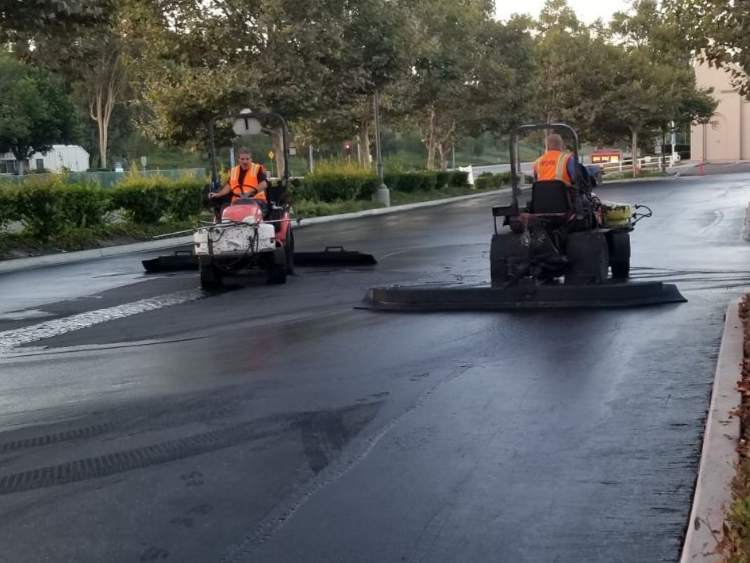
HOA & Community Flatwork
The south’s specialty: walkways, community-area slabs, drive approaches, and the shared concrete of master-planned neighborhoods — installed and repaired with board-ready documentation, phased around residents, and assessed panel-by-panel so communities fund ranked plans instead of open-ended fears.
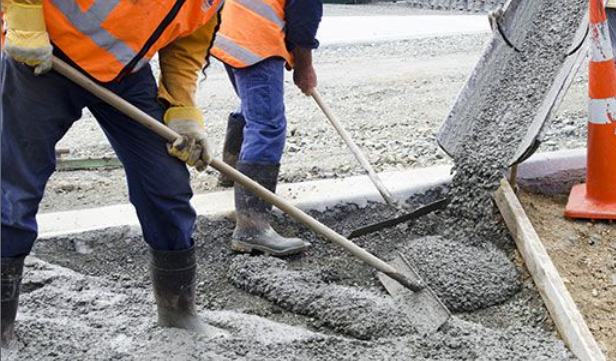
Repair, Replacement & Right-of-Way Concrete
Diagnosis-first repair of cracked, settled, and spalled concrete — cause identified before replacement is quoted — plus frontage work in the public right-of-way, permitted through Corona’s Development Services counter as contractor scope, with the Temescal Valley county-jurisdiction difference handled where 92883 addresses need it.
Get Your Free Concrete Installation and Repair Proposal
From a single dumpster pad to a full site’s flatwork, our estimators will scope the work with the specs in writing. Call (951) 739-9200 or submit the form below.
The Thermal Life of a Slab: Why Joints Are Climate Engineering Here
Every concrete slab is in constant motion — expanding as it heats, contracting as it cools — and the size of that motion tracks the size of the temperature swing, which is why inland concrete lives a more strenuous life than coastal concrete ever will. Corona hands its slabs both versions of the workout: the daily swing (a summer slab can traverse a huge temperature range between 5 AM and 3 PM) and the seasonal one (surface temperatures from winter-cold to summer-scorching). The movement itself can’t be prevented — concrete is going to change dimension with temperature, period — so good design does the only wise thing: it decides where the resulting stress gets relieved. That’s what joints are: planned relief lines, spaced so the slab’s accumulated shrinkage and thermal stress crack at the joint (straight, clean, sealable) instead of wherever the slab chooses (wandering, ragged, permanent). The climate rule that follows: bigger swings argue for disciplined spacing — generous joint intervals that work in mild climates run out of margin here, which is why we draw Corona joint layouts conservatively and to the slab’s actual geometry (squarish panels, joints at re-entrant corners where slabs love to crack, isolation joints wherever flatwork meets buildings, posts, and anything that doesn’t move with it). One more inland-specific behavior completes the picture: curling — slabs whose top and bottom surfaces sit at different temperatures bow microscopically at the edges, which is why panel corners sometimes rock or wear first in sun-baked lots; proper joint spacing, slab thickness, and curing all tame it. None of this is exotic — it’s the standard practice bodies like the National Ready Mixed Concrete Association publish — but it’s practice a bid either reflects or doesn’t, and in this climate the difference is written on the slab by its second summer. A Corona concrete proposal should show its joint plan; ours do, drawn before the truck is ordered.
Pouring in the Heat: The Summer Craft That Decides a Slab's First Day
A slab’s whole life is shaped by its first hours, and Corona summers make those hours a discipline. Heat accelerates cement’s chemistry — hot weather shortens working time, so a mix that gives a finishing crew a comfortable window in April gives them a sprint in August — and the air itself becomes an adversary through the evaporation triangle: heat, wind, and low humidity (our summer trifecta) pull moisture off the fresh surface faster than the concrete’s own water rises to replace it, and a surface that dries while the slab beneath is still plastic tears itself into plastic shrinkage cracks — the shallow, parallel early cracks that are hot-country concrete’s signature defect, entirely preventable and entirely permanent. The playbook that prevents it is why summer pours here look the way they do: dawn starts, placing concrete in the day’s coolest, calmest hours so set times and finishing stay controlled; cooled mixes where size and season demand them; wind and evaporation managed at the surface — misting, evaporation retarders, and finishing sequenced so no fresh surface sits exposed and drying; curing treated as the main event, not the cleanup — wet curing or quality curing compounds applied promptly and maintained, because the strength a slab reaches depends on the water the reaction keeps, and hot dry air is a thief; and the sawing window respected — control joints must be cut in the hours after finishing, and heat narrows that window, so summer jointing is scheduled to the concrete’s clock, not the crew’s convenience, because a slab that cracks overnight before its joints were cut has made its own joint plan permanently. The owner’s translation: an August pour done by hot-weather practice is every bit as good as an April one — and a bidder’s answer to “how do you handle a summer pour?” tells you in one minute whether they own the practice or just the truck.
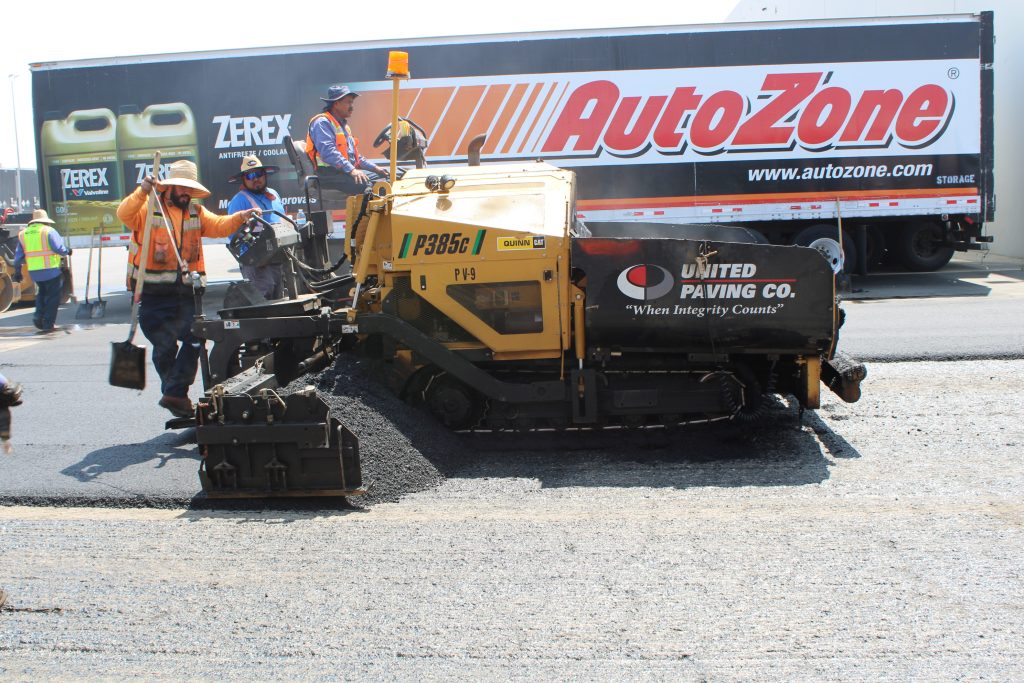
Why Corona Property Owners Choose United Paving Co.
Licensed California Contractor
verify our license anytime through the CSLB license check.
Over 25 years in the asphalt and concrete industry
Serving properties from Los Angeles through San Diego County
Active members of the property-management community.
BOMA, IREM, CAI, ICSC, AGC, and more.
Materials and Methods
Free on-site written estimates
We work throughout Corona — 92879 (central: the Circle City core and North Main corridor), 92880 (the industrial north toward the Eastvale line), 92881 (the south: Eagle Glen, Dos Lagos, and the Ontario Avenue corridor), and 92882 (the west: Sierra del Oro, Green River, and the older westside neighborhoods) — plus the Temescal Valley communities of 92883, where county jurisdiction applies and we handle the difference as standard scope.
A Crack Guide for Concrete Owners: Which Ones Matter
Concrete cracks — the honest trade says when, not if — and the skill worth borrowing is telling the cosmetic from the consequential. Craze cracking — a fine, shallow, chicken-wire pattern over the surface, common on sun-exposed slabs — is a finishing-and-curing artifact: cosmetic, stable, and no threat to the slab. Hairline shrinkage cracks — thin, tight lines from the slab’s first-year drying — are ordinary; if they’re narrow, flat, and not moving, they’re the material being the material. Plastic shrinkage cracks — the shallow parallel tears described above — are a birth defect: usually cosmetic-to-minor structurally, but a permanent record of a rushed hot-weather finish, and worth sealing against water. The consequential list is different. Working cracks — ones that visibly open and close with the seasons, or grow year over year — are movement finding an unplanned path, and they need sealing at minimum and diagnosis at best, because whatever’s moving hasn’t finished. Settlement cracks — accompanied by a panel dropping, tilting, or rocking — are a base problem wearing a concrete symptom: the fix is under the slab, and replacing the panel without addressing the base schedules the sequel. Corner breaks and edge failures at loaded locations mean the load exceeded the design (or the design was never made) — the refuse-truck aprons and approach edges of the world — and the rebuild specs to the real duty. And spalling with rust stains means embedded steel is corroding and jacking the concrete off itself — a repair with a cause, not a patch. The rule that organizes it all: flat, tight, and stable is usually cosmetic; moving, dropping, or growing is structural — photograph the crack with a coin for scale, photograph it again in six months, and you’ve done the first diagnostic yourself. Bring us both photos and the assessment starts a step ahead.
Corona Concrete Installation and Repair - FAQs
Our new slab has fine hairline cracks after its first year. Did we get a bad pour?
Probably not — thin, tight, stable lines are ordinary drying shrinkage, the material's normal first-year behavior. The checks that matter: are they narrow and flat, and are the joints doing their job elsewhere? Cracks that open seasonally, widen year over year, or come with movement are the ones that earn a call.
Why do concrete crews here want to start at 5 AM in summer?
Because the concrete demands it: heat shortens working time and the summer air strips moisture off fresh surfaces fast enough to tear them. Dawn placement keeps set times controlled, finishing unhurried, and the surface protected — the early alarm is the cheapest quality-control measure in hot-weather concreting.
A slab we had poured last July is flaking and showing shallow parallel cracks. What happened?
That reads like a hot-weather finish done without the playbook — plastic shrinkage cracking from surface drying, sometimes with weakened surface paste that flakes under traffic. It's permanent but usually manageable: sealing protects against water entry, and the real lesson is for the next pour — evaporation control and prompt curing are non-negotiable here.
How far apart should joints be on a Corona slab?
Conservatively, drawn to the slab's thickness and geometry — squarish panels, relief at re-entrant corners, isolation wherever the slab meets things that don't move with it. The honest answer is a drawing, not a number: joint layout should arrive with the proposal, because in this climate the spacing is doing climate work, not decoration.
Does concrete need sealing in our sun, like asphalt does?
Differently but yes: the slab itself doesn't oxidize the way asphalt binder does, but surface sealing slows water absorption and staining, and joint sealing is the workhorse here — keeping storm water out of the relief lines so it never reaches the base. Joints resealed on cycle are cheap; a base eroded through failed joints is not.
One corner of a walkway panel dropped half an inch and rocks underfoot. Grind it or replace it?
Neither yet — diagnose it: a dropped, rocking panel is a base or moisture problem underneath, and both grinding and replacing without fixing the cause buy the same failure twice. Once the base story is read (and corrected), the panel decision usually makes itself.
Areas We Serve NEAR Corona
We work throughout Corona — 92879 (central: the Circle City core and North Main corridor), 92880 (the industrial north toward the Eastvale line), 92881 (the south: Eagle Glen, Dos Lagos, and the Ontario Avenue corridor), and 92882 (the west: Sierra del Oro, Green River, and the older westside neighborhoods) — plus the Temescal Valley communities of 92883, where county jurisdiction applies and we handle the difference as standard scope. See our concrete pages for Riverside, Perris, and Menifee.