
Asphalt Repair and Maintenance in Oceanside, ca
Asphalt Repair and Maintenance in Oceanside, CA — Repairs That Protect the Rent Roll
In most cities, a pothole costs you a repair. In Oceanside’s defining market — the county’s deepest stock of apartments and rentals — it costs you more quietly: every prospective tenant’s first impression happens in the parking lot, every lease tour walks across the pavement’s condition, and a property competing for military households in PCS season is being judged against the community down the street before anyone sees a unit. United Paving Co provides asphalt repair and maintenance in Oceanside, CA with that arithmetic in view: repairs prioritized by what they protect — occupancy, safety, and the asset — programs built for owners holding properties across this city’s coast-to-valley gradient, and fluency in the piece of Oceanside fabric most contractors have never priced correctly: the alleys.
Our Asphalt Repair and Maintenance in Oceanside
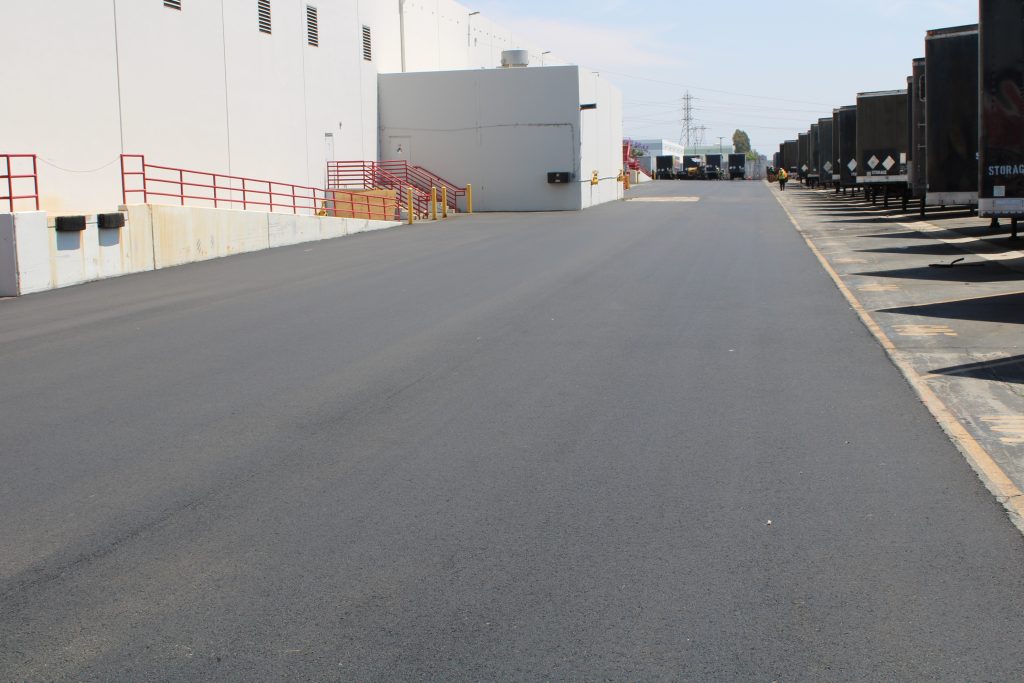
Patching & Failed-Zone Reconstruction
Remove-and-replace repair of potholes, alligatored zones, and base failures — excavated to sound material, base rebuilt, hot-mix compacted to the location’s real duty — at apartment communities, corridor retail, industrial parks, and HOA streets, with occupied-property choreography as the default: resident notices, phased stall closures, fire-lane continuity, and tow coordination carried as scope.
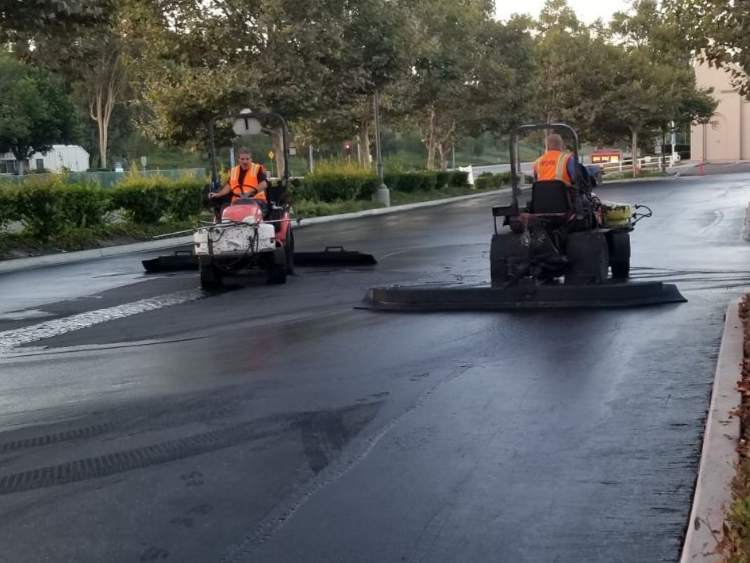
Multifamily Curb-Appeal & Make-Ready Repair
The leasing-calendar specialty: repair scopes timed to the property’s revenue rhythm — entry drives and tour paths brought right before peak leasing season, hazard repairs handled on the immediate clock their liability demands, and cosmetic zones batched economically into scheduled visits, so the property photographs well when it matters and the budget goes where the rent roll feels it.
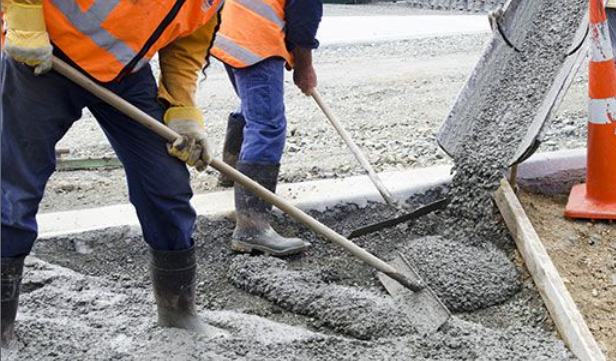
Crack Sealing & Portfolio Maintenance Programs
Hot-applied crack sealing each fall before the December–March storms — the highest-return line on every property’s budget — plus standing programs built for multi-property owners: condition baselines across the portfolio, per-property calendars tuned to each site’s climate mile-marker, and shared-mobilization pricing that makes maintaining five properties cheaper per square foot than maintaining one.
Get Your Free Asphalt Repair and Maintenance Proposal
Send us photos or schedule a site walk — our estimators will priority-rank what actually needs repair now, what can wait, and what maintenance will keep you off the expensive end of the curve. Call (951) 739-9200 or submit the form below!
Vacancy Math: What Pavement Condition Actually Costs a Rental Property
Here’s the repair economics no square-footage bid captures: at a rental property, pavement condition is a leasing input, and its costs arrive as vacancy, not invoices. Run the owner’s math. A community’s entry drive and tour path are its handshake — condition research across real estate consistently puts exterior first impressions among the strongest drivers of prospect decisions, and a cratered entry tells every tour the same story about how the property is run before the leasing agent says a word. The clock matters double here: military-heavy tenancy concentrates turnover into PCS season, which means the property’s pavement is being judged by its year’s largest prospect volume in a compressed window — a repair completed in April earns its keep across the whole summer wave; the same repair in September missed the season it existed for. The liability line compounds it: at a residential property, trip hazards and pothole damage aren’t abstract exposure — they’re incidents involving your own tenants, documented on your own property, with habitability expectations layered over ordinary premises liability. And the deferral math runs the same direction it always does: surface repairs deferred through a winter graduate toward base repairs at multiples of the cost. The scheduling translation we build into multifamily proposals: hazards now, handshake zones before leasing season, cosmetics batched into the cheapest mobilization — a priority order written from the rent roll’s point of view, which is the only point of view a rental property’s pavement budget should take.
The Portfolio Program: Maintaining Many Properties Like One Asset
Oceanside’s ownership pattern — portfolio owners and managers holding multiple communities across town — rewards a maintenance structure most cities never need, and it runs on three mechanics. One baseline, many calendars: the portfolio gets a single condition assessment pass — every property mapped on the same scale, same season, same criteria — so the owner sees the whole holdings’ pavement as one dataset; but the resulting calendars diverge by mile marker, because the harbor-area community and the valley community age on different clocks (the coastal site’s priorities lean drainage and crack discipline; the valley site’s lean the compressed seal-and-repair cycles of inland sun — see [Seal Coating in Oceanside] — internal link). Shared mobilization is the discount that compounds: crews, equipment, and materials moving across multiple properties in planned sequence cost meaningfully less per property than five separate projects bid cold — fall crack-sealing campaigns and repair batches priced across the portfolio are where multi-property owners buy maintenance at a structurally better rate. And ranked capital planning replaces whack-a-mole: with every property on one baseline, the portfolio’s worst-first order becomes visible — this year’s budget goes to the community whose base is actually failing, not the one whose manager emailed most recently, and the reserve planning for each property’s eventual reconstruction gets real dates instead of guesses. The deliverable that makes it work is the document set: per-property condition maps, a portfolio-level priority table, and multi-year budget projections formatted for whoever approves the money — asset manager, board, or bank.
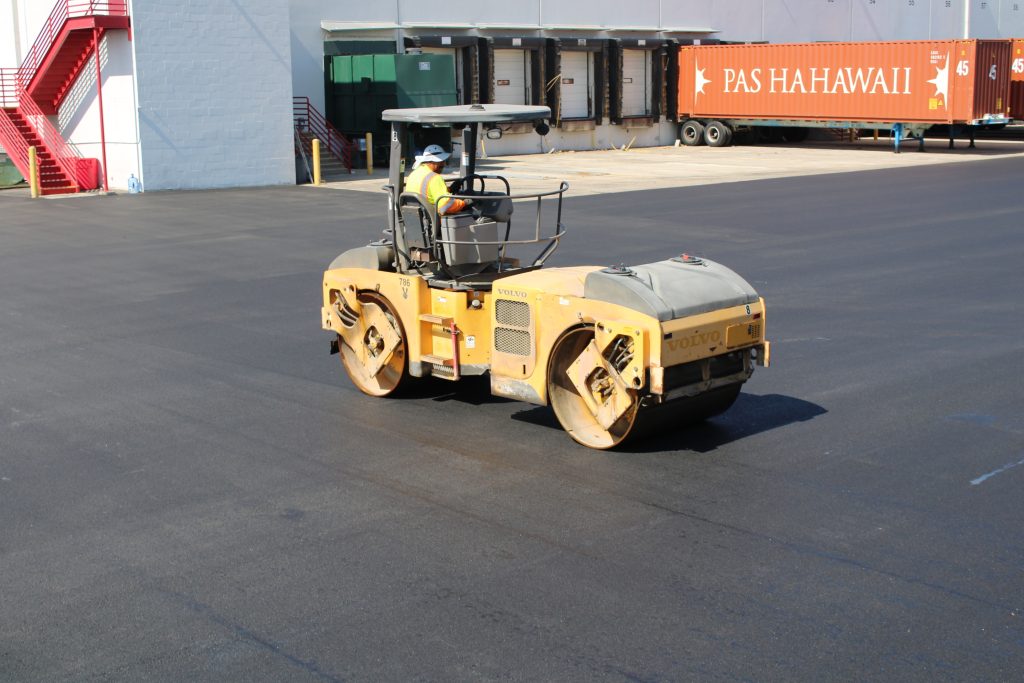
Your Pavement Maintenance Timeline
| When | What | Why |
|---|---|---|
| Year 1 | First seal coat (after full cure) | Locks in binder before UV oxidation starts |
| Every 3–5 years | Re-apply seal coat | Ongoing UV and moisture protection in our high-sun climate |
| Annually (fall) | Crack sealing | Closes entry points before winter rains reach the base |
| As needed | Patching, striping refresh | Addresses isolated damage; maintains ADA compliance |
| Year 15–25+ | Overlay or reconstruction | Even well-maintained pavement eventually reaches structural end-of-life |
The Alley Problem: Oceanside's Hidden Pavement Network
Older coastal Oceanside runs on a fabric newer cities never built: alleys — the narrow lanes threading the blocks between streets, serving garages, carports, trash pickup, and the rear parking of exactly the rental properties this city specializes in. They’re also the most neglected pavement in town, for a structural reason: an alley is everyone’s access and no one’s frontage, so it absorbs decades of trench cuts, refuse-truck axles, and drainage improvisation while sitting last on every maintenance list. The repair realities are their own discipline. Drainage is the design constraint: most alleys drain down their own centerline — an inverted crown carrying water along the alley’s length — so repairs must preserve that center flowline exactly; a patch crew that crowns an alley patch like a street patch builds a dam mid-block, and every property upstream learns it the next storm. The duty is heavier than it looks: refuse trucks work alleys weekly at axle loads the original section rarely anticipated, which is why alley failures cluster at the pickup points and why durable repairs there spec heavier than the alley’s age would suggest. Jurisdiction and access take homework: alley status varies — public right-of-way in much of the older grid, private or shared in spots — which sets the permit path; and repairs must phase around the access they interrupt, because closing an alley closes garages, trash service, and rear parking for every property on it, with notice choreography to match. For owners of alley-served rentals, the practical takeaway: your property’s real entrance may be the alley — your tenants’ cars, your trash service, your garages all live on it — and the condition walk that skips it has skipped the pavement your property actually depends on.
Why Oceanside Property Owners Choose United Paving Co
Licensed California Contractor
verify our license anytime through the CSLB license check.
Over 25 years in the asphalt and concrete industry
Serving properties from Los Angeles through San Diego County
Active members of the property-management community.
BOMA, IREM, CAI, ICSC, AGC, and more.
Materials and Methods
Free on-site written estimates
We work throughout Oceanside — 92054 (the coast: downtown, the harbor and pier districts, Fire Mountain, and South Oceanside), 92056 (central and east: the El Camino Real corridor, Rancho Del Oro, and the mesa neighborhoods), 92057 (the north and the San Luis Rey valley: College Boulevard corridor, Jeffries Ranch, and the route east), and 92058 (San Luis Rey and the Highway 76 corridor).
Oceanside Asphalt Repair and Maintenance - FAQs
When should an apartment community schedule repairs for maximum leasing value?
Ahead of the prospect wave: hazard repairs immediately, and the handshake zones — entry drive, tour path, guest parking — completed before PCS season's summer surge, so the year's largest prospect volume meets the property at its best. Spring completion buys a full season; fall completion buys a photograph.
Our alley patch from last year created a puddle mid-block. What went wrong?
The patch fought the alley's design: most alleys drain down an inverted-crown centerline, and a patch built with street-style crown dams that flowline. The fix rebuilds the patch to the alley's true center grade — and it's why alley repair is its own discipline, not street repair in a narrow space.
We own four properties across town. Is a combined maintenance program actually cheaper?
Structurally, yes: one baseline assessment, shared mobilization across sites, and batched fall campaigns price meaningfully below four cold-bid projects — and the portfolio-level priority table means each year's budget lands where the pavement math says, not where the loudest request came from.
A tenant's car was damaged by a pothole in our lot. What should we do about the pavement?
Repair on the immediate clock and document everything: photos of the condition, the repair date, and the invoice — because at a rental property, a known hazard's timeline is the liability story. Then walk the rest of the lot with the same eyes; potholes travel in cohorts, and the second incident is the expensive one.
Refuse trucks keep breaking the same spot in our alley. Why does it keep failing?
Because the repairs keep matching the alley's original light-duty section while the trucks apply street-grade axle loads at the same pickup point weekly. The fix that holds specs that zone to the duty it actually takes — deeper base, heavier section at the pickup and turning spots — once, instead of annually.
Can repairs at our occupied community really avoid towing anyone?
That's the goal the choreography serves: phased closures sized small, notices at doors and windshields on a published cadence, clear dates, and management-coordinated escalation for the stragglers — towing as last-resort procedure, not first-resort surprise. Communities that have lived a bad project are usually remembering the version without the choreography.
Areas We Serve NEAR Oceanside
We work throughout Oceanside — 92054 (the coast: downtown, the harbor and pier districts, Fire Mountain, and South Oceanside), 92056 (central and east: the El Camino Real corridor, Rancho Del Oro, and the mesa neighborhoods), 92057 (the north and the San Luis Rey valley: College Boulevard corridor, Jeffries Ranch, and the route east), and 92058 (San Luis Rey and the Highway 76 corridor). See our asphalt repair pages for Carlsbad, Vista, and San Marcos.