
Asphalt Repair and Maintenance in Corona, ca
Read Right, Fixed Right, From Right Down the Street
Repair starts with reading, and Corona’s pavement writes in a particular hand: the inland sun ages surfaces from the top down, heat cycles crack them in patterns that have nothing to do with traffic, and the difference between a lot that’s weathered twenty summers well and one that’s failing at fifteen usually comes down to a maintenance habit that cost a few hundred dollars a year. United Paving Co provides asphalt repair and maintenance in Corona, CA with the hometown version of the service: diagnosis that reads heat damage correctly, repairs graded honestly from stopgap to permanent, response times measured in freeway exits — and the standing maintenance programs that decide, quietly and years in advance, which side of the divergence your pavement lands on.
Our Asphalt Repair and Maintenance in Corona
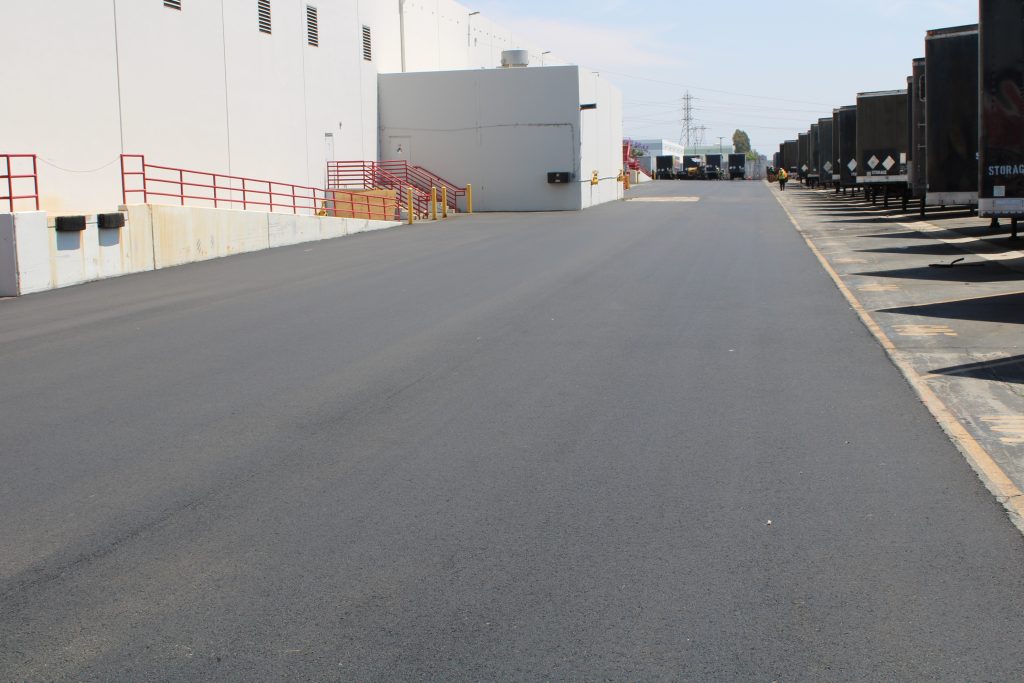
Patching & Failed-Zone Reconstruction
Remove-and-replace repair done to the permanent standard: failed zones sawcut to clean edges, excavated to sound material, base rebuilt and compacted, hot-mix restored to the duty the location actually carries — at industrial courts, corridor retail, HOA streets, and the older core’s aging lots, phased so businesses and communities keep operating.
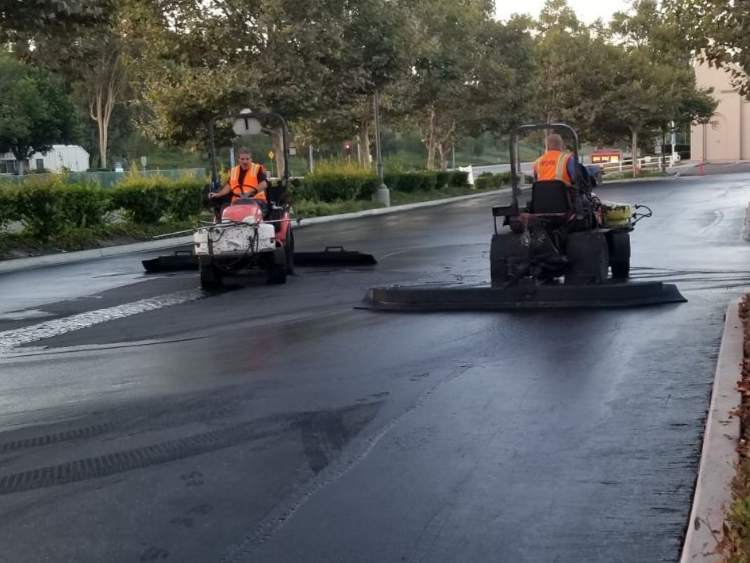
Crack Sealing & Maintenance Programs
Hot-applied crack sealing on the fall calendar — the habit that separates Corona’s twenty-five-year lots from its fifteen-year ones — plus standing programs with condition mapping, per-zone schedules, and budgets formatted for facility managers, HOA boards, and the portfolio owners we’ve served for decades.
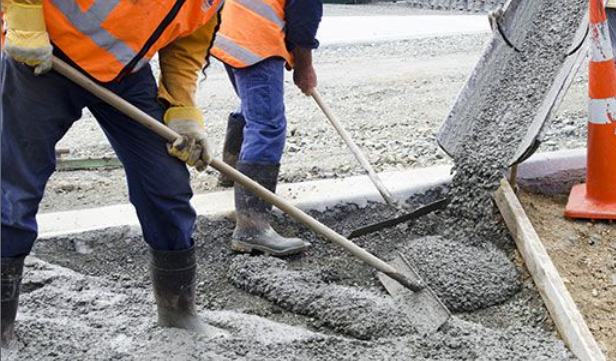
Hometown Rapid Response
The home-field service: hazard repairs on the immediate clock — potholes in active drive lanes, trip-edge failures, storm damage — with Corona mobilizations the shortest we offer anywhere, honest stopgap-versus-permanent recommendations on arrival, and the permanent fix scheduled before the temporary one is forgotten.
Get Your Free Asphalt Repair and Maintenance Proposal
Send us photos or schedule a site walk — our estimators will priority-rank what actually needs repair now, what can wait, and what maintenance will keep you off the expensive end of the curve. Call (951) 739-9200 or submit the form below!
Reading the Cracks: A Field Guide to What Corona Pavement Is Telling You
Cracks are pavement’s handwriting, and the pattern names the cause — which names the fix. Learn four signatures and you can pre-diagnose most of what you’ll ever see on a Corona lot. Alligator cracking — the chicken-wire mesh of small interconnected polygons in the wheel paths — is load damage: the pavement flexing over a base that’s no longer supporting it, and it means the fix is structural (dig-out and rebuild), because sealing the surface of a base problem is painting a bruise. Block cracking — larger rectangles, often a foot or more across, spread across the whole lot regardless of where anyone drives — is this climate’s signature: age and thermal cycling, the binder oxidizing brittle under years of sun and then cracking as the pavement expands and contracts through Corona’s big daily temperature swings. Its message is different: the surface is aging but the structure may be fine — crack-seal it, protect what remains (see [Seal Coating in Corona] — internal link), and plan the resurfacing on a schedule instead of an emergency. Straight-line cracks — transverse (across the pavement) or longitudinal (along it) — are usually thermal or joint-related: individually minor, highly sealable, and dangerous only when ignored, because every open line is a water intake. And raveling — the surface losing its fine material until it looks like exposed aggregate and sheds loose grit — is oxidation’s end stage here: the sun-dried binder no longer holding its stone, a surface announcing it needed protection years ago. The diagnostic payoff: pattern plus location tells you whether you’re buying a structural repair, a maintenance treatment, or a resurfacing conversation — and a contractor who quotes without distinguishing them is pricing a mystery.
The Twin-Lots Story: How Two Identical Lots End Up a Decade Apart
Here’s the most valuable economics lesson twenty-five years of one city teaches, and Corona demonstrates it on block after block: two commercial lots, built the same year by the same kind of developer to the same spec, sitting a mile apart — one still sound at year twenty-five, one reconstructed at year sixteen. The divergence wasn’t construction, traffic, or luck. It was a habit. The surviving lot got crack-sealed most falls and seal-coated on cycle: a few thousand dollars in scheduled years, and — this is the mechanism — every winter’s water met a closed surface, so the base underneath spent two decades dry and strong. The failed lot deferred: each skipped year let the sun open more cracks and the December-through-March storms pump water into the base, and base damage is the only pavement damage that gets truly expensive — by the time the surface looked bad enough to act on, the structure underneath was already gone, and the owner bought demolition, base reconstruction, and new pavement at many multiples of the maintenance that would have prevented all of it. The inland kicker: Corona’s sun runs this divergence faster than milder climates — oxidation opens cracks sooner, so the deferral penalty compounds earlier — which is why maintenance programs here aren’t upsell, they’re the cheapest decade-scale decision a property makes. We’ve watched the twin-lots story play out across this city for our whole corporate life; the program exists so your lot is the one still standing when the comparison gets made.
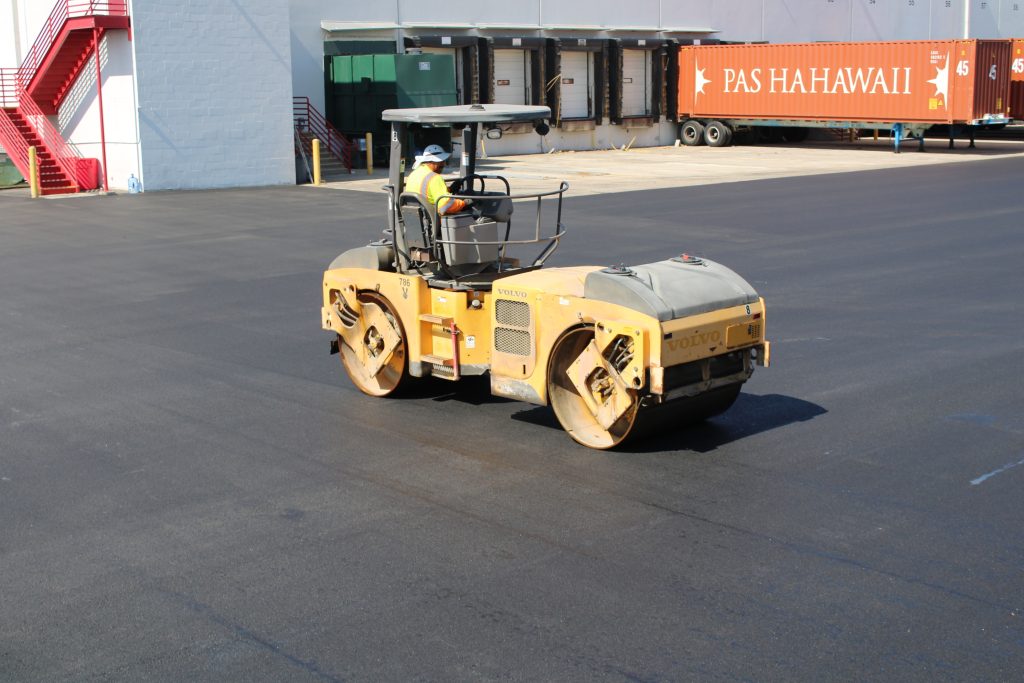
Your Pavement Maintenance Timeline
| When | What | Why |
|---|---|---|
| Year 1 | First seal coat (after full cure) | Locks in binder before UV oxidation starts |
| Every 3–5 years | Re-apply seal coat | Ongoing UV and moisture protection in our high-sun climate |
| Annually (fall) | Crack sealing | Closes entry points before winter rains reach the base |
| As needed | Patching, striping refresh | Addresses isolated damage; maintains ADA compliance |
| Year 15–25+ | Overlay or reconstruction | Even well-maintained pavement eventually reaches structural end-of-life |
The Repair Ladder: Stopgap, Semi-Permanent, and Permanent — and When Each Is Honest
Not every repair should be the gold standard, and a trustworthy contractor tells you which rung of the ladder you’re buying. Cold patch — bagged or truck-loaded asphalt placed without heat — is the tourniquet: legitimate for immediate hazard abatement (a pothole in an active lane can’t wait for scheduling), for winter repairs when hot-mix plants and weather don’t cooperate, and as a bridge to permanent work already on the calendar. Its honest lifespan is measured in months, and its dishonest use — sold as the fix, invoiced annually for the same hole — is the industry’s most common small-scale grift. Semi-permanent repair — the failed area squared up, cleaned, filled with hot mix, and compacted, without full-depth excavation — is the middle rung: right where the surface has failed but the base beneath checks sound, at a meaningful discount to full-depth, with years of honest service in it. Permanent repair — sawcut edges, excavation to sound material, base rebuilt and compacted, hot-mix restored in lifts to the location’s duty spec — is the standard for anything structural: wherever alligatoring, pumping, or repeat failure says the base is involved, anything less is renting the hole. The ladder’s rule of use: match the rung to the diagnosis, not the budget’s mood — a permanent repair on a surface-only failure over-spends, a cold patch on a base failure under-spends into perpetuity — and every repair on our proposals is labeled by rung, because a price without a grade is a repair without a promise. One hometown footnote: rapid response and the ladder work together — our same-week hazard calls often place the tourniquet and schedule the surgery in one visit, which is what stopgap repair is actually for.
Why COrona Property Owners Choose United Paving Co
Licensed California Contractor
verify our license anytime through the CSLB license check.
Over 25 years in the asphalt and concrete industry
Serving properties from Los Angeles through San Diego County
Active members of the property-management community.
BOMA, IREM, CAI, ICSC, AGC, and more.
Materials and Methods
Free on-site written estimates
We work throughout Corona — 92879 (central: the Circle City core and North Main corridor), 92880 (the industrial north toward the Eastvale line), 92881 (the south: Eagle Glen, Dos Lagos, and the Ontario Avenue corridor), and 92882 (the west: Sierra del Oro, Green River, and the older westside neighborhoods) — plus the Temescal Valley communities of 92883, where county jurisdiction applies and we handle the difference as standard scope.
Corona Asphalt Repair and Maintenance - FAQs
Our whole lot is cracking in big rectangles, even where nobody drives. Is the base failing?
Probably not — that pattern is block cracking, this climate's signature: sun-aged binder cracking under thermal cycling, a surface problem across the whole exposure rather than a load problem in the wheel paths. The response is seal the cracks, protect the surface, and plan resurfacing on a schedule — a very different (and much cheaper) conversation than base reconstruction.
Why does the pothole repair we bought last year keep coming back?
Check the rung: if it was cold patch, it was a tourniquet sold as surgery — honest for weeks-to-months, dishonest as an annual invoice. If it was hot mix and still failed, the base underneath was involved and the repair didn't go deep enough. Either way, the returning hole is telling you which repair it actually needed.
How fast can you get to a hazard in Corona?
Home-field fast: hazard calls in our headquarters city get the shortest mobilization we offer — typically same-day or next-day for active-lane potholes and trip edges, with the stopgap placed on arrival and the permanent fix scheduled in the same visit. It's the most tangible thing "hometown contractor" means.
The lot next door is the same age as ours and looks ten years younger. What are they doing?
Almost certainly maintaining: fall crack sealing and on-cycle seal coating keep winter water out of the base, and over fifteen or twenty inland summers that habit is the whole divergence — a few thousand a year against a six-figure reconstruction. The good news is the habit can start now; the honest news is it can't retroactively dry out a base that's already been soaked for a decade, which is what the assessment determines.
Is it too late to crack-seal cracks that have been open for years?
Rarely too late to help, sometimes too late to fully save: sealing old cracks still shuts off future water, which slows everything downstream — but if past winters already reached the base, sealing joins a repair conversation rather than replacing one. The distinction shows in the pavement around the cracks: sound and flat argues seal-and-protect; depressed or alligatored argues the water already won locally.
Can repairs at our retail center run without scaring off customers?
That's standard corridor choreography: small-footprint phasing that never takes the storefront row's parking at once, work sequenced against your traffic hours (early mornings on retail strips, mid-days where mornings rule), clean cutlines and same-day reopening per zone — the repair should read as maintenance happening, not construction looming.