
Asphalt Paving in Poway, CA
Asphalt Paving in Poway, CA — From Campus Truck Courts to the Longest Driveways in the County
Poway paves at two scales no other city in our service area combines: the South Poway Business Park’s corporate campuses and truck-served industrial streets on one end, and horse country’s private lanes and ranch driveways — some running a quarter mile from gate to garage — on the other. United Paving Co provides asphalt paving in Poway, CA for both: new construction, removal and replacement, and fine grading, specified honestly to what each surface actually carries — and, on the rural half, engineered around the two forces that decide whether a long driveway thrives or dissolves: water and fire access.
The Quarter-Mile Question: Why a Long Driveway Is a Drainage Project First
Here’s the engineering reframe every rural Poway owner deserves before spending driveway money: a 40-foot suburban driveway is a slab; a 1,000-foot Poway driveway is a watershed intervention. Every foot of pavement on a hillside run intercepts the water that used to sheet across it — and then has to put that water somewhere, foot after foot, all the way down. Get that right and the asphalt is almost incidental: a crowned or cross-sloped surface sheds each yard’s rain sideways immediately; swales along the uphill edge intercept the hillside’s contribution before it ever touches pavement; culverts carry concentrated flow under the drive at the low points instead of letting it cross over (a wet-season waterfall across asphalt is a base washout on a schedule); and the discharge points release water where it won’t carve a gully into your land or your neighbor’s. Get it wrong and the driveway becomes the drainage system by default — water running down the pavement’s length, gathering volume and speed, finding every crack, undermining edges, and delivering the classic rural failure: edges crumbling inward until a one-lane drive is a goat path. This is why our rural proposals map the water before pricing the asphalt, why long-drive bids that never mention swales or culverts are quoting you the short version of a long problem — and why the second-cheapest line on a good rural bid is drainage, while the most expensive line on a bad one is the re-do.
Get Your Free Asphalt Paving Proposal
Our estimating and project management team will develop the right scope of work for your budget, performance goals, and visual expectations. Estimates and recommendations are free. Call (951) 739-9200 or submit the form below.
Your Pavement Maintenance Timeline
| When | What | Why |
|---|---|---|
| Year 1 | First seal coat (after full cure) | Locks in binder before UV oxidation starts |
| Every 3–5 years | Re-apply seal coat | Ongoing UV and moisture protection in our high-sun climate |
| Annually (fall) | Crack sealing | Closes entry points before winter rains reach the base |
| As needed | Patching, striping refresh | Addresses isolated damage; maintains ADA compliance |
| Year 15–25+ | Overlay or reconstruction | Even well-maintained pavement eventually reaches structural end-of-life |
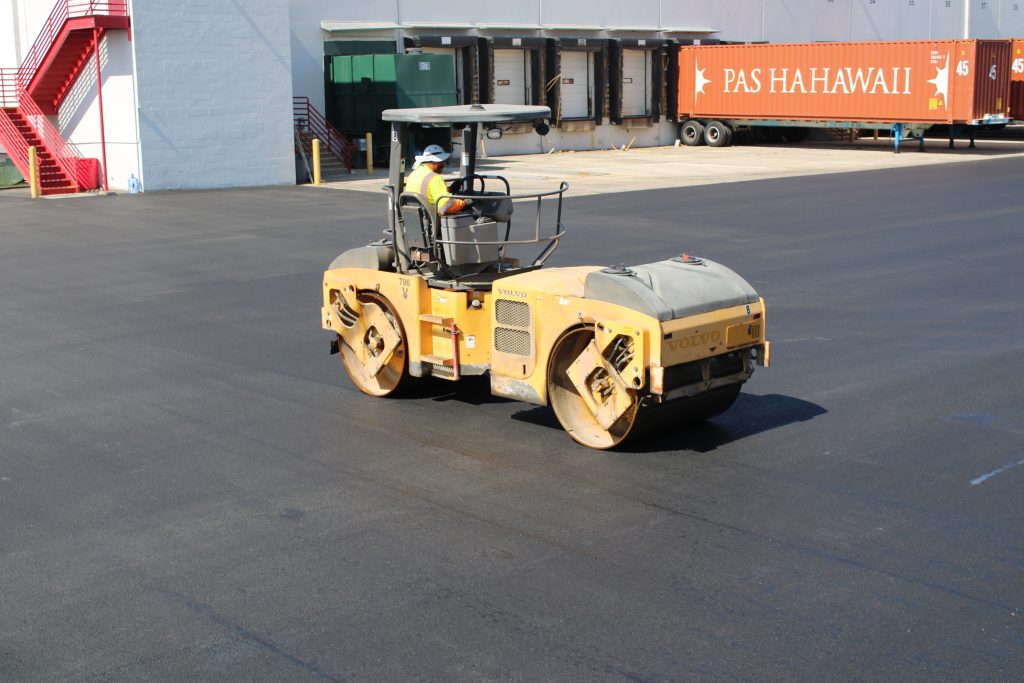
Built for the Trucks You Forget: Trailers, Deliveries, and Fire Apparatus
Rural driveways get specified to a polite fiction — “residential traffic” — and Poway’s reality laughs at it. The actual duty roster: a loaded three-horse gooseneck runs heavier than most delivery trucks; hay, feed, and shavings arrive by the ton; construction and septic services visit every property eventually; and — the one with legal teeth — fire apparatus must be able to reach the house, which in a Wildland-Urban Interface city like Poway is not a suggestion. California fire code and local standards govern rural access: minimum unobstructed widths, grade limits (fire engines refuse slopes steep enough that some hillside drives need engineering, not just paving), vertical clearance, surfaces rated to carry apparatus weight in all weather, and turnarounds where runs exceed the code’s dead-end lengths. The design translation for your project: section thickness and base built to the heaviest regular visitor, not the daily average; widths and geometry checked against access requirements while the plans are still paper (retrofitting width into a finished hillside drive is the expensive version); and grades solved with the route, because the driveway that saves construction dollars by going straight up the fall line pays them back forever in water damage and may fail the one test that matters most on a red-flag day. A Poway driveway done right is quietly three things at once — pavement, drainage, and emergency access — and the bid should show all three.
Our Asphalt Paving Services In Poway
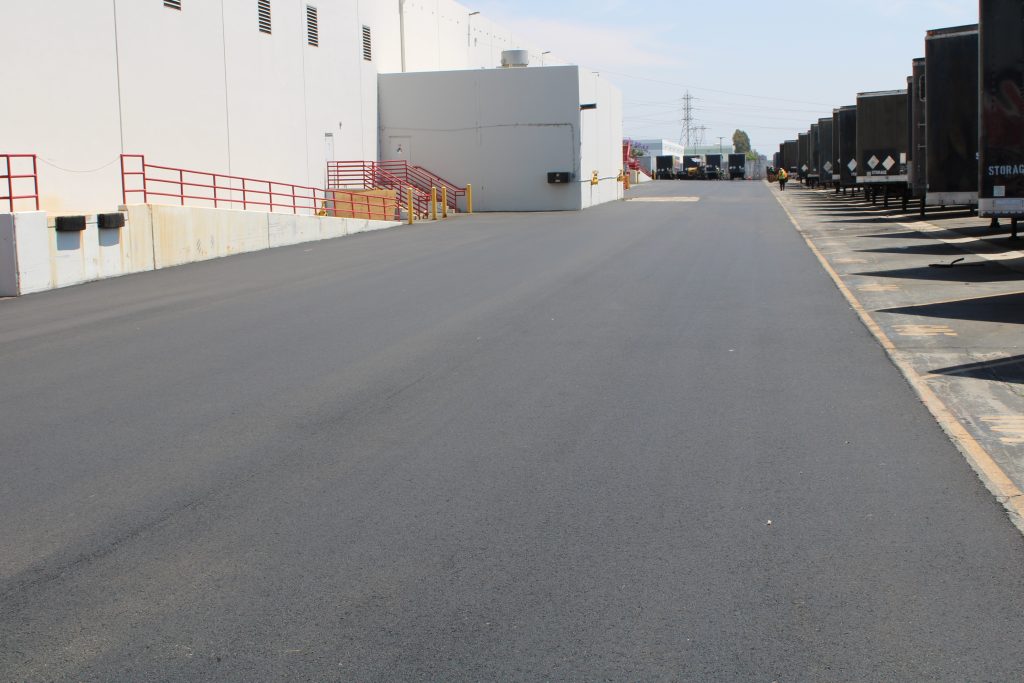
Business Park & Commercial Construction
New pavement and full reconstruction for the business park’s campuses, the Scripps Poway Parkway corridor, and Poway Road’s retail centers — zone-duty design as standard practice: truck courts and dock approaches specified to their freight, drive lanes to their circulation, stall fields to their economics, with fiber-reinforced (Forti-Fi) options where turning trucks work the surface. Written sections per zone on every proposal, and phasing that keeps campuses and centers operating.
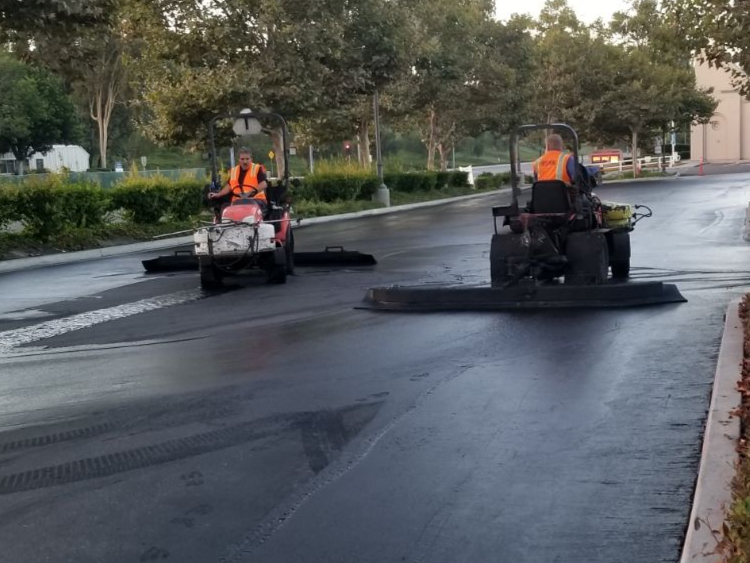
Ranch Driveways, Private Lanes & Rural Paving
The Poway specialty: long-run driveway construction and replacement engineered as the linear infrastructure it is — base built for horse trailers, delivery trucks, and fire apparatus rather than sedans alone; edges designed to survive without urban curbs; transitions detailed where pavement meets dirt, gravel, gate, and garage; and shared private lanes scoped with the itemized documentation neighbor cost-splits need.
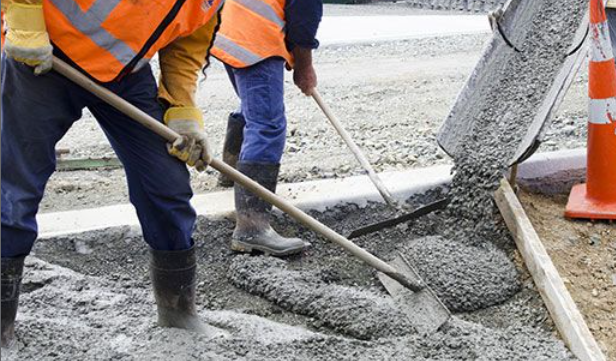
Fine Grading & Drainage Construction
Grading for a city built on sloping granite: cross-slopes and crowns that shed the December–March storms, interceptor swales and culvert coordination on hillside runs, and pad and approach grading that respects Poway’s grading-permit thresholds — because on this terrain, the dirt work under the asphalt is the project.
Permits on Poway's Terrain: ROW, Grading, and the Floodplain Layer
Poway consolidates its process under Development Services, and paving projects here can touch three permit layers. Work in city streets or easements — approaches, curb connections — takes a Right-of-Way Permit through the Engineering Inspection Division. Move enough earth — a real possibility on hillside driveway and pad projects — and the city’s grading-permit process applies, with Land Development Engineering handling review and an engineering inspector assigned to the work. And uniquely among our service cities, properties along Poway’s creek corridors can sit in mapped flood hazard areas, where Floodplain Development Permits add a layer suburban re-paves never meet. The operating rhythm: electronic-only submittals through the city’s online portal, published review timelines, and City Hall closed every other Friday — a calendar fact we build inspection scheduling around rather than discover. All contractor scope on our projects, with the permit path identified at the estimate: on Poway’s terrain, which layers apply is a site-specific answer, and we give it before the work is priced, not after.
Why Poway Property Owners Choose United Paving Co.
Licensed California Contractor
verify our license anytime through the CSLB license check.
Over 25 years in the asphalt and concrete industry
Serving properties from Los Angeles through San Diego County
Active members of the property-management community.
BOMA, IREM, CAI, ICSC, AGC, and more.
Materials and Methods
Free on-site written estimates
We work throughout Poway — 92064 — including the South Poway Business Park and Scripps Poway Parkway corridor, the Poway Road commercial corridor, Old Poway, Green Valley, Garden Road, Rancho Arbolitos, StoneRidge, Bridlewood, and the rural and equestrian neighborhoods of the north and east. See our asphalt paving pages for Escondido, San Marcos, and Miramar.
How a Quality Asphalt Paving Project Works, Step by Step
Most pavement failures trace back to shortcuts in the first three steps below — the ones buried underground when the job is “done.” Here’s the full process, so you know what to expect and what to ask any contractor bidding your project:
1. Site Evaluation & Soil Assessment
San Marcos sits on a mix of decomposed granite, sandy loam, and clay-heavy soils depending on where you are — and each behaves differently under load. Clay expands when saturated and shrinks when dry, flexing whatever sits on top of it. A contractor who quotes your project without evaluating the subgrade is guessing with your money.
2. Demolition & Excavation (for replacement projects)
Failed asphalt and contaminated base are removed and hauled off — and old asphalt is one of America's most recycled materials, routinely reprocessed into new pavement, as documented by the Asphalt Institute. We excavate to the depth the new pavement section requires, not just deep enough to hide the old problems.
3. Subgrade Preparation & Aggregate Base
The subgrade is compacted and proof-rolled to expose soft spots, which are dug out and rebuilt. Then Class II aggregate base is placed and compacted in lifts. This layer carries the structural load; the asphalt on top mostly protects it and provides the driving surface.
4. Fine Grading for Drainage
Surfaces are graded to a minimum slope (typically 1–2%) toward drains, gutters, and flowlines. Standing water after a storm is the most common visible symptom of grading that was skipped or done wrong.
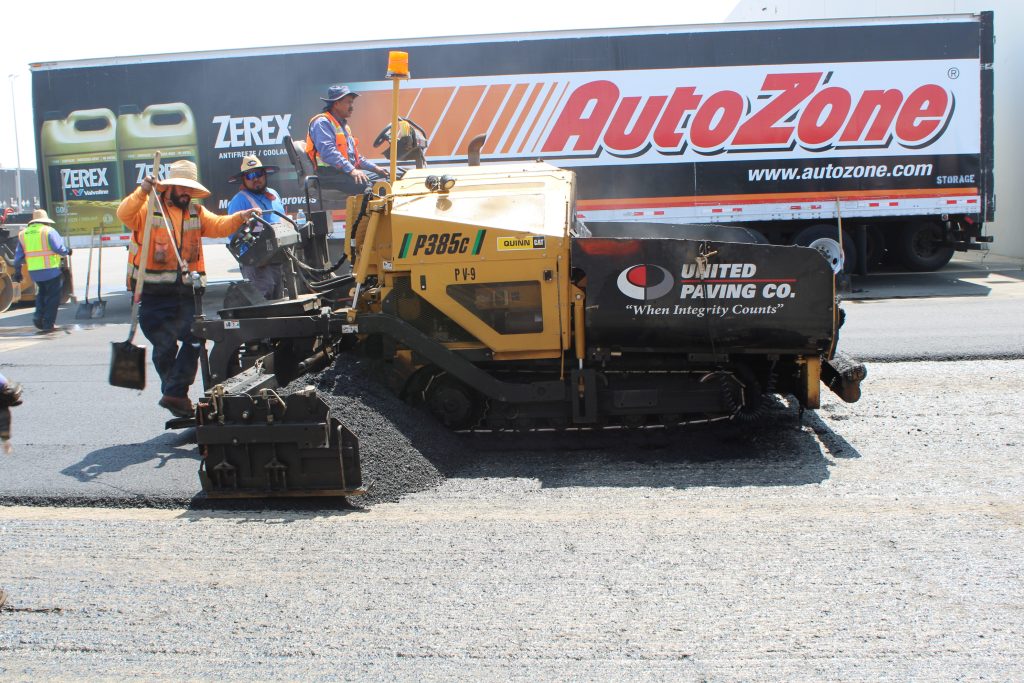
5. Hot-Mix Asphalt Placement
Hot-mix asphalt arrives at roughly 300°F and must be placed and compacted before it cools. Thickness depends on use: a residential driveway section differs substantially from a truck-trafficked commercial lot. This is why a bid quoting "asphalt paving" without specifying compacted thickness isn't comparable to one that does.
6. Compaction & Finishing
Rollers compact the mat to target density while it's still workable. Proper compaction is the single biggest factor in pavement durability — under-compacted asphalt lets in air and water and ages years faster.
Poway Asphalt Paving - FAQS
How thick should a ranch driveway actually be?
Thick enough for its heaviest regular visitor: a loaded horse trailer or delivery truck sets the spec, not the daily cars — typically meaning more base and asphalt than suburban-driveway defaults, concentrated where the heavy traffic actually runs. The honest answer is site-specific and belongs in writing on the bid.
Is asphalt or chip seal the better choice for a long private lane?
Asphalt costs more up front and delivers a smoother, longer-lived, lower-maintenance surface; chip seal economizes the install but recycles its own maintenance. For shared lanes, asphalt's predictability usually wins the neighbors' math over a decade — but we'll price the honest comparison for your lane's length, slope, and traffic rather than sell a default.
Our driveway is steep. Can it even be paved to fire-access standards?
Usually — with route and grade engineering: switchback geometry, regraded segments, or surface specs that meet apparatus requirements on the achievable slope. The critical move is checking access standards at design, because grade problems are cheap on paper and brutal in asphalt.
What does a shared-lane project look like for the neighbors splitting it?
One assessment, one itemized scope, one schedule — documented so each owner sees exactly what's being bought and how the split maps to it, with phasing that keeps every driveway reachable during construction. Clear paper is half of what keeps shared-lane projects friendly.
Do business park campuses really need different specs across one parking lot?
Categorically — a campus lot contains truck courts, circulation, and stall fields whose duties differ by orders of magnitude, and pricing them identically over-builds the stalls while under-building the docks. The zone map with stated sections is how campus bids become comparable.
When does a Poway paving project need a grading permit?
When it moves enough earth to cross the city's thresholds — a real question on hillside drives, new pads, and significant regrading, and a non-issue on like-for-like resurfacing. We make the determination during scoping and carry the permit as contractor scope when it applies.
Areas We Serve NEAR Poway
We work throughout Poway — 92064 — including the South Poway Business Park and Scripps Poway Parkway corridor, the Poway Road commercial corridor, Old Poway, Green Valley, Garden Road, Rancho Arbolitos, StoneRidge, Bridlewood, and the rural and equestrian neighborhoods of the north and east. See our asphalt paving pages for Escondido, San Marcos, and Miramar.