
Asphalt Paving in Carlsbad, CA
Asphalt Paving in Carlsbad, CA — Coastal Construction, Replacement & Grading
In Carlsbad, pavement is part of the product. A resort guest’s arrival experience starts in the porte-cochère lane. A Village shopper’s impression of a retail block forms in its parking lot. A corporate campus on Palomar Airport Road wears its asphalt the way it wears its landscaping — as evidence of how the whole operation is run. United Paving Co provides asphalt paving in Carlsbad, CA for properties where the surface has to perform and present: new construction, removal and replacement, and fine grading, designed for coastal conditions and built through the city’s stormwater-conscious permit process.
Our Asphalt Paving Services In Carlsbad
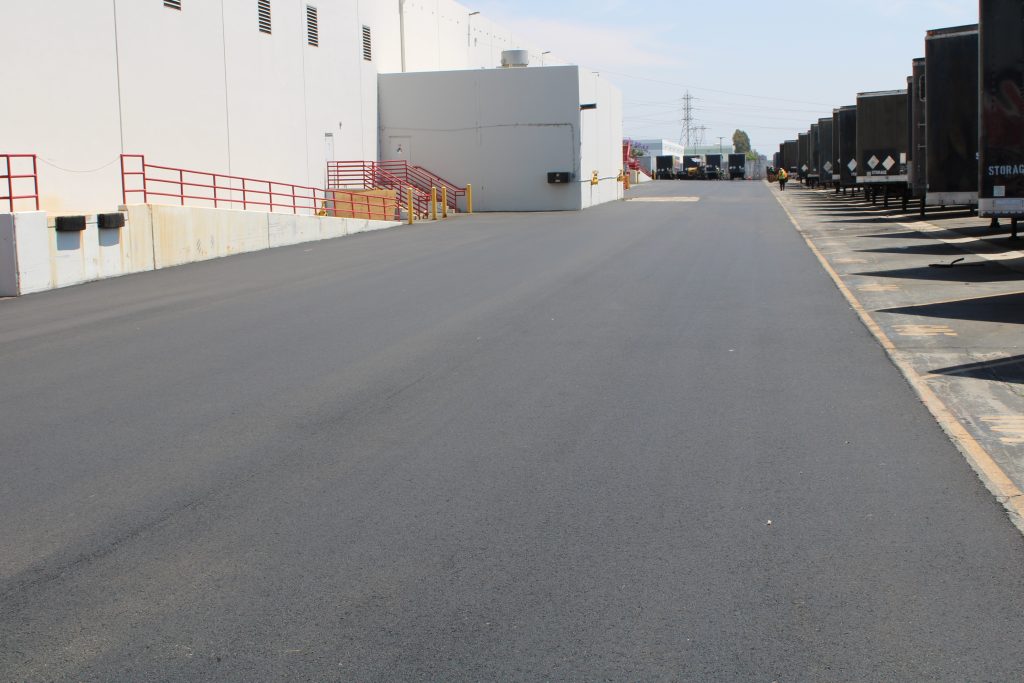
New Asphalt Construction — Finish-Grade Coastal Work
Ground-up paving for hospitality, retail, office, HOA, and residential properties, with the finish quality the market here expects: uniform texture, crisp edges against Carlsbad’s extensive hardscape and landscape borders, and drainage designed to city standards. Written specs on every proposal — thickness, base, and mix — because premium properties deserve premium documentation, not “asphalt paving, lump sum.”
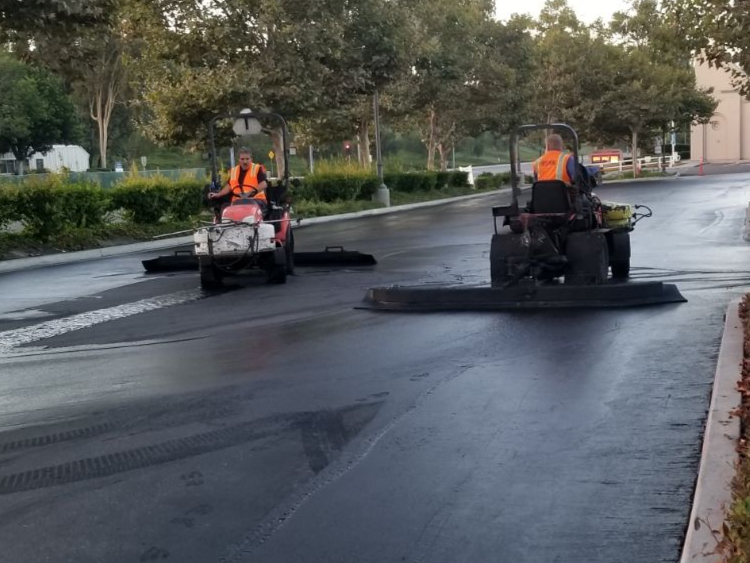
Removal & Replacement — Engineered for the Marine Environment
Full-depth reconstruction where coastal moisture and time have finished a pavement’s service life. Coastal replacements get moisture-conscious design: base sections that drain rather than hold the marine environment’s persistent dampness, and grades that move water off the surface fast — because on the coast, drying time is the resource in shortest supply.
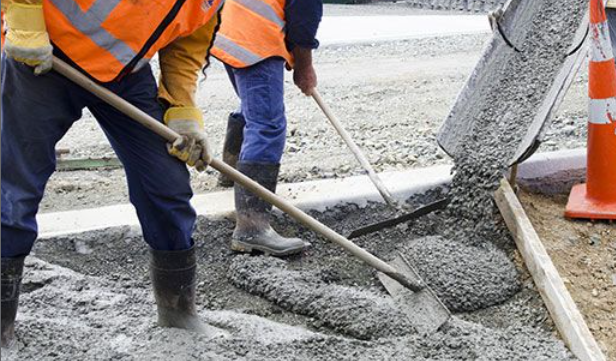
Fine Grading — Where Runoff Is Regulated
Grading in Carlsbad isn’t just slope-to-drain; it’s slope-to-compliant-drain. The city’s lagoons and beaches receive what its pavement sheds, and grading design that respects the stormwater system — inlets, treatment features, discharge points — is both good engineering and, on permitted work, a legal requirement we build to from the first stake.
Get Your Free Asphalt Paving Proposal
Our estimating and project management team will develop the right scope of work for your budget, performance goals, and visual expectations. Estimates and recommendations are free. Call (951) 739-9200 or submit the form below.
The Coastal Paradox: Gentler Sun, Wetter Pavement
Here’s the trade every coastal property makes, and most owners only know half of it. The marine layer that blankets Carlsbad mornings — and famously overstays its welcome through “May Gray” and “June Gloom” — moderates the UV and heat that age inland asphalt so aggressively. Carlsbad pavement oxidizes slower than Escondido pavement. That’s the good half.
The other half: the same marine layer keeps pavement damp for hours every morning, salt-bearing air works on exposed aggregate and metal fixtures season after season, and shaded or poorly drained areas near the coast may barely dry at all in winter. Moisture is asphalt’s true enemy — it strips binder from aggregate (the raveling you see as loose gravel on aging coastal lots), and it exploits every crack far more often here because it arrives more often, even in months with no rain. Coastal paving strategy therefore inverts the inland playbook: the sun is less of a threat, the water table of daily dampness is more of one, and drainage design, dense compaction, and crack discipline carry more of the load than UV protection does. We design for the coast pavement actually lives on, not the one on the brochure.
Your Pavement Maintenance Timeline
| When | What | Why |
|---|---|---|
| Year 1 | First seal coat (after full cure) | Locks in binder before UV oxidation starts |
| Every 3–5 years | Re-apply seal coat | Ongoing UV and moisture protection in our high-sun climate |
| Annually (fall) | Crack sealing | Closes entry points before winter rains reach the base |
| As needed | Patching, striping refresh | Addresses isolated damage; maintains ADA compliance |
| Year 15–25+ | Overlay or reconstruction | Even well-maintained pavement eventually reaches structural end-of-life |
Where Asphalt Meets the Hardscape: The Seams That Decide a Coastal Lot's Fate
Carlsbad properties rarely give asphalt a clean rectangle to live in. Resort drives thread between paver bands and stamped-concrete medallions; Village frontages meet brick crosswalks and decorative gutters; HOA streets border landscape walls and cobble aprons. Every one of those transitions is a seam between materials that move differently — asphalt flexes, concrete and pavers don’t — and on the coast, seams are exactly where the marine layer’s daily moisture goes to work. An open joint against a paver band gets watered every gray morning whether it rains or not, and the failure pattern that follows is one of Carlsbad’s most common: a tidy line of cracking and settlement tracing the hardscape edge, on a lot whose open field is still perfectly sound.
Building these transitions right is detail work with outsized returns. The asphalt edge gets full-depth support at the joint rather than a feathered taper that crumbles under wheel loads. The seam itself gets sealed as a maintenance line item, on a schedule, the way the coast requires — a bead of sealant renewed every few years versus a trench of reconstruction later. Grades at each transition are set so water crosses the seam and keeps moving instead of parking on it, and where a paver or concrete band sits proud or low of the asphalt, the height difference is resolved in the paving, not left as a toe-catcher on a property that hosts foot traffic in sandals. When we quote a Carlsbad project, the transition inventory is part of the assessment: how many linear feet of material seams the site carries, what condition each is in, and what the design does to make them boundaries instead of failure lines — because on premium coastal properties, the pavement’s weakest points are almost never in the middle of the lot.
Why Carlsbad Property Owners Choose United Paving Co.
Licensed California Contractor
verify our license anytime through the CSLB license check.
Over 25 years in the asphalt and concrete industry
Serving properties from Los Angeles through San Diego County
Active members of the property-management community.
BOMA, IREM, CAI, ICSC, AGC, and more.
Materials and Methods
Free on-site written estimates
Throughout Carlsbad — 92008 (Northwest Carlsbad: the Village, Barrio, and coastal north), 92009 (Southeast Carlsbad: La Costa and the Rancho Santa Fe Road corridor), 92010 (Northeast Carlsbad: Calavera Hills and the Robertson Ranch area), and 92011 (Southwest Carlsbad: Aviara, Poinsettia, and the Palomar Airport Road business corridor).
Permits in Carlsbad: Where Paving Meets the Stormwater Rules
Carlsbad runs one of North County’s most integrated permit systems, and paving projects feel it in two ways. First, the mechanics: right-of-way work — approaches, curb connections, anything within the ROW that typically extends about 10 feet behind the curb face — is permitted through the Land Development Engineering division via the city’s online CSS Portal, with inspections requested by 2 PM for next-business-day service. Grading permits trigger at published thresholds: more than 200 cubic yards of cut or fill, cuts or fills over four feet, or fill on slopes steeper than 5:1.
Second — and this is Carlsbad’s signature — the stormwater layer: the city’s encroachment ordinance requires a stormwater applicability questionnaire and an approved construction SWPPP before a right-of-way permit is issued, because everything Carlsbad’s pavement sheds is headed for Buena Vista, Agua Hedionda, or Batiquitos Lagoon, or the beach itself. Larger “priority” projects carry permanent stormwater BMP obligations. This is where out-of-town bids stall; for us it’s standing procedure — questionnaire, SWPPP, erosion controls, and inspections, carried as contractor scope. Properties in the Coastal Zone can carry an additional review layer under the state’s coastal program, administered locally and by the California Coastal Commission — we flag it early when a project’s location raises it.
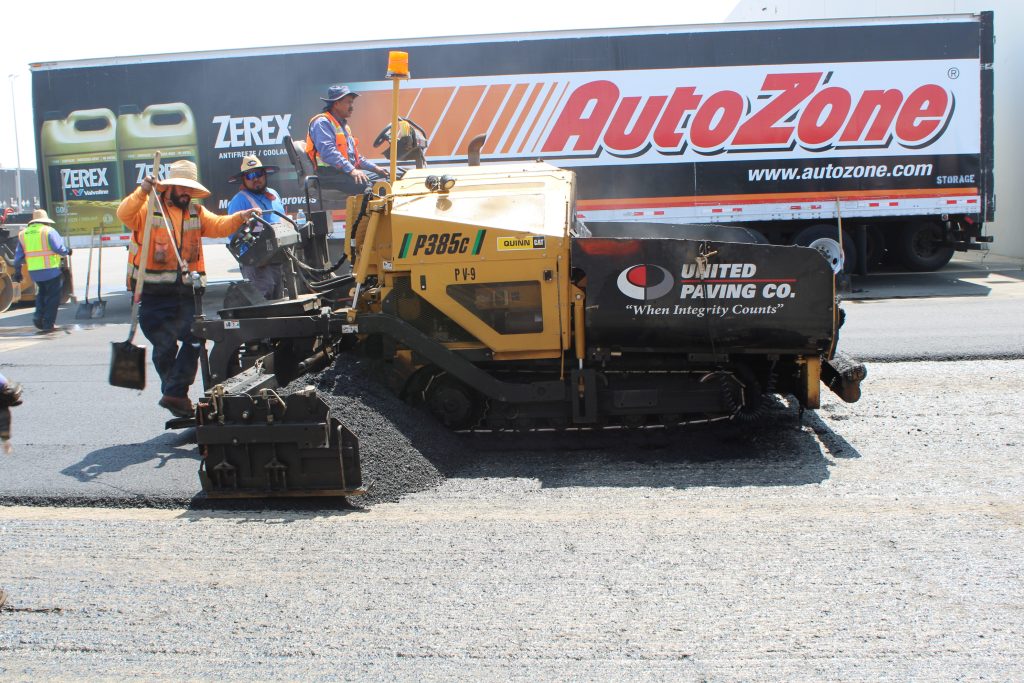
How a Quality Asphalt Paving Project Works, Step by Step
Most pavement failures trace back to shortcuts in the first three steps below — the ones buried underground when the job is “done.” Here’s the full process, so you know what to expect and what to ask any contractor bidding your project:
1. Site Evaluation & Soil Assessment
San Marcos sits on a mix of decomposed granite, sandy loam, and clay-heavy soils depending on where you are — and each behaves differently under load. Clay expands when saturated and shrinks when dry, flexing whatever sits on top of it. A contractor who quotes your project without evaluating the subgrade is guessing with your money.
2. Demolition & Excavation (for replacement projects)
Failed asphalt and contaminated base are removed and hauled off — and old asphalt is one of America's most recycled materials, routinely reprocessed into new pavement, as documented by the Asphalt Institute. We excavate to the depth the new pavement section requires, not just deep enough to hide the old problems.
3. Subgrade Preparation & Aggregate Base
The subgrade is compacted and proof-rolled to expose soft spots, which are dug out and rebuilt. Then Class II aggregate base is placed and compacted in lifts. This layer carries the structural load; the asphalt on top mostly protects it and provides the driving surface.
4. Fine Grading for Drainage
Surfaces are graded to a minimum slope (typically 1–2%) toward drains, gutters, and flowlines. Standing water after a storm is the most common visible symptom of grading that was skipped or done wrong.
5. Hot-Mix Asphalt Placement
Hot-mix asphalt arrives at roughly 300°F and must be placed and compacted before it cools. Thickness depends on use: a residential driveway section differs substantially from a truck-trafficked commercial lot. This is why a bid quoting "asphalt paving" without specifying compacted thickness isn't comparable to one that does.
6. Compaction & Finishing
Rollers compact the mat to target density while it's still workable. Proper compaction is the single biggest factor in pavement durability — under-compacted asphalt lets in air and water and ages years faster.
Carlsbad Asphalt Paving - FAQS
Does coastal asphalt really last longer than inland asphalt?
Against sun, yes; against water, no — it's a different aging profile, not a longer one by default. A well-drained, well-maintained Carlsbad lot can outlast its inland twin; a poorly drained one can fail faster despite the gentler sun, because daily marine moisture never gives it a dry season. Drainage design decides which story your pavement gets.
What is a SWPPP and why does my paving project need one?
A Stormwater Pollution Prevention Plan — the document and site controls that keep construction runoff (sediment, debris, materials) out of the storm system during the work. Carlsbad requires an approved construction SWPPP before issuing a right-of-way permit, which makes it part of the project's critical path, and part of our scope.
Will our project trigger a grading permit?
Carlsbad publishes the thresholds: over 200 cubic yards of cut or fill, vertical cuts or fills beyond four feet, or fill on steep existing slopes. Most parking-lot reconstructions stay under them; hillside and expansion projects often don't. We run the math during estimating so the permit path is known before you sign anything.
Our property is near a lagoon. Does that change the paving work?
It changes the care level and sometimes the paperwork — erosion and material controls are non-negotiable near receiving waters, drainage design gets extra attention, and Coastal Zone location can add review. It doesn't change the feasibility; lagoon-adjacent paving is routine for us, done by the rules that keep it routine.
Can paving work happen around resort and retail operations?
That's the Carlsbad specialty: phasing that protects arrival experiences and storefront access, night and shoulder-season scheduling for hospitality properties, and site housekeeping standards that match the properties we're working on. The construction should be the least memorable part of the project.
What finish details separate premium paving from standard work?
Uniform surface texture (a function of mix consistency and rolling discipline), straight saw-cut joints where new meets old, clean edges against curbs and landscape borders, and striping laid out precisely after cure. None of it costs much extra; all of it is visible every day for twenty years.
Areas We Serve NEAR carlsbad
We work throughout Carlsbad — 92008 (the Village, Barrio, and coastal north), 92009 (La Costa and the southeast), 92010 (Calavera Hills and the northeast), and 92011 (Aviara and the coastal south) — including the Palomar Airport Road business corridor and the resort corridor. See our asphalt paving pages for Vista, San Marcos, and Escondido.