
Concrete installation and repair in Riverside, CA
Craft for the City That Keeps Its Character
Concrete in the county seat carries assignments no other city in our range combines: replacement panels that must reproduce a historic district’s century-old detailing rather than merely fill the hole, civic flatwork that serves more daily public traffic than anywhere else in the county, and — the signature of a city that owns its own water and electric — utility boxes, vaults, and lids embedded in nearly every walk and plaza, aging at their own rate inside concrete aging at another. United Paving Co provides concrete installation & repair in Riverside, CA for all three assignments: heritage reproduction done with documentation and restraint, public-realm slabs engineered for their real duty, and the box-and-collar work that keeps a utility city’s flatwork flush.
Our Concrete Services in Riverside
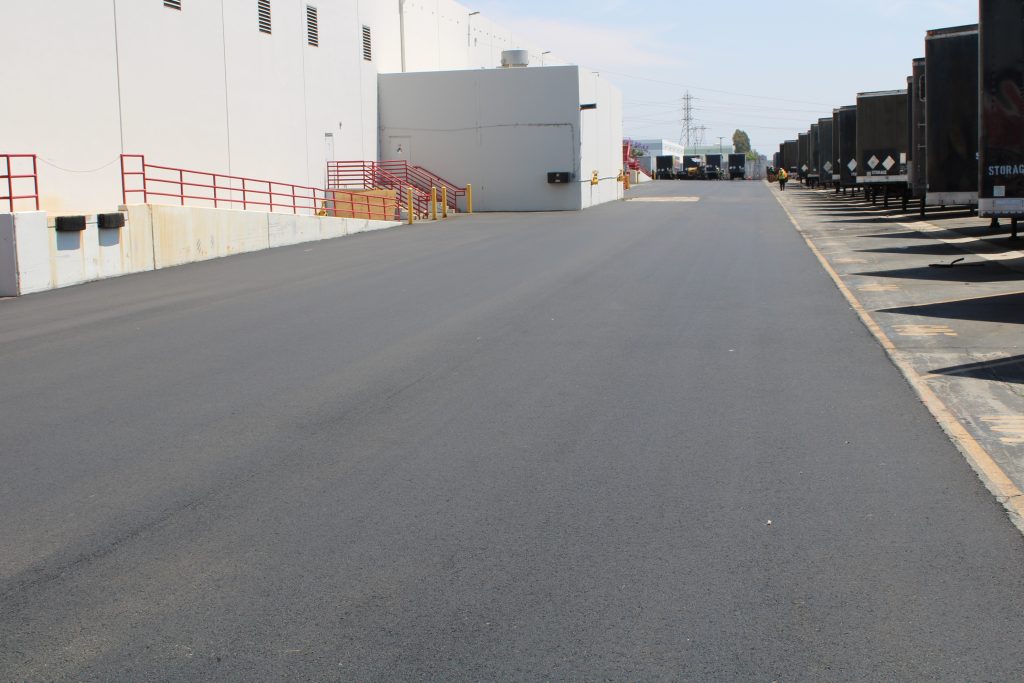
Heritage & Historic-District Concrete
The county-seat specialty: sidewalk, walkway, and flatwork replacement in the Wood Streets, the Mission Inn blocks, and the city’s designated districts — existing scoring, borders, and finishes documented and reproduced so new panels read as original, with district review questions surfaced at scoping rather than mid-pour.
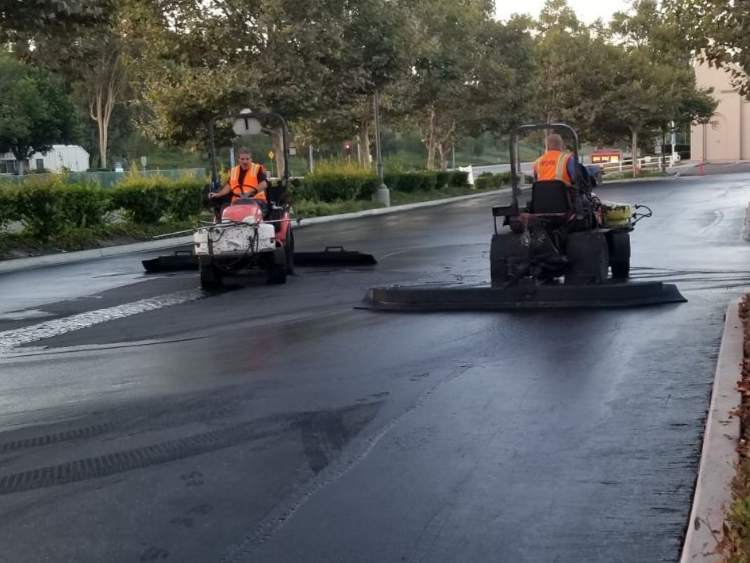
Repair, Releveling & Utility-Collar Work
Diagnosis-first repair of cracked, settled, and spalled concrete — plus the full-service-city staple: sunken and tilted utility boxes, vault lids, and meter cans releveled and re-collared flush with the flatwork around them, coordinated with the utility owners whose infrastructure they serve.
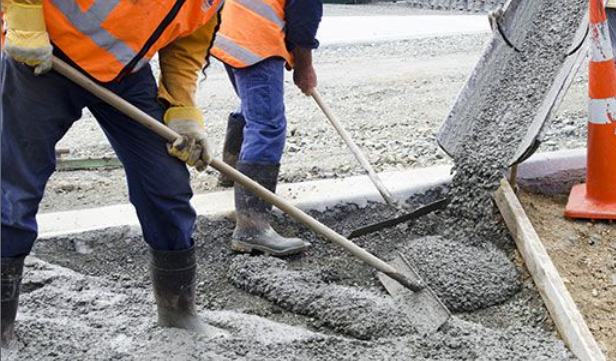
Commercial, Institutional & ADA Concrete
The load-bearing standard citywide: dumpster pads and dock aprons for the logistics belts, drive approaches and storefront flatwork on the corridors, plaza and entry concrete for the civic and campus properties, and ADA ramps and accessible routes built to current federal and California standards — every element’s design load stated, every joint layout drawn for our climate’s swings.
Get Your Free Concrete Installation and Repair Proposal
From a single dumpster pad to a full site’s flatwork, our estimators will scope the work with the specs in writing. Call (951) 739-9200 or submit the form below.
Reproducing the Past: How Heritage Concrete Replacement Actually Works
Replacing a broken panel in a historic district is a different craft than replacing one anywhere else, because the assignment isn’t new concrete — it’s continuity. Riverside’s older districts carry concrete vocabulary a century deep: scoring patterns cut at spacings modern crews never use, picture-frame borders and header details, finishes from eras when every walk was hand-troweled and edged, and the warm patina of hundred-year-old cement that fresh gray announces itself against. The reproduction discipline runs in sequence. Documentation first: before demolition, the existing work is recorded — scoring layout measured, border widths and edge profiles noted, finish texture photographed in raking light — because the original is the drawing, and it’s about to be removed. Detail reproduction in the pour: scoring re-cut at the historic spacing and depth (not the modern default), borders and edging tooled to match the neighboring panels’ profiles, and finishes floated and troweled to the district’s texture rather than the crew’s habit. Color honesty: new concrete will read newer — that’s chemistry, not failure — but mix selection and finishing choices can land it in the family, and the patina gap closes substantially with weathering; where districts or owners want faster convergence, tinting and surface treatments are tools we’ll discuss with their trade-offs stated. And process awareness: designated districts can attach review to exterior work, a question we surface during scoping so approvals precede schedules. The restraint principle governs it all: in heritage settings, the best replacement is the one nobody notices — which means the craft is measured by how little the new work asserts itself, a standard the American Concrete Institute’s finishing practice underlies and a district’s residents enforce better than any inspector.
The Public-Realm Slab: Engineering Flatwork for Civic Duty
The county seat’s plazas, institutional entries, transit-adjacent walks, and downtown frontages carry a duty profile private lots never see — thousands of daily pedestrians, service and maintenance vehicles taking shortcuts across “pedestrian” surfaces, street furniture and fixtures anchored everywhere, and the full creativity of public use — and civic flatwork that lasts is designed for all of it. Duty-honest sections: public-realm slabs get specified for the occasional vehicle they’ll actually receive (the delivery van on the plaza, the lift servicing the lights), because “pedestrian-only” concrete in civic settings is a spec that public reality overrules within the year. Skate and wear management designed in, not bolted on: edges, seat walls, and stair nosings in public settings take deliberate grinding wear, and the answer is detailing — deterrent hardware planned into the pour on vulnerable edges, sacrificial steel edges where districts prefer them, and radiused profiles that offer less to grind — installed at construction cost instead of retrofit cost. The anchored-object problem: bollards, bike racks, benches, and sign posts all penetrate the slab, and every penetration is a future crack unless it’s isolated — sleeves and isolation details at fixtures, so the slab and the anchored steel can move on their own terms. Slip resistance as specification: public entries and plazas carry finish requirements the traffic writes — broom and exposed textures where weather meets volume, and retrofit options (grinding, treatments) where an inherited polished surface has proven itself slick — with walkway surface standards from bodies like ASTM giving the specification its vocabulary. And cleanability as a design input: civic concrete gets pressure-washed, gum-scraped, and event-abused on a schedule, so sealers and finishes are chosen for the maintenance regime the facility actually runs. Public-realm concrete priced like private patio work fails publicly; the civic spec costs its premium once and serves its decades.
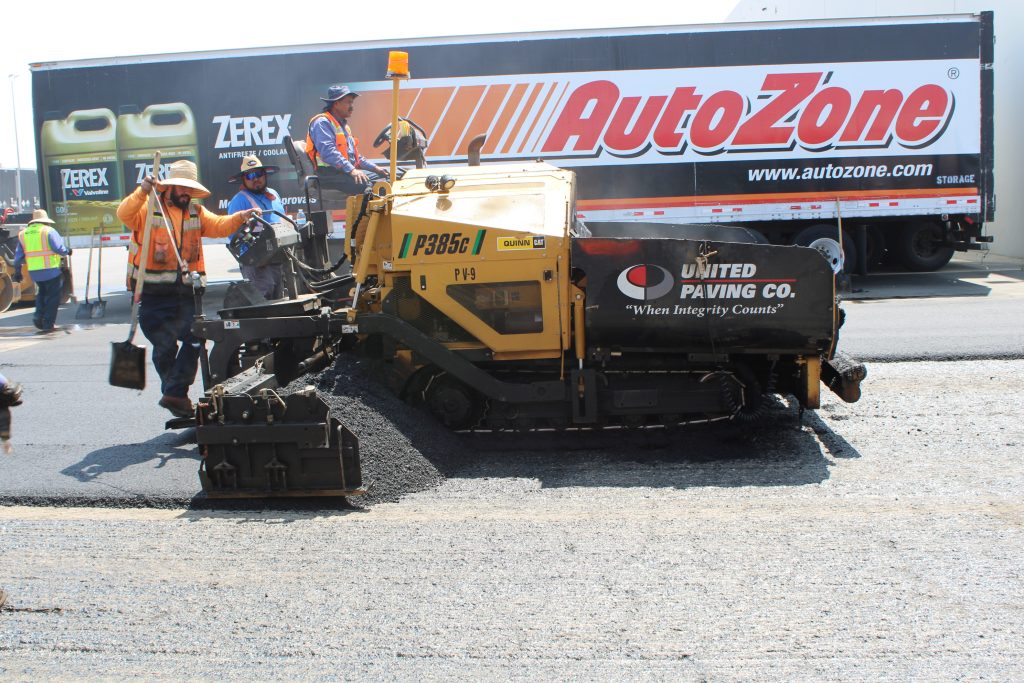
Why Riverside Property Owners Choose United Paving Co.
Licensed California Contractor
verify our license anytime through the CSLB license check.
Over 25 years in the asphalt and concrete industry
Serving properties from Los Angeles through San Diego County
Active members of the property-management community.
BOMA, IREM, CAI, ICSC, AGC, and more.
Materials and Methods
Free on-site written estimates
We work throughout Riverside — 92501 (downtown and the civic core), 92506 and 92507 (Canyon Crest, Victoria, UCR, the Eastside, and Hunter Park), 92503 and 92505 (Arlington, La Sierra, and the western corridors), 92504 (the central city and Magnolia corridor), and 92508 (Orangecrest, Mission Grove, and the March-adjacent south). See our concrete pages for Corona, Perris, and Menifee.
Boxes, Vaults, and Lids: The Utility City's Flatwork Problem
Walk any Riverside sidewalk or plaza and count the metal and composite rectangles: water meter cans, electric vaults, valve covers, pull boxes — the surface fixtures of a city that owns its own utilities, embedded in flatwork by the thousands. They’re also the most common flatwork failure point in the city, for a structural reason worth understanding: a box and its surrounding slab are different structures on different foundations, aging at different rates. The slab bears on its compacted base; the box sits on its own bedding, often over a trench whose backfill has its own settlement history — so time pulls them apart vertically: boxes sink below the walk (a heel-catching depression with a steel edge), tilt as bedding consolidates unevenly, or stand proud when the surrounding slab settles instead. Each is a trip hazard with a lid on it, and the repairs have their own discipline. Releveling addresses the box: lid and frame reset to flush on corrected bedding — a repair that requires coordination with the utility that owns the box, because the infrastructure below is live and the access is theirs; in this city that owner is usually the city itself, and we’ve learned its coordination rhythm. Collar rebuilds address the interface: the concrete immediately around a box takes concentrated edge stress and cracks first, and the durable repair rebuilds that collar as its own properly-jointed element — isolated from the field slab so the two structures can move independently without cracking each other, which is exactly the joint principle the original pour usually skipped. And field-panel decisions follow the diagnosis: a panel cracked by a settling box gets its cause fixed first, or the new panel inherits the old panel’s assignment. For property owners the practical notes: fixtures in your private flatwork are your repair with the utility’s coordination; fixtures in the public walk fronting you sit in right-of-way territory where responsibility and permits get sorted before work (our standing first step); and either way, a walk full of flush, collared boxes is the quiet signature of flatwork maintained by someone who understood the assignment.
Riverside Concrete Installation and Repair - FAQs
Can a replacement panel in our historic district really match hundred-year-old concrete?
In detailing, immediately — scoring, borders, and finish reproduced from documentation of the original. In color, honestly: new cement reads newer and closes the gap through weathering, with tinting available where faster convergence matters. The craft standard is that the panel belongs at a walker's glance; the patina finishes the job on its own schedule.
Skaters keep grinding our plaza's seat walls and stair edges. What actually works?
Detailing over signage: deterrent hardware on the vulnerable edges, radiused or steel-protected profiles that offer nothing to grind, and repairs that rebuild damaged nosings to the protected version rather than the original target. Installed during construction it's a line item; retrofit after damage it's still cheaper than the third repair.
A water meter box in our walkway has sunk an inch below the concrete. Whose problem is it?
Structurally, it's the classic two-foundations problem — the box settled on its bedding while the slab held its grade. Responsibility depends on whose box and whose walk: private flatwork is your repair with the utility's coordination on their live infrastructure; public frontage runs through right-of-way rules first. We sort ownership, coordinate the utility, and rebuild box and collar flush either way.
Why does the concrete right around our vault lids keep cracking while the rest of the slab is fine?
Because the collar takes concentrated edge stress between two structures moving independently — and most original pours ran the field slab tight to the frame with no isolation. The durable fix rebuilds the collar as its own jointed element, isolated from the field, so future movement stops printing cracks.
Our building's polished entry concrete is dangerously slick when wet. Full replacement?
Rarely — slip resistance retrofits onto sound concrete: mechanical texturing, treatments, or finish overlays chosen to the entry's traffic and look, at a fraction of demolition. Replacement earns the call only when the slab has other verdicts against it; the assessment reads that before anyone quotes the big number.
Can you install bollards and bike racks into our existing plaza without wrecking the slab?
Yes — with isolation as the rule: cored penetrations, sleeved anchors, and details that let steel and slab move separately, because a fixture hard-set into a monolithic slab is a crack with a schedule. Fixture layout is also worth one planning pass so anchors land mid-panel, not on joints.
Areas We Serve NEAR Riverside
We work throughout Riverside — 92501 (downtown and the civic core), 92506 and 92507 (Canyon Crest, Victoria, UCR, the Eastside, and Hunter Park), 92503 and 92505 (Arlington, La Sierra, and the western corridors), 92504 (the central city and Magnolia corridor), and 92508 (Orangecrest, Mission Grove, and the March-adjacent south). See our concrete pages for Corona, Perris, and Menifee.