
Asphalt Paving in Vista, Ca
Asphalt Paving — Industrial-Duty Construction, Replacement & Grading
Vista’s economy rolls on trucks. The business and industrial parks along Sycamore Avenue, Poinsettia Avenue, and the Highway 78 corridor — one of North County’s largest concentrations of manufacturing, distribution, and the city’s famous craft breweries — generate delivery, freight, and forklift traffic that ordinary parking-lot pavement was never designed to carry. United Paving Co provides asphalt paving in Vista, CA built for that reality: new construction, removal and replacement, and fine grading specified to the loads your site actually takes, from a tasting-room parking lot to a distribution yard that eats semis all day.
Our Asphalt Paving Services In Vista
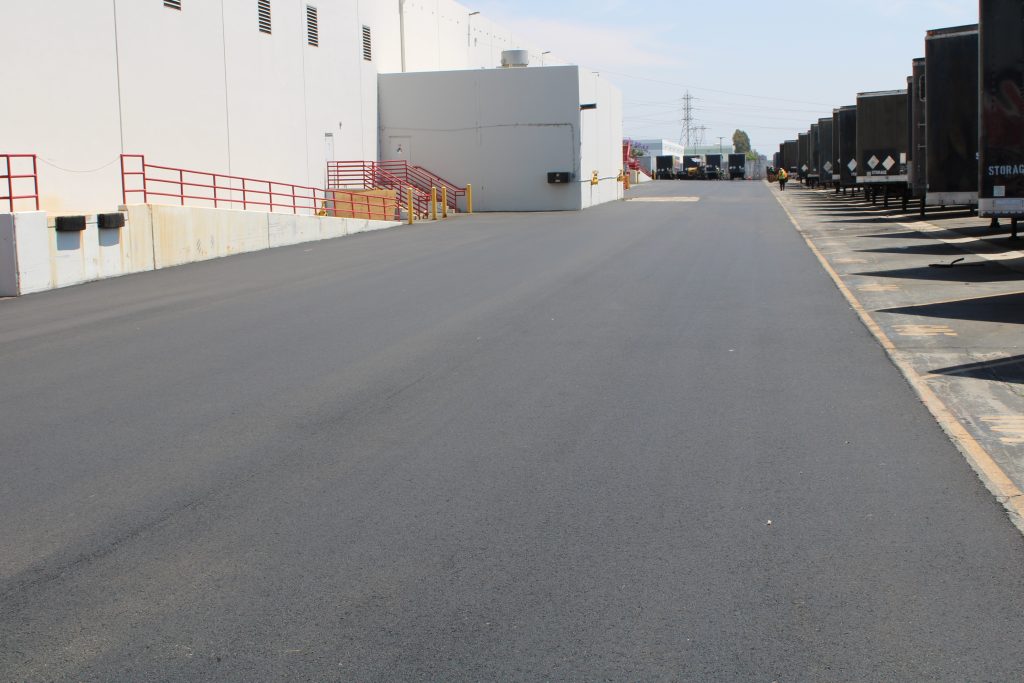
New Asphalt Construction — Zoned for Industrial Duty
Vista’s business parks don’t have one traffic load; they have three — car parking, constant drive-lane circulation, and truck routes feeding docks and gates — and we design new pavement as zones, not acreage. Car bays get an economical standard section; drive lanes get more depth; truck corridors and gate approaches get heavy sections with fiber-reinforced (Forti-Fi) mix where semis brake and turn. For Vista’s breweries and food producers, we add the fourth zone: washdown-exposed loading areas graded to move process water off the asphalt fast, because standing wash water ages pavement like a permanent puddle. Every zone’s compacted thickness, base depth, and mix goes in the written proposal.
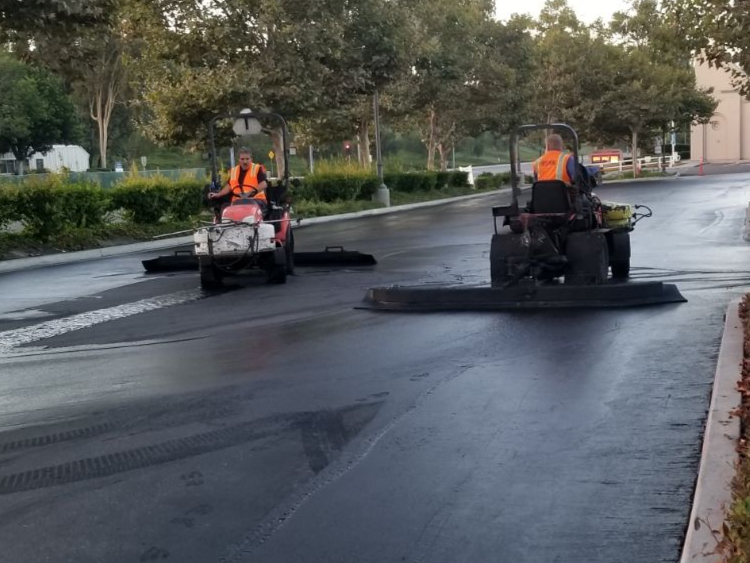
Asphalt Removal & Replacement — Sequenced Around Live Tenants
Replacement in Vista usually means working inside an operating park, so our reconstruction scope is as much logistics as paving: demolition phased so every tenant keeps dock access daily, truck circulation rerouted rather than closed, and the city’s Haul Route Permit pulled for exporting the demolished material — a Vista-specific requirement most out-of-area bidders discover mid-project. The rebuilt section matches the traffic that killed the original: if the old pavement failed under axle loads it wasn’t designed for, replacing it like-for-like just schedules the next failure, and we’ll say so in the assessment.
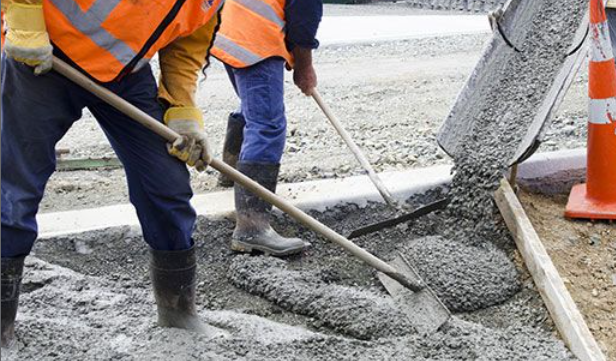
Fine Grading — Engineering for Vista's Hills
Vista is named for its views because it’s built on slopes, and hillside pavement lives or dies on grading. We design cross-slopes that shed the December–March storms without exceeding ADA limits on parking surfaces, interceptor drainage at the high side of cut sites so runoff never reaches the pavement, and controlled discharge at the downhill edge so water leaves the property without scouring the base on its way out. The flat-lot grading habits that work fine in the valley cities are precisely what fail here — most hillside pavement problems we’re hired to fix in Vista started as grading problems on the original job.
Get Your Free Asphalt Paving Proposal
Our estimating and project management team will develop the right scope of work for your budget, performance goals, and visual expectations. Estimates and recommendations are free. Call (951) 739-9200 or submit the form below.
Your Pavement Maintenance Timeline
| When | What | Why |
|---|---|---|
| Year 1 | First seal coat (after full cure) | Locks in binder before UV oxidation starts |
| Every 3–5 years | Re-apply seal coat | Ongoing UV and moisture protection in our high-sun climate |
| Annually (fall) | Crack sealing | Closes entry points before winter rains reach the base |
| As needed | Patching, striping refresh | Addresses isolated damage; maintains ADA compliance |
| Year 15–25+ | Overlay or reconstruction | Even well-maintained pavement eventually reaches structural end-of-life |
Pavement for the 7-Ton-Plus Economy
Vista formalizes what its pavement already knows: the city maintains a designated truck route system for vehicles over 7 tons, because heavy traffic is a defining fact of local infrastructure — the manufacturing, distribution, and brewing operations that anchor the Sycamore and Poinsettia corridors all live on freight, and every one of those trucks finishes its trip on private pavement.
The engineering translation is the least intuitive fact in this industry: pavement life is consumed by axle weight, not vehicle count — and the relationship isn’t linear, it’s exponential. Doubling an axle’s load doesn’t double its damage; it multiplies it many times over, which is how a single loaded semi stresses asphalt more than thousands of sedans, and why a business park’s pavement can fail in its truck lanes while the employee parking beside them stays showroom-fresh for twenty years. It also explains the failure pattern Vista’s under-built lots wear like a uniform: ruts and alligatoring tracing exactly the paths delivery trucks take from gate to dock, with pristine asphalt ten feet to either side. The pavement isn’t failing randomly — it’s failing precisely where the design ignored the weight.
Designing for the 7-ton-plus economy means starting the section math from the trucks, not the square footage. Drive lanes and dock approaches get thicker asphalt over deeper aggregate base, sized to the axle loads and daily truck counts the operation actually generates. Braking and turning zones — gate approaches, dock maneuvering areas, tight corners where tractor-trailers work the surface horizontally — get honest mix selection, because standard mixes shove and rut under steering forces no matter how thick they’re laid, and these are the zones where fiber-reinforced (Forti-Fi) asphalt earns its premium. The extreme point-load positions — dumpster pads, trailer landing zones, dock faces — graduate past asphalt entirely to concrete, the material match for concentrated standing weight (see [Concrete Installation & Repair in Vista] — internal link). And the car parking stays economical, because over-building the stalls wastes exactly the money the truck lanes needed.
The bid-reading lesson falls out of the physics: a proposal that prices a distribution yard like a retail lot isn’t cheaper — it’s shorter-lived, and the difference arrives as reconstruction costs within a few years of freight traffic. Ask any bidder one question — what axle loads is this section designed for? — and the answer, or the silence, tells you which kind of proposal you’re holding.
How a Quality Asphalt Paving Project Works, Step by Step
Most pavement failures trace back to shortcuts in the first three steps below — the ones buried underground when the job is “done.” Here’s the full process, so you know what to expect and what to ask any contractor bidding your project:
1. Site Evaluation & Soil Assessment
San Marcos sits on a mix of decomposed granite, sandy loam, and clay-heavy soils depending on where you are — and each behaves differently under load. Clay expands when saturated and shrinks when dry, flexing whatever sits on top of it. A contractor who quotes your project without evaluating the subgrade is guessing with your money.
2. Demolition & Excavation (for replacement projects)
Failed asphalt and contaminated base are removed and hauled off — and old asphalt is one of America's most recycled materials, routinely reprocessed into new pavement, as documented by the Asphalt Institute. We excavate to the depth the new pavement section requires, not just deep enough to hide the old problems.
3. Subgrade Preparation & Aggregate Base
The subgrade is compacted and proof-rolled to expose soft spots, which are dug out and rebuilt. Then Class II aggregate base is placed and compacted in lifts. This layer carries the structural load; the asphalt on top mostly protects it and provides the driving surface.
4. Fine Grading for Drainage
Surfaces are graded to a minimum slope (typically 1–2%) toward drains, gutters, and flowlines. Standing water after a storm is the most common visible symptom of grading that was skipped or done wrong.
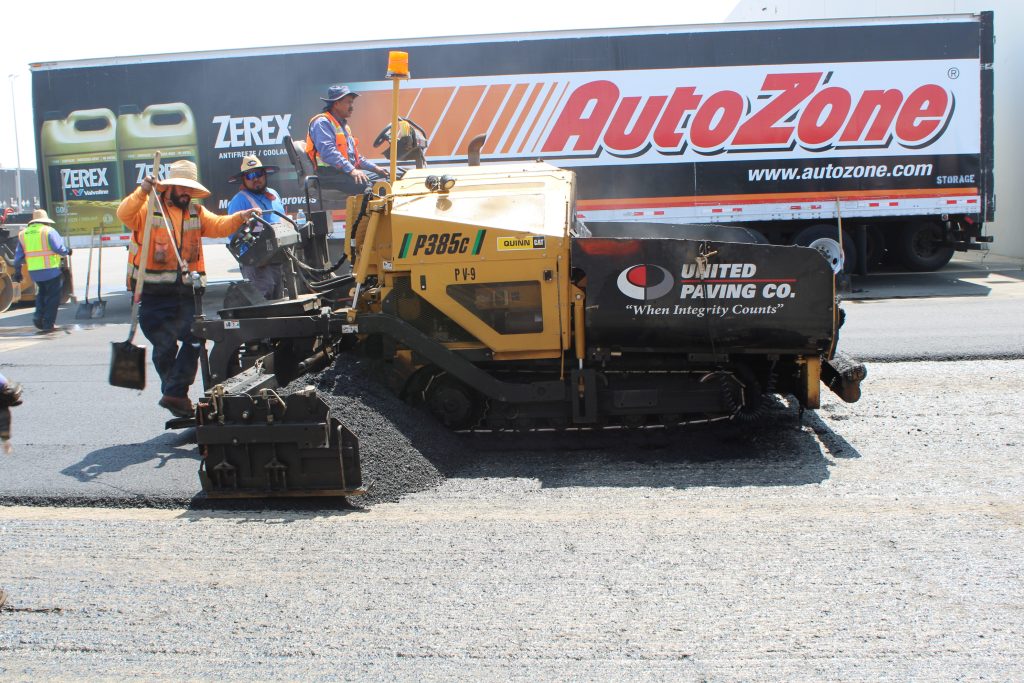
5. Hot-Mix Asphalt Placement
Hot-mix asphalt arrives at roughly 300°F and must be placed and compacted before it cools. Thickness depends on use: a residential driveway section differs substantially from a truck-trafficked commercial lot. This is why a bid quoting "asphalt paving" without specifying compacted thickness isn't comparable to one that does.
6. Compaction & Finishing
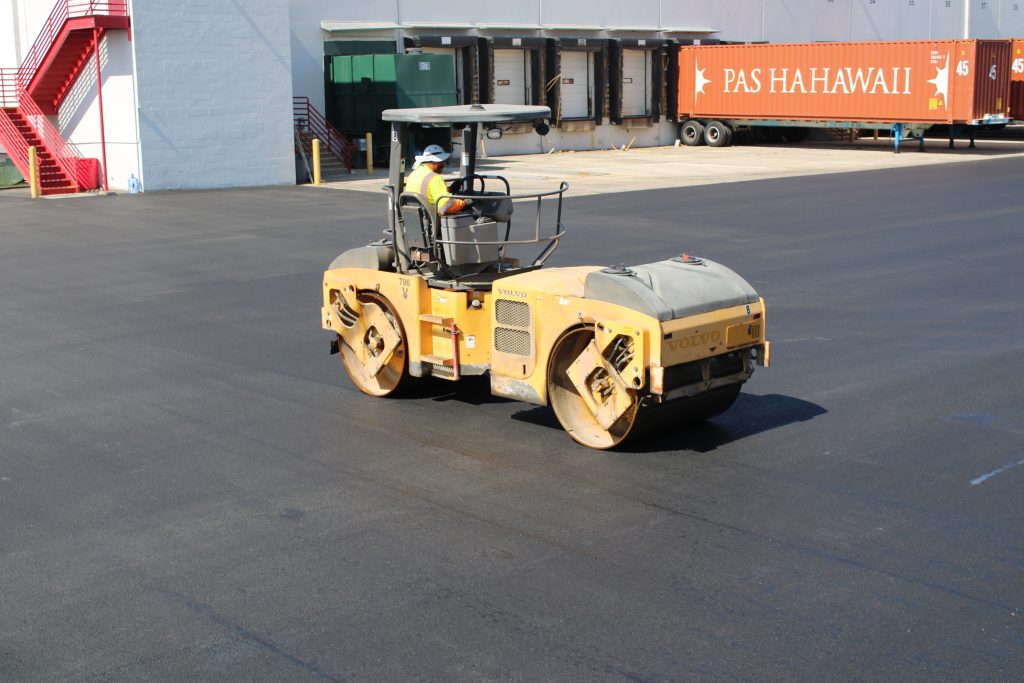
Rollers compact the mat to target density while it's still workable. Proper compaction is the single biggest factor in pavement durability — under-compacted asphalt lets in air and water and ages years faster.
Built for Vista's Terrain and Weather
Seven miles from the coast, Vista splits the difference between marine-layer mildness and inland heat — kinder to asphalt than Escondido’s valley, harder than Carlsbad’s coastline, with the same December–March storm concentration as everyone else. Terrain is the bigger local variable: hillside sites need grading that controls runoff velocity, cross-slopes that don’t fight ADA limits, and drainage details that keep water from undermining base at the downhill edge. Flat-city paving habits fail on Vista hills; we design for the slope the site actually has.
Why Vista Property Owners Choose United Paving Co.
Licensed California Contractor
verify our license anytime through the CSLB license check.
Over 25 years in the asphalt and concrete industry
Serving properties from Los Angeles through San Diego County
Active members of the property-management community.
BOMA, IREM, CAI, ICSC, AGC, and more.
Materials and Methods
Free on-site written estimates
We work throughout Vista — 92081 (South Vista: Shadowridge and the Sycamore Avenue/Palomar business park corridor), 92083 (West Vista: the Townsite neighborhoods and South Santa Fe corridor), and 92084 (North and East Vista: downtown, Vista Village, and the foothill neighborhoods).
Vista's Rules of the Road: Permits, Hours, and Hauling
Vista runs right-of-way work on specific operational rails, and knowing them is part of delivering a project on schedule. Work in the public right-of-way — approaches, curb cuts, street connections — requires a Right-of-Way permit through the city’s Engineering Department, with inspection scheduled 48 hours ahead and traffic control built to CA MUTCD standards under the city’s Traffic Engineering requirements. Standard R/W work hours run 7:00 AM–3:30 PM Monday through Thursday — and City Hall closes every other Friday, which makes inspection scheduling a planning item, not an afterthought. Hauling demolition or fill material triggers a Haul Route Permit, and night work needs Traffic Engineer approval. We build these constraints into the project schedule from day one, so they’re our logistics problem, not your surprise.
Vista Asphalt Paving - FAqs
What should industrial pavement in Vista actually be built to?
To its traffic, stated in writing: compacted asphalt thickness, base depth, and mix type for the specific duty — drive lanes one spec, dock approaches another, car parking a third. Zoned design like this costs less than uniformly heavy pavement and vastly outlasts uniformly light pavement. If a bid doesn't state the section, it isn't a comparable bid.
Our drive lanes rutted within a few years of the last paving job. Why?
Almost always under-design for axle loads — too little thickness or base for truck traffic, or a mix that softens under turning stress. Repaving to the same spec buys the same result; the fix is rebuilding those lanes to a truck-duty section while leaving the car parking as-is.
Do brewery and food-production sites have special paving considerations?
They combine three hard uses: heavy delivery and keg-freight traffic, forklift point loads, and frequent washdown water. That argues for truck-duty sections at the loading areas, concrete at the extreme-load zones, and drainage grading that moves process and storm water off the pavement fast.
Who handles Vista's haul route and right-of-way permits — us or you?
We do. Right-of-Way permits, haul route permits for demolition export, traffic control plans, and the 48-hour inspection calls are contractor scope on our projects, scheduled around Vista's work-hour windows and alternating-Friday closures.
Can a hillside lot be paved without drainage problems?
Yes — if the grading is designed for the hill. Controlled cross-slopes, interceptor drainage at the high side, and protected discharge at the low side keep runoff from scouring the base. Most hillside pavement failures we replace in Vista trace to flat-lot grading habits applied to a slope.
How fast can a phased replacement go for an occupied industrial park?
Typically area-by-area with tenant access maintained throughout — demolition, base work, and paving sequenced so docks stay reachable and truck circulation reroutes rather than stops. Multi-tenant phasing plans and tenant notices are part of our scope.
Areas We Serve NEAR Vista
We work throughout Vista — 92081 (South Vista: Shadowridge and the Sycamore Avenue/Palomar business park corridor), 92083 (West Vista: the Townsite neighborhoods and South Santa Fe corridor), and 92084 (North and East Vista: downtown, Vista Village, and the foothill neighborhoods). See our asphalt paving pages for San Marcos, Carlsbad, and Escondido.