
Asphalt Repair and Maintenance in Carlsbad, ca
Asphalt Repair in Carlsbad, CA — Moisture Damage, Invisible Patches & Guest-Hour Scheduling
Coastal pavement fails politely — then all at once. The marine layer’s daily dampness doesn’t blast asphalt apart the way inland heat does; it seeps, strips, and loosens, so Carlsbad’s aging lots show their trouble as raveling (that loose gravel underfoot), soft shaded corners that never quite dry, and cracks that stay wet long after the sky clears. United Paving Co provides asphalt repair in Carlsbad, CA tuned to those coastal failure modes — and to the properties they happen on, where a repair has to disappear into a resort entrance or a Village streetscape, not announce itself as a patch.
Our Asphalt Repair and Maintenance in Carlsbad
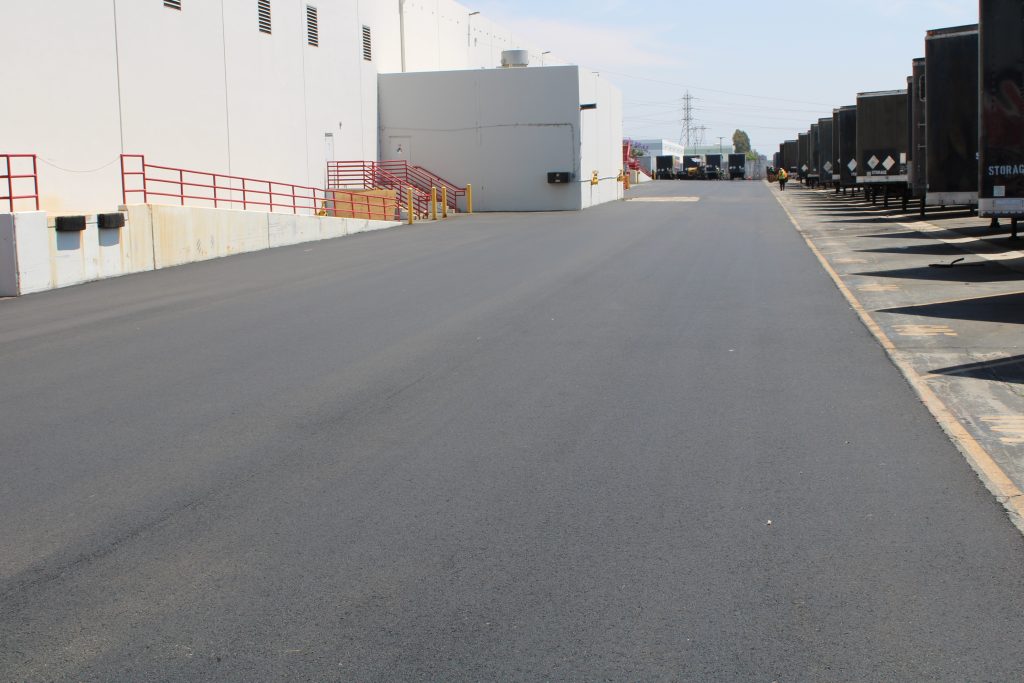
Moisture-Damage Repair & Patching
Remove-and-replace repair of raveled surfaces, stripped and softened areas, and moisture-fed failures — excavated to sound material, base restored with drainage corrected where dampness was the cause, and compacted back dense, because tight compaction is coastal pavement’s best defense against the water that visits daily.
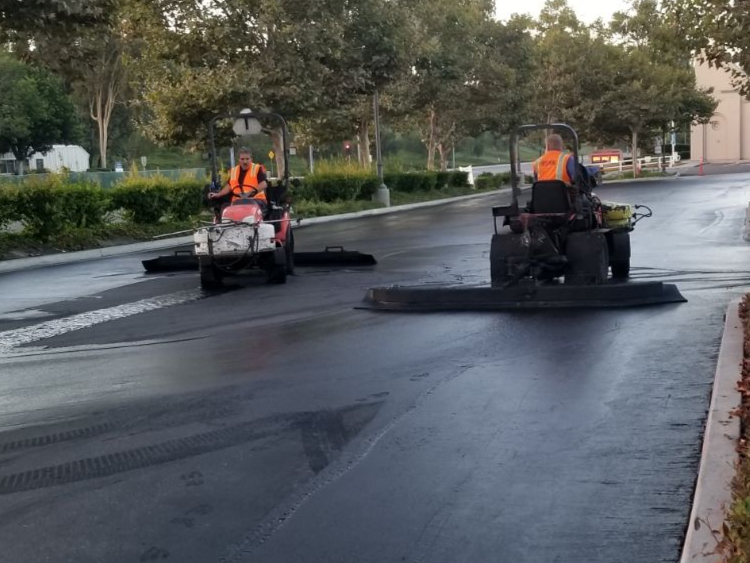
Appearance-Grade Patch Blending
The hospitality-and-retail specialty: patches cut to clean geometric lines rather than amoeba shapes, edges sealed, surfaces matched for texture — and where a lot will be seal coated after repairs, sequencing that makes patchwork vanish entirely under the finish coat (see [Seal Coating in Carlsbad]. On premium properties, the repair standard isn’t “fixed”; it’s “can’t tell.”
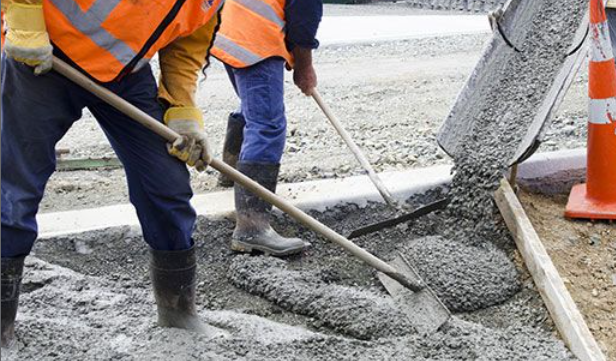
Crack Discipline & Coastal Maintenance Programs
Crack sealing on a coastal rhythm — where the December–March storms are only part of the exposure, because marine moisture probes open cracks all year — plus standing maintenance programs for resort, retail, office, and HOA properties: condition mapping, guest-calendar-aware scheduling, and budget documents built for the way premium properties plan.
Get Your Free Asphalt Repair and Maintenance Proposal
Send us photos or schedule a site walk — our estimators will priority-rank what actually needs repair now, what can wait, and what maintenance will keep you off the expensive end of the curve. Call (951) 739-9200 or submit the form below!
Why Coastal Asphalt Fails Differently: A Field Guide
Inland pavement is murdered by the sun; coastal pavement is dissolved by persistence. Knowing the difference changes what you look for on a walk-through. Raveling — surface aggregate coming loose, collecting at edges and drains — is the coast’s signature: moisture working between binder and stone until the surface literally sheds. Early raveling is a maintenance call; ignored, it becomes a surface that unravels a layer per season. Chronic damp zones — under mature landscaping, on north faces, behind buildings — are where coastal lots rot first, because they lose the daily drying contest; watch them the way inland owners watch their sun-baked lanes. Slow-healing cracks matter more here than their size suggests: a crack that would sit harmlessly dry inland spends its Carlsbad mornings wet, feeding the base below on a near-daily schedule. And edge failures along gutters and hardscape often trace to the joint where asphalt meets concrete — a seam marine moisture exploits patiently. The repair logic follows the diagnosis: fix the water’s access first, then the asphalt, or plan on doing the asphalt again. Preservation economics are unchanged from anywhere else — treat pavement while it’s structurally sound and the FHWA’s preservation research says you’re buying years at the cheapest price they’ll ever be — but the coastal clock runs on moisture-dwell, not sun-hours.
The Coastal Maintenance Year: A Season-by-Season Playbook
Inland pavement maintenance has one deadline — beat the winter rains. Coastal maintenance runs a fuller calendar, because Carlsbad’s moisture arrives on two schedules: the storm season everyone plans for, and the marine layer that waters the pavement quietly all year. Here’s the rhythm we build client programs around, and it works as a self-serve checklist even if you never call us.
Fall (September–November) — the load-bearing season. This is when the year’s real work happens: crack sealing while surfaces are dry and workable, patching any failures the summer exposed, and drainage checks — inlets cleared, flow paths verified — before the first December storm tests them. Fall is also Carlsbad’s scheduling gift: tourist volume drops after Labor Day, which means resort and Village properties can host the noisy work while the fewest guests exist to notice it.
Winter (December–March) — observe, don’t just endure. Storm season is diagnostic season. Walk the lot during or just after rain and photograph what you see: where water stands an hour after the sky clears, which cracks are still dark and wet the next morning, where runoff crosses the surface instead of riding the gutters. Those photos are the most valuable maintenance document your property produces all year — they show exactly where next fall’s budget belongs.
Spring (April–June) — audit and arrest. Winter’s damage is now visible: new cracks, raveling that accelerated, patches that told the truth about what’s under them. Spring is triage time — schedule the repairs that shouldn’t wait, and log the rest for fall. It’s also when the marine layer peaks, so any surface treatments get scheduled with the gray-season discipline they require (see [Seal Coating in Carlsbad].
Summer (July–August) — the light-touch months. Peak season for guests means minimum-disruption mode for pavement: sweeping, quick cosmetic touch-ups in off-hours, and planning — walking the property with fall’s scope in mind so September’s work orders are ready the week the crowds leave.
Two rhythms, one takeaway: the properties whose pavement lasts decades on the coast aren’t doing more maintenance than everyone else — they’re doing it on this clock, when each task is cheapest and least disruptive. The ones that treat maintenance as an emergency response are paying storm-season prices for fall-season work.
Your Pavement Maintenance Timeline
| When | What | Why |
|---|---|---|
| Year 1 | First seal coat (after full cure) | Locks in binder before UV oxidation starts |
| Every 3–5 years | Re-apply seal coat | Ongoing UV and moisture protection in our high-sun climate |
| Annually (fall) | Crack sealing | Closes entry points before winter rains reach the base |
| As needed | Patching, striping refresh | Addresses isolated damage; maintains ADA compliance |
| Year 15–25+ | Overlay or reconstruction | Even well-maintained pavement eventually reaches structural end-of-life |
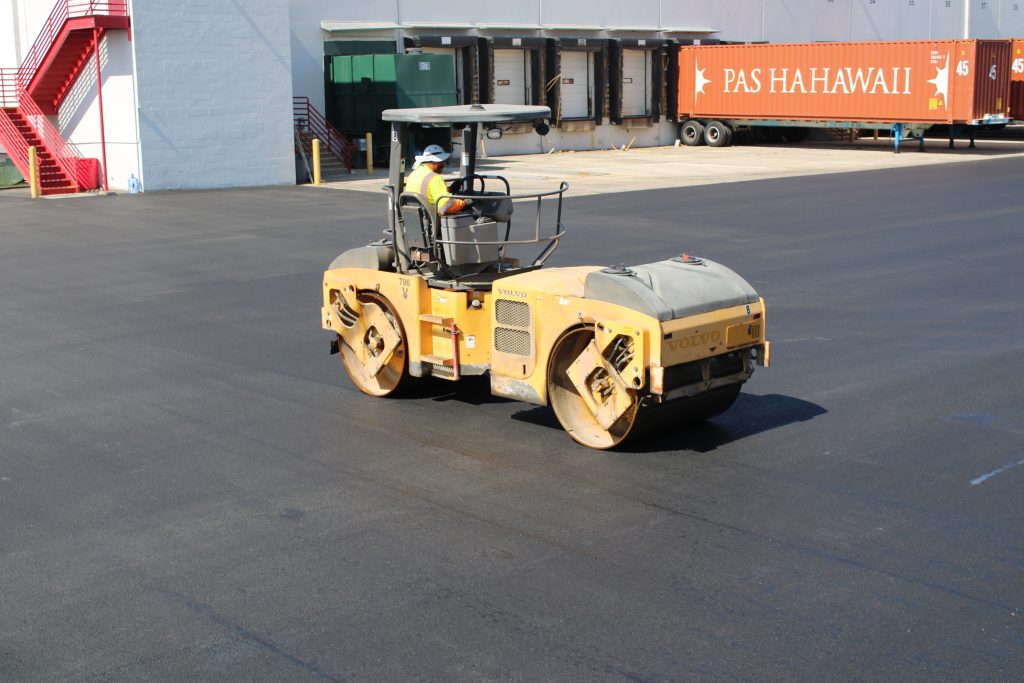
Repair Around the Guest: Scheduling as Craft
Carlsbad’s repair market runs on calendars other cities don’t have: resort occupancy, event schedules, tourist season, the Village’s evening economy. Our occupied-property repairs are planned like stagecraft — night and early-morning windows, work areas that never intercept an arrival experience, same-day returns to service, and clean-site standards (no cold-patch scatter, no orphaned barricades) that match the properties. Repairs that touch the public right-of-way run through Carlsbad’s Land Development Engineering permit process with its online portal and next-day inspection rhythm — and with the stormwater housekeeping the city requires, which for repair-scale work means honest site controls that keep grindings, tack, and wash water out of a storm system that ends at the lagoons.
Why Carlsbad Property Owners Choose United Paving Co.
Licensed California Contractor
verify our license anytime through the CSLB license check.
Over 25 years in the asphalt and concrete industry
Serving properties from Los Angeles through San Diego County
Active members of the property-management community.
BOMA, IREM, CAI, ICSC, AGC, and more.
Materials and Methods
Free on-site written estimates
Throughout Carlsbad — 92008 (Northwest Carlsbad: the Village, Barrio, and coastal north), 92009 (Southeast Carlsbad: La Costa and the Rancho Santa Fe Road corridor), 92010 (Northeast Carlsbad: Calavera Hills and the Robertson Ranch area), and 92011 (Southwest Carlsbad: Aviara, Poinsettia, and the Palomar Airport Road business corridor).
Carlsbad Asphalt Repair and Maintenance - FAQs
There's loose gravel appearing on our lot. What is that?
Raveling — the coastal aging signature, moisture stripping binder until surface stone sheds. Caught early, the treatment ladder is friendly: crack sealing plus a protective surface treatment can arrest it. Advanced raveling means the surface course is failing and patching or overlay enters the conversation. Either way, it's a schedule-now item, because raveling compounds.
Parts of our lot never seem to dry out. Is that a problem even without visible damage?
Yes — chronic damp zones are pre-failure zones. The fix menu runs from trimming landscaping and correcting sprinkler overspray to drainage improvements; the point is restoring the daily dry-out the rest of the lot enjoys. We flag these zones on every assessment because they're where the next repair was going to be.
Can a patch really be made invisible?
On a lot that's getting seal coated: essentially yes — geometric cuts, matched texture, and the finish coat over everything reads as one surface. Without sealing: nearly — clean lines and texture matching beat the classic ragged patch by a mile, but new asphalt always reads slightly newer until it weathers. We'll tell you which standard your project can hit.
Do you work nights around our hotel and restaurant operations?
Routinely — night and shoulder-hour work is the norm for our hospitality and Village clients, scheduled with your front desk and tenants, with areas returned to service before the morning's first arrivals.
Does salt air actually damage asphalt?
Its main victims are the metal fixtures in the pavement system — drainage grates, bollard bases, sign hardware — and exposed aggregate over time; the daily moisture cycle is the bigger asphalt-specific threat. Our assessments cover the whole surface system, corroding hardware included, since a failing grate is both a hazard and a drainage problem.
How does repair timing interact with the tourist calendar?
Ideally, inversely — the fall shoulder season is the sweet spot: summer crowds gone, winter storms not yet arrived, and crack sealing timed exactly when the coast needs it. We build resort and retail programs around that rhythm so the disruptive work happens when the fewest guests exist to notice.
Areas We Serve NEAR Carlsbad
We work throughout Carlsbad — 92008 (the Village, Barrio, and coastal north), 92009 (La Costa and the southeast), 92010 (Calavera Hills and the northeast), and 92011 (Aviara and the coastal south) — including the Palomar Airport Road corridor and the resort corridor. See our asphalt repair pages for Vista, San Marcos, and Escondido.